Showing posts with label crime. Show all posts

Saturday, 5 August 2023

Wolfen

 Year:  1981

Director:  Michael Wadleigh

Screenplay:  David M. Eyre Jr., Michael Wadleigh and Eric Roth, based on the novel The Wolfen by Whitley Streiber

Starring:  Albert Finney, Diane Venora, Edward James Olmos, Gregory Hines, Tom Noonan

Running Time:  114 minutes

Genre:  Horror, crime, drama

New York City:  Troubled former detective Dewey Wilson (Finney) is brought back on the job when a wealthy property developer, his wife and their bodyguard are found brutally murdered.  As he investigates, Dewey connects the murders to a string of similar slayings throughout the city.  Dewey eventually discovers the existence of savage, intelligent wolf-like creatures prowling the city.

This is a mixture of gory horror, police procedural and social commentary.  While the different aspects of the film don't always hang together particularly well, it is a slick and often suspenseful monster movie.  Albert Finney is very good as the cynical rumpled detective for whom carnivorous wolf spirits are just one more story in the Naked City.  Diane Venora is good as the criminal psychologist who Wilson is partnered with, and there is good support from Gregory Hines, as Wilson's pathologist friend, Edward James Olmos, as a Native American activist, and Tom Noonan as a sinister wolf expert.  The film gets good milage out of the run-down inner city setting, and it has some really effective horror moments.  It uses a kind of electronic effect to depict the point of view of the Wolfen, which is slightly overused but effective, and also features a few too many fake scares where a character is startled only for them (and the audience) to realise that it's nothing.  The Wolfen themselves are kept mostly off screen only appearing fully towards the end of the film.  The explanation as to what the Wolfen actually are (a kind of Native American animal spirit) is muddled, particularly at the end.  While the Wolfen aren't strictly speaking werewolves, they are lycanthropic enough for the film to be lumped in with the other, better known, werewolf movies released at the time, namely The Howling (1981) and An American Werewolf in London (1981), both of which were more successful at the Box Office.  Despite its flaws, Wolfen is consistently suspenseful, and intriguing, the police procedural elements and the New York setting are effective, and the script has a welcome vein of cynical, hard-boiled humour.  The plot is intelligent, and while the different themes don't always hang together, the film deserves credit for trying to do something different with some well-worn tropes. 
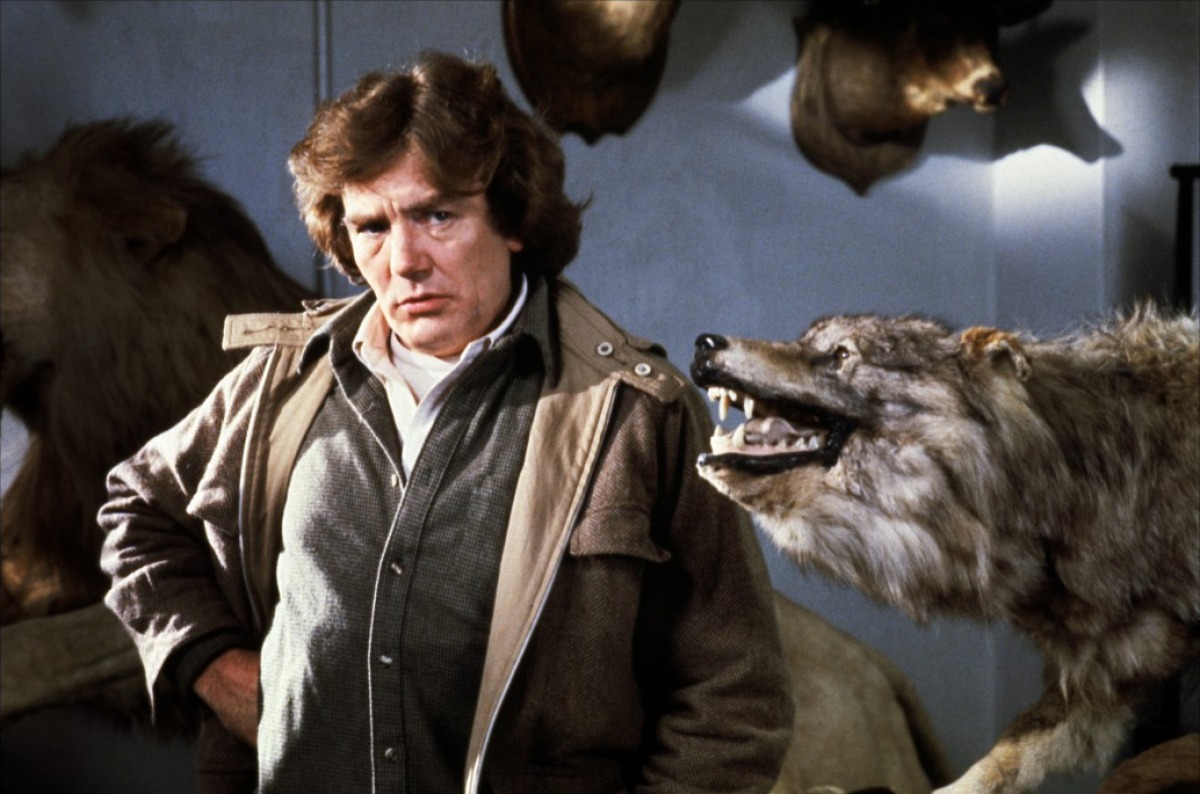


Albert Finney and furry friend in Wolfen


Wednesday, 28 June 2023

The Killing of a Chinese Bookie

 Year:  1976

Director:  John Cassavetes

Screenplay:  John Cassavetes

Starring:  Ben Gazzara, Timothy Agoglia Carey, Seymour Cassel, Azizi Johari

Running Time:  135 minutes (cut to 109 minutes)

Genre:  Drama, thriller

Cosmo Vittelli (Gazzara) owns and operates the sleazy, failing nightclub Crazy Horse West in Los Angeles.  To make matters worse Cosmo owes a large gambling debt to the Mob.  The gangsters order Cosmo to kill a bookmaker, Harold Ling (Soto Joe Hugh).  After some less than gentle persuasion, Cosmo reluctantly accepts his task, but soon finds the hit is much more complex than he had expected.

Writer, director and actor John Cassavetes appeared as an actor in a number of big Hollywood movies such as The Dirty Dozen (1967), for which he received an Academy Award nomination for Best Supporting Actor, and most notably a starring role as Mia Farrow's traitorous husband in Rosemary's Baby (1968).  However, he is most influential as a writer and director, and his echo is still felt today in the world of Independent Cinema.  Despite its seemingly conventional thriller plot, in terms of style and approach, The Killing of a Chinese Bookie is anything but conventional.  More a character study than a thriller, the film focuses on the dilemmas and pressures of Cosmo Vittelli, a man whose entire world is this sleazy club, and who puts all of the money he earns back into the club, as well as spending a lot of time and effort writing and directing the cheesy cabaret acts, hosted by the club compere "Mr. Sophistication" (Meade Roberts), even though he knows that the audience only care about seeing naked women.  He also has a severe gambling problem.  To celebrate making his last payment on a previous debt to a loan shark, he immediately goes out on a night on the town and ends up losing everything on poker.  Ben Gazzara, who saw Vittelli as a kind coded version of Cassavetes himself, gives a great performance, giving Vittelli a kind of down-at-heels charm, and a cocktail of hope and despair.  As is common with Cassavetes' work, the film has a loose, documentary style look, filmed guerrilla-style on the streets and in nightclubs, restaurants and homes.  The performances, which include Cassavetes regular Seymour Cassel and veteran gangster movie actor Timothy Carey, have a naturalistic, improvised feel about them.  The film was originally released in 1976 with a running time of 135 minutes, and immediately tanked at the box office, being withdrawn from general release after a week, with even Gazzara stating that it "was too long".  Cassavetes re-released the film in 1978 in a much shortened version of 109 minutes, with scenes drastically rearranged and some new footage.  For a long time this was the only version available, but in 2004 the 109 minute and 135 minute versions were released on DVD, so now you can watch both, should you care to.

The eagle-eyed viewer may notice a familiar face in some of the crowd scenes.  David Bowie sat in on much of the filming, just to watch Cassavetes at work, although he was not involved in the film.  However he can be glimpsed in the audience during some of the nightclub scenes.


Ben Gazzara in The Killing of a Chinese Bookie


Monday, 2 January 2023

Glass Onion: A Knives Out Mystery

 Year: 2022

Director:  Rian Johnson

Screenplay:  Rian Johnson

Starring:  Daniel Craig, Edward Norton, Janelle Monáe, Kathryn Hahn, Leslie Odom Jr., Jessica Henwick, Madelyn Cline, Kate Hudson, Dave Bautista

Running Time:  139 minutes

Genre:  Mystery, comedy

May 2020:  Tech billionaire Miles Bron (Norton) invites some of his closest friends and rivals to play a murder mystery game on his private greek island.  Celebrated detective Benoit Blanc (Craig) also receives an invitation .  As the weekend progresses it becomes apparent that everyone present has motive to murder Bron, but it becomes increasingly unclear who is the victim and who is the perpetrator.

This enjoyable, lighthearted murder mystery piles on twists and laughs in roughly equal measure.  Daniel Craig reprises his role as detective Benoit Blanc from writer/director Rian Johnson's previous film Knives Out (2019).  The cast, which includes a number of celebrity cameos, including Ethan Hawke, Hugh Grant, Stephen Sondheim, Yo-Yo Ma, Angela Lansbury, Kareem Abdul-Jabbar, Natasha Lyonne and Serena Williams, all seem to be enjoying themselves immensely, particularly Edward Norton as obnoxious Elon Musk-alike "tech bro" Miles Bron, and Daniel Craig once more adopting an extraordinary Southern accent as the detective Benoit Blanc.  Among the eclectic cast,  Janelle Monáe is the standout as Bron's enigmatic former partner.  Despite a generous running time the film still manages to be consistently funny, as well as having enough twists and turns to satisfy fans of traditional murder-mysterys.  


Daniel Craig and Janelle Monáe in Glass Onion: A Knives Out Mystery

Monday, 19 December 2022

Touch of Evil

 Year:  1958

Director:  Orson Welles

Screenplay:  Orson Welles, based on the novel Badge of Evil by Whit Masterson

Starring:  Charlton Heston, Janet Leigh, Orson Welles, Joseph Calleia, Akim Tamiroff, Marlene Dietrich, Zsa Zsa Gabor

Running Time:  111 minutes

Genre:  Crime, thriller, film noir

In an unnamed town on the Mexican-U.S. border, a wealthy American businessman and his girlfriend are killed by a bomb planted in the car.  Upstanding Mexican cop Miguel Vargas (Heston) and his new bride, Susie (Leigh), witness the explosion and cut short their honeymoon while Vargas becomes drawn into the investigation, coming up against powerful, corrupt police captain Hank Quinlan (Welles).


This is one of the best, as well as one of the last, of the classic film noir.  The term film noir was coined by French film critics to describe a run of stylish American thrillers and crime dramas that featured bleak, cynical and often nihilistic attitudes, and which flourished in the 1940s and '50s.  Based on the 1956 novel Badge of Evil by Whit Masterson, this is a surprisingly dark thriller, with it's striking visuals, including run-down locations, off-kilter camera angles, extreme close-ups, grotesque characters, and stark, black and white photography, the film has a genuinely nightmarish feel.  The main flaw is its racially insensitive casting, with white actors, such as Charlton Heston and Marlene Dietrich, cast as Mexican characters.  Although it is worth pointing out that the Mexican Vargas (albeit played by Heston) is the noble hero, while the white American Quinlan is the chief antagonist.  In the character of Hank Quinlan, Orson Welles creates one of the screen's most memorable monsters.  A racist, corrupt cop who plants evidence to frame suspects, and has all the powerful people in the town in his pocket, and who seem to orbit him like satellites around a planet.  The ageing, gargantuan Quinlan, an alcoholic, who constantly eats candy bars, and walks with a cane, he seems almost to be falling apart in front of our eyes, and yet there are flickers of the tattered remnants of nobility in his small, narrow eyes, and in his relationship with ex-lover Tana (Marlene Dietrich under very heavy makeup), who appears to be the only person who really knows and cares about him, there is a kind of tenderness, making him more damaged than truly evil.  A miscast Charlton Heston (who looks kind of like a young Sean Connery here) is okay, and Janet Leigh is good as Vargas' new wife, Susie, even if she doesn't have much to do.  The scene where she is attacked in a remote motel almost foreshadows her most famous role in Psycho (1962).  The film was taken away from Welles and re-edited by the studio without his approval.  For example, in Welles' version there are no opening credits, and the film opens with a famous sequence where a ticking time bomb is placed in the boot of a car.  An unsuspecting couple get in the car and drive off.  We follow the car through the streets, there is no score, instead we hear street sounds:  Music spilling from bars and restaurants, police whistles, car noises, muffled conversations, and then the car explodes.  In the release version, the credits are splashed over Welles' carefully composed shots, and the street sounds replaced by loud, brassy music.  A furious Welles penned a 58 page memo outlining his vision for the film.  In 1998, the film was restored and re-edited according to Welles' instructions.  Now it can be seen for the masterpiece it is.


Orson Welles, Victor Millan, Joseph Calleia and Charlton Heston in Touch of Evil


Saturday, 15 October 2022

To Live and Die in L.A.

 Year:  1985

Director:  William Friedkin

Screenplay:  William Friedkin and Gerald Petievich, based on the novel To Live and Die in L.A. by Gerald Petievich

Starring:  William Petersen, Willem Dafoe, John Pankow, Debra Feuer, John Turturro, Darlanne Fluegel, Dean Stockwell

Running Time:  116 minutes

Genre:  Action, crime, thriller


When his partner is killed investigating a counterfeiting operation, corrupt Secret Service Agent Richard Chance (Petersen) is determined to bring down master counterfeiter Rick Masters (Dafoe) by any means necessary.  However, Chance is forced to team up with by-the-book agent John Vukovich (Pankow), who opposes Chance's anything goes philosophy.

Adapted from the 1984 novel by Gerald Petievich, this gritty crime thriller returns director William Friedkin to the seamy world of amoral cops and brutal criminals that he previously explored in The French Connection (1974), the film that made his name.  In fact, aside from being set in Los Angeles rather than New York and dealing with counterfeiters rather than international drug runners, there are some similarities between To Live and Die in L.A. and The French Connection, both deal with ruthless cops (or, more accurately, Secret Service agents in To Live and Die) who will break any rules they have to to bring down a powerful enemy,  and To Live and De in L.A. also features it's own spectacular car chase set piece.  Despite being set in December and January, Los Angeles seems to burn under blazing sunlight, and beautiful pink evening skies (I don't know, I've never been to Los Angeles, maybe it really is like that in the bleak midwinter).  The film looks beautiful throughout, and has a pulsing score from British new wave band Wang Chung.  There is a gritty, authentic feel to the proceedings, which are filmed in some of the less glamorous parts of the city.  The cast is impressive with a number of actors who weren't well known at the time, but later went on to become major stars, notably Willem Dafoe and John Turturro.  William Petersen is believably callous as the repellant Richard Chase, who is the film's nominal hero and extorts his informer Ruth (Darlanne Fluegel) for information and sexual favours, under threat of having her parole revoked.  Willem Dafoe is good as the murderous counterfeiter,  John Turturro is convincingly desperate as the member of Dafoe's gang who Chance arrested and tries to make a deal with.  Darlanne Fleugel takes the acting honours as the unfortunate collateral damage in Chance's war on crime, and her desperation to break free and make a fresh start is heartbreaking.  The big problem with the film is, as good as it is, there is really no-one to root for here.  The ostensible "heroes" aren't much better than the crooks they are chasing.  However, this is an involving and exciting slice of '80s action thriller.


William Petersen and John Pankow in To Live and Die in L.A.

Foxy Brown

 Year:  1974

Director:  Jack Hill

Screenplay:  Jack Hill

Starring:  Pam Grier, Antonio Fargas, Peter Brown, Terry Carter, Kathryn Loder, Harry Holcombe

Running Time:  91 minutes

Genre:  Action, crime


When her narcotics agent boyfriend is murdered by a powerful crime ring, Foxy Brown (Grier) poses as a  call girl to infiltrate the syndicate.

This is one of the defining blaxploitation films.  Blaxploitation (the term is a portmanteau word made up of "black" and "exploitation") was a subgenre of American action and crime films that were very popular in the 1970s, which featured predominantly black lead characters and were ostensibly aimed at black audiences.  These films were criticised at the time and since for perpetuating stereotypes of African-Americans, but they were also one of the few places where black characters and stories were shown.  Directed by exploitation veteran Jack Hill, who had previously worked with Pam Grier on Coffy (1972), the film is full of violent action, and it all moves along at a good pace.  Pam Grier is fantastic as Foxy.  Antonio Fargas, who is best known as Huggy Bear in Starsky & Hutch (1975-1979), plays Foxy's deadbeat brother.  Kathryn Loder is good as the sinister head of the "modelling agency" which is the front for the crime ring.  Veteran exploitation actor Sid Haig appears as a pilot who runs drugs between the US and Mexico.  The film does have some social commentary, Foxy has connections to the local Black Panthers, who help keep the streets safe from drug pushers.  Foxy also is in favour of direct, vigilante action against crime as opposed to her upstanding boyfriend who believes in the due process of law.  The film is funny, fast and dynamic.  The fashions and jive-talking dialogue scream 1970s, as well as the funky soul soundtrack featuring songs by Willie Hutch, and the film had kind of a second life in the late 1990s when there was a lot of '70s nostalgia, and has been a heavy influence on Quentin Tarantino, who cast Pam Grier as the lead in his homage to blaxploitation Jackie Brown (1998).  However, the film does have plot holes, and there are elements of it that are certainly not politically correct, particularly in the film's mos disturbing sequence where Foxy is kidnapped by the villains, forcibly injected with heroin and sexually assaulted (although the assault isn't shown, but her violent retribution certainly is).  

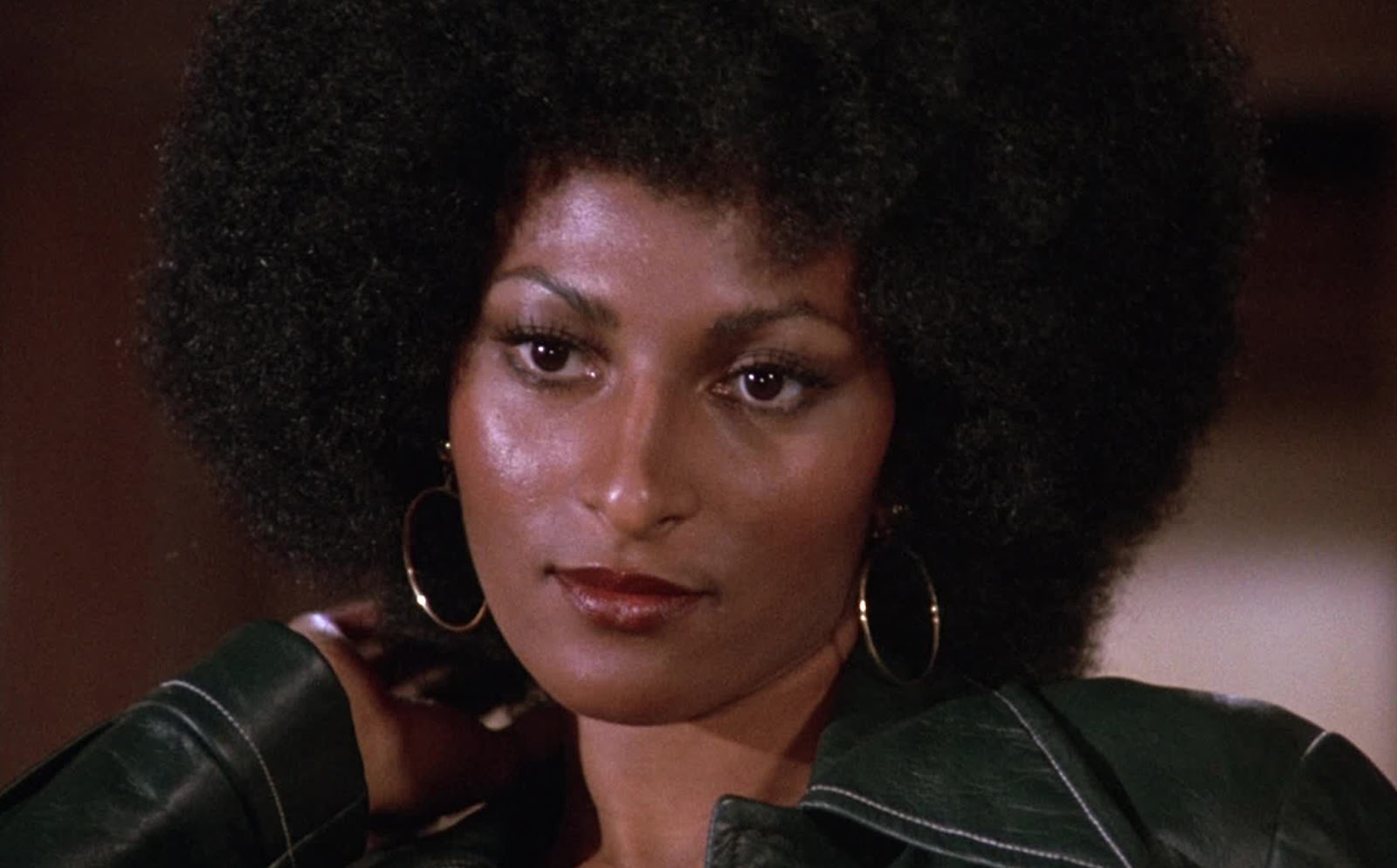
Pam Grier is Foxy Brown
  

Monday, 18 July 2022

Bonnie and Clyde

 Year:  1967

Director:  Arthur Penn

Screenplay:  David Newman and Robert Benton

Starring:  Warren Beatty, Faye Dunaway, Michael J. Pollard, Gene Hackman, Estelle Parsons

Running Time:  111 minutes

Genre:  Crime


Texas, 1930s:  Bored waitress Bonnie Parker (Dunaway) is desperate for some excitement in her life.  She thinks that she has found what she is looking for when she meets charismatic thief Clyde Barrow (Beatty).    Along with dim-witted mechanic C. W. Moss (Pollard), Clyde's tough older brother Buck (Hackman) and Buck's highly strung wife, Blanche (Parsons), Bonnie and Clyde embark on a violent crime spree across the southern United States, robbing banks and shops.  Along the way they become celebrities, as well as the target of every lawman in the USA.

"They're young.  They're in love.  And they kill people."

- Poster tagline for Bonnie and Clyde

Loosely based on the real life exploits of Depression era bank-robbers Clyde Barrow and Bonnie Parker, this became one of the most iconic films of the 1960s.  Heavily criticised at the time for it's then groundbreaking violence, as well as it's glamorising of the ruthless duo, this nevertheless became a smash hit, helping to usher the so-called "New Hollywood" of the 1970s as well as influencing any number of "lovers on the run" films such as Badlands (1973), Wild at Heart (1990), True Romance (1993) and Natural Born Killers (1994).  Screenwriters Robert Benton and David Newman were heavily influence by the French New Wave movement, and their original choice to direct the film was François Truffaut, who passed on the project.  However, Truffaut and the French New Wave influenced several elements of the film, including the changes in tone, the choppy editing, and slow-motion sequences.  Warren Beatty, who produced the film, is perfectly cast as is Faye Dunaway, and the two have real chemistry.  Michael J. Pollard plays naive, moon-faced C. W. Moss, the gang's getaway driver and mechanic.  Pollard, who was pretty much unknown at the time, and was nominated for the Academy Award, Golden Globe and BAFTA got so much attention for the role that he announced a joke candidacy for President of the Unites States, which inspired a novelty song by Jim Lowe called "Michael J. Pollard for President".  Gene Hackman was also Oscar nominated for his role as Clyde's older brother Buck.  Estelle Parsons plays preacher's daughter Blanche, who is married to Buck, and becomes a reluctant a reluctant member of the gang.  Blanche and Bonnie's mutual hatred of each other threatens to undo the group from within.  After viewing the film, the real Blanche Barrow complained about her depiction saying: "That film made me look like a screaming horse's ass!"  Comedian Gene Wilder makes his screen debut in the film as a nerdy undertaker who is kidnapped by the gang.  

While the film is not now as shocking as it was in 1967, it is still a striking film, which has aged surprisingly well.  The tone of the film moves from humour to tragedy, from warmth to cold, stylised violence.  The tone changes in the same scene, the action scenes are often shown as comical slapstick, which then moves into shocking, graphic violence.  Amongst the brutality there are moments of humanity and tenderness, the gang joke around and okay games, take photographs of themselves and Bonnie immortalises their adventures in poetry.  The romance between Bonnie and Clyde is genuinely moving.  The film was released by Warner Bros., who specialised in gangster movies throughout the thirties, and Bonnie and Clyde brings together Old Hollywood glamour, with European experimentalism, to create a new type of American film.      


"I'm Miss Bonnie Parker, this here's Clyde Barrow.  We rob banks."  Faye Dunaway and Warren Beatty as Bonnie and Clyde

Saturday, 23 April 2022

Chinatown

 Year:  1974

Director:  Roman Polanski

Screenplay:  Robert Towne

Starring:  Jack Nicholson, Faye Dunaway, John Hillerman, Perry Lopez, Burt Young, John Huston

Running Time:  134 minutes

Genre:  Crime, mystery, drama


Los Angeles, 1937:  Cynical private investigator Jake Gittes (Nicholson) is hired to investigate a seemingly simple case of suspected marital infidelity.  However, he soon finds himself drawn into a murderous criminal conspiracy over water rights. As he pursues his investigation, Gittes uncovers secrets far darker than he could have suspected.

Inspired by the real life "California water wars", a series of disputes in the early 20th century over the rights to supply water in Southern California, this is one of the classic American films of the 1970s.  Film noir was a subgenere of American film which flourished during the 1940s and 1950s.  Literally translated as "black film",  film noir featured dark, cynical and bleak stories with often stylish, shadowy cinematography.  Chinatown is an example of "neo-noir"in that it came after the period of film noir, but still hearkens back to it in terms of plot and style, albeit with an updated sensibility. The darkness of the film's content is somehow complemented by mostly taking place in bright sunshine.  Jack Nicholson gives one of his best performances as the cynical detective Jake Gittes, charismatic, tough and sometimes dangerous, but with a moral centre.  Faye Dunaway gives a powerful, complex performance as the brittle femme fatale Evelyn Mulwray, who turns out to be more of a tragic victim.  Legendary director John Huston plays the courtly, avuncular, fabulously wealthy and thoroughly evil Noah Cross, who is terrifying because he is so friendly and polite.  Roman Polanski has a cameo as a henchman who slices Gittes' nose in a memorable scene.  The screenplay by Robert Towne is superbly crafted, with every element fitting together like clockwork, although Polanski apparently rearranged some scenes, and also wrote the film's bleak conclusion.  Polanski, ghastly human being although he may be, was a great filmmaker, and this is one of his finest moments as director.  Despite the title, only the film's final few minutes are set in the Chinatown area of Los Angeles, although it is mentioned in several places that Jake was a policeman in Chinatown, and something terrible happened there which is never revealed, but which made him leave the force and seemingly left him with lasting trauma,  and so Chinatown in the film is less a physical place than a state of mind, as after the devastating climax, which is still shocking even after several viewings, Gittes' partner in his detective agency delivers the film's classic closing line:  "Forget it, Jake.  It's Chinatown."


Jack Nicholson and Faye Dunaway in Chinatown


Thursday, 17 March 2022

The Batman

Year:  2022

Director:  Matt Reeves

Screenplay:  Matt Reeves and Peter Craig, based on characters from DC Comics

Starring:  Robert Pattinson, Zoë Kravitz, Paul Dano, Jeffrey Wright, John Turturro, Peter Sarsgaard, Andy Serkis, Colin Farrell

Running Time:  176 minutes

Genre:  Action, superhero, crime, thriller

On Halloween night, the mayor of Gotham City is brutally murdered by a masked individual calling himself The Riddler (Dano), who leaves a series of cryptic clues aimed at masked vigilante, the Batman (Pattinson), the secret identity of reclusive billionaire Bruce Wayne, who has been fighting crime in Gotham for two years.  As Batman investigates, he realises that The Riddler is just getting started, as more and more of the great and good in Gotham turn up murdered.  With the help of nightclub waitress Selina Kyle (Kravitz), who has her own secret, the Batman uncovers a vast criminal conspiracy, which hits uncomfortably close to home.  

It's tempting to roll the eyes at the thought of yet another Batman film, or indeed yet another superhero film as the last ten years has seen a seemingly endless stream of them.  The tendency, particularly of the Batman films, has been to get increasingly dark and gritty, which to be fair is in keeping with the character's origins in the pages of Detective Comics in 1939, but a long way from the colourful, campy Batman TV series with Adam West and Burt Ward which defined the character for decades, at least until the 1989 Tim Burton Batman film.  Despite Batman Forever (1995) and Batman and Robin (1997) the character seems to get darker and grittier with each new iteration, and this is possibly the bleakest yet.  Devoid of light (literally for the most part, the film takes place almost entirely at night in gloomy, cavernous rooms, and strobe-lit nightclubs), humour and mostly any sense of hope, this is Batman for the 2020s.   It is less of a superhero action film, although there are some very good action scenes, including a spectacular car chase, it's more of a gritty crime thriller, closer to films such as Se7en (1995).  Batman is more of a detective here, trying to crack the case by solving the clues and interviewing witnesses and suspects.  Robert Pattinson is good as Batman, and his Bruce Wayne is a very different take on the character.  Instead of the traditional billionaire playboy, his Bruce is a recluse lurking around the Batcave, always in black, listening to Nirvana and writing his thoughts in a journal. and seems to be more than. little bit disturbed, closer to characters such as Travis Bickle in Taxi Driver (1976) or Rorschach in the comic series Watchmen (1986-87), who incidentally was inspired by Batman.  Andy Serkis plays Alfred, Bruce's one connection to a normal life.  Zoë Kravitz is very good as Selina Kyle aka Catwoman, who helps Batman for her own purposes and whose moral ambiguity challenges Batman's black-and-white worldview.  Paul Dano is chilling as the Riddler, turning the character from a gimmicky prankster to a genuinely frightening killer.  Jeffrey Wright is good as Commissioner Gordon, Batman's friend on the police force, and one of the few honest cops in a corrupt city.  Colin Farrell is almost completely unrecognisable under layers of makeup as mobster and club owner the Penguin.  While the Batmobile does make an appearance in the film, and very impressive it is too, Batman uses less gadgets than usual in these films, mostly allowing his targets to hear his heavy footfalls as he looms from the shadows  This is an impressive and complex film which spins out an intriguing mystery and remains gripping throughout what could politely be described as a generous run time.  While this may be too dark and sombre for many people's tastes it feels right for the character, and I liked the fact that it was a smaller scale than most recent superhero films, and I also liked the portrayal of Batman as a crime-solving detective.

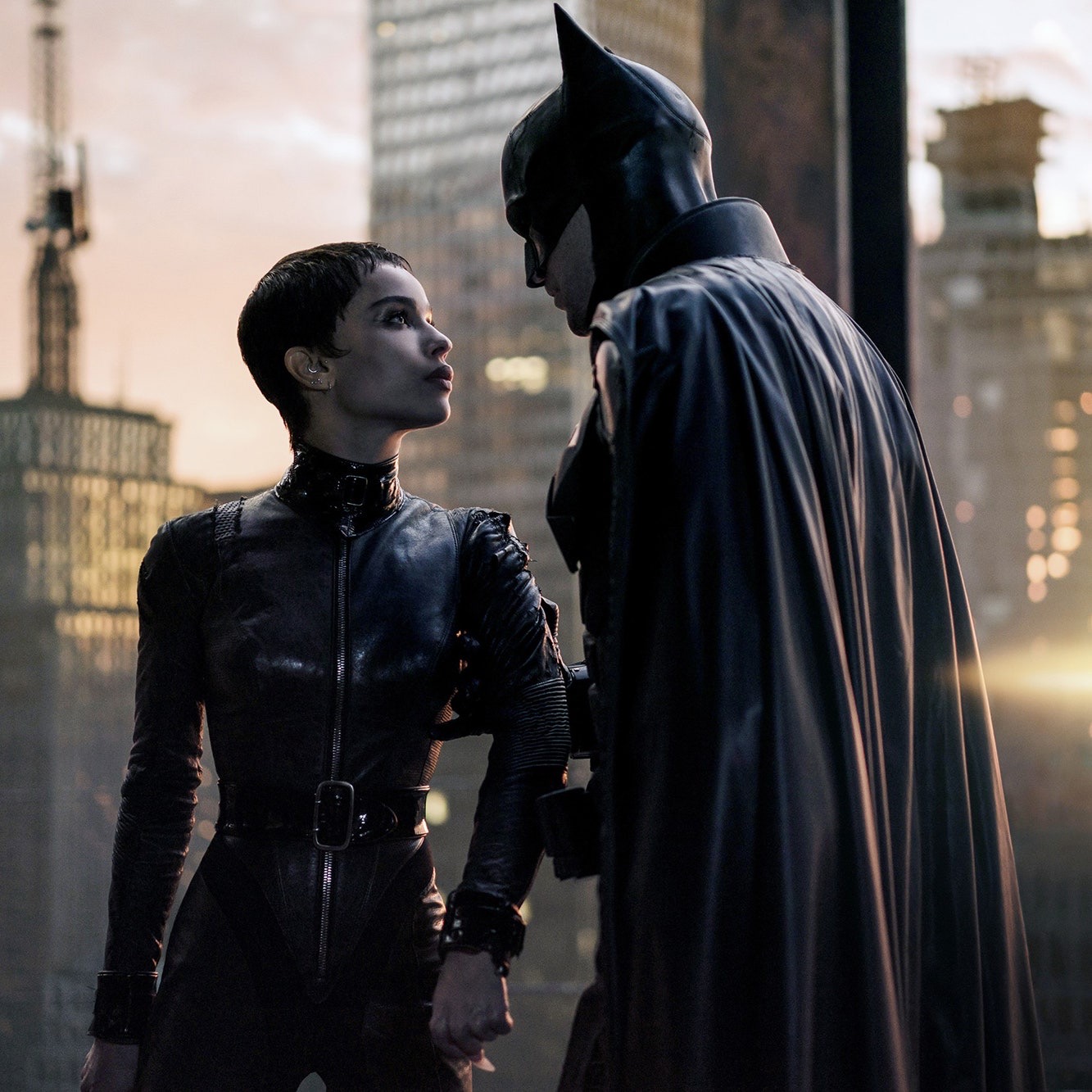
Catwoman (Zoë Kravitz) and Batman (Robert Pattinson) in The Batman

Saturday, 29 January 2022

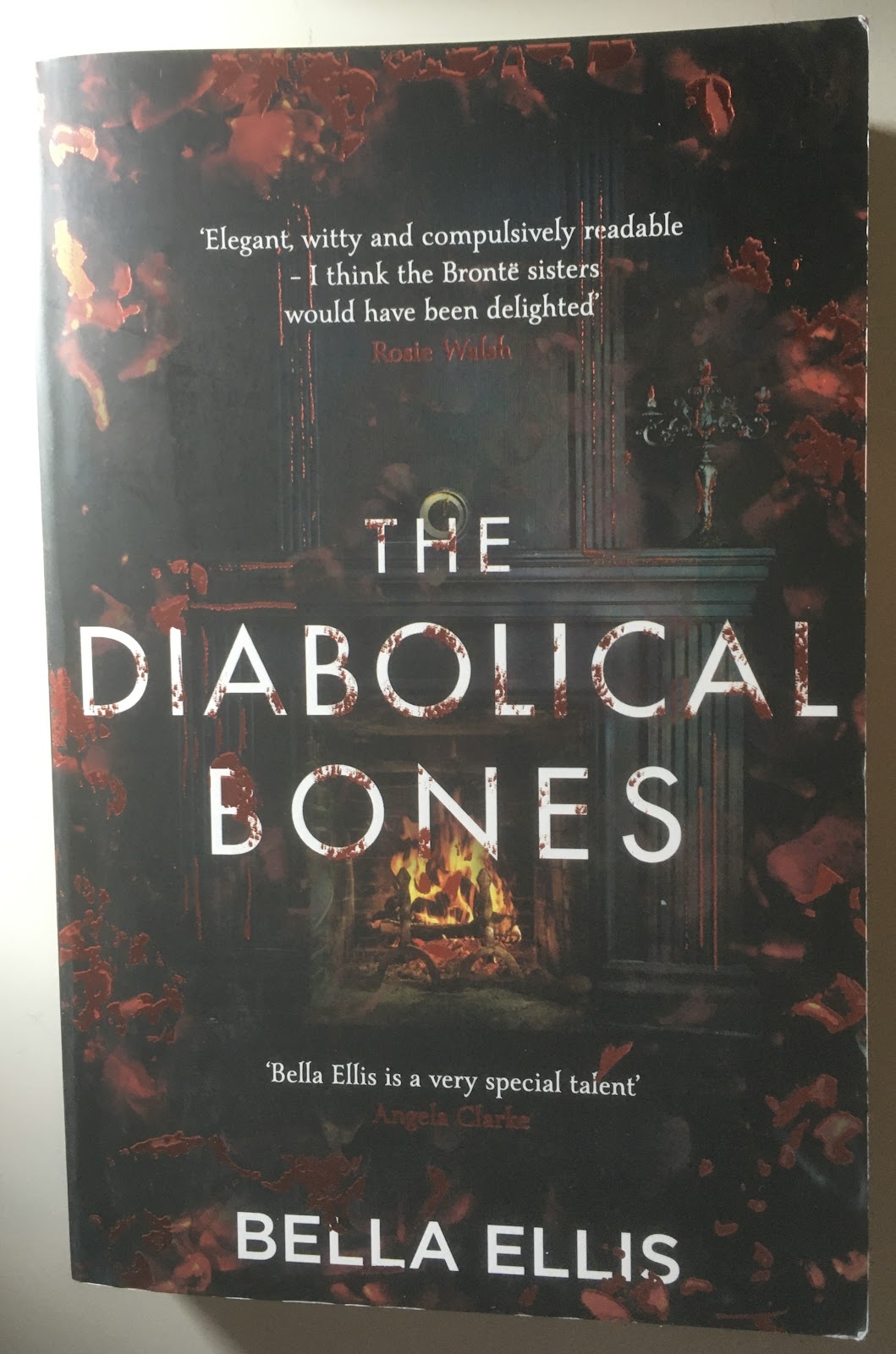
"The Diabolical Bones" by Bella Ellis

Year of Publication:  2020

Length:  340 pages

Genre:  Mystery


Haworth, December 1845:  Aspiring writers and amateur detectives (or "detectors") Charlotte, Anne and Emily Brontë are shocked when the bones of a child are discovered sealed up inside the walls of the nearby Top Withins Hall.  The prime suspect is immediately assumed to be the brutal Clifton Bradshaw, owner of Top Withins.  However, the Brontë sisters investigate and find themselves plunged into a murky world of occult rituals, human sacrifice, and a horrific orphanage, as they find themselves up against their most dangerous enemy yet.

This is the second in the "Brontë Mysteries" by Bella Ellis (the pen name of author Rowan Coleman), following The Vanished Bride (2019), which reimagine the famous literary sisters as detectives, investigating mysteries in and around the village of Haworth in Yorkshire.  As with its predecessor, The Diabolical Bones has an intriguing story, with an effectively creepy mystery at its centre.  Ellis writes with real skill, keeping the plot moving at a good pace and she has a strong feel for character and location.  Despite obviously being fiction, the book still ties in well with the known facts about the Brontë's lives and personalities, and is written with obvious love for the sisters and their work.  Even for readers unfamiliar with the Brontë's work, it's still a hugely enjoyable period mystery.


Monday, 20 September 2021

Over the Edge

 Year of Release:  1979

Director:  Jonathan Kaplan

Screenplay:  Charles S. Haas and Tim Hunter

Starring:  Michael Kramer, Matt Dillon, Pamela Ludwig, Vincent Spano, Harry Northup, Tom Fergus

Running Time:  95 minutes

Genre:  Coming-of-age, crime, drama


In the isolated planned community of New Granada, Colorado, the adults live quiet peaceful lives in their nice houses, while their teenage kids have nothing to do except hang around at the local recreation centre (which closes at 6PM) and get into trouble.  As the instances of vandalism and other crimes committed by the kids increases, they become harassed by hated local cop Sgt. Doberman (Northup).  When the recreation centre is closed, the tensions between adults and kids escalates into violence.


This film was based on a 1973 news article from the San Francisco Examiner about gangs of kids called "Mousepacks" who had been causing chaos in a middle-class planned community in California.  The film does a good job at depicting the bland, dull and entirely white community of New Granada, where the affluent residents are more concerned about property resale values than the fact that there is nothing to do there.  The kids have a recreation centre which is little more than a large barn, and which closes at 6PM.  A planned cinema and bowling alley is revealed to have been scrapped for a business park.  The kids hang around, argue, get into fights, drink, take drugs and do pretty much what kids everywhere do.  They really are just ordinary kids, not particularly good or bad, just bored.  The adults however treat them as a problem to be locked away or yelled at, instead of talking to them.  The characters in the film are all pretty solidly middle-class and are fairly comfortable.  The kids live in large, nice houses, with plenty of cool stuff, but they are pretty much cast adrift.  This may make it sound like a worthy, message film, but, while it is a message film, it is fun, exciting and entertaining, although it does drag occasionally towards the middle.  The kids, which include a 14 year old Matt Dillon in his film debut, look and talk like real teenagers.  It also boasts a cool seventies soundtrack including Van Halen, Cheap Trick, The Cars and The Ramones.  It all comes to a satisfyingly apocalyptic conclusion.  The film wasn't a big success on it's first release, and someone had the baffling idea to market it as a horror film with a poster that made it look like Village of the Damned:  The High School Years, however it has become something of a cult film.  Nirvana frontman Kurt Cobain named it as his favourite film, and it influenced the music video for "Smells Like Teen Spirit", as well as influencing the Richard Linklater film Dazed and Confused (1993).  It has inevitably dated, there are no people of colour and the kids frequently use homophobic slurs, but it still feels relevant and packs a real punch.  


The Kids Aren't All Right:  Matt Dillon and Michael Kramer go Over the Edge


Sunday, 1 August 2021

Diva

 Year of Release:  1981

Director:  Jean-Jacques Beineix

Screenplay:  Jean-Jacques Beineix and Jean Van Hamme, based on the novel Diva by Delacorta (Daniel Odier)

Starring:  Frédèric Andréi, Wilhelmenia Wiggins Fernandez, Richard Bohringer, Thuy Ann Lu

Running Time:  117 minutes

Genre:  Crime, thriller


Paris:  Young opera-mad postman Jules (Andréi) makes a secret tape of American soprano Cynthia Hawkins (Fernandez), who refuses to allow herself to be recorded, and steals one of her gowns. The next day Jules finds himself in accidental possession of another tape which implicates a senior police officer, Saporta (Jacques Fabbri), in an international human trafficking ring.  Soon Jules finds himself pursued by two mysterious men who want his tape of Cynthia, as well as the police, and a pair of ruthless hitmen in the employ of Saporta.

Based on a 1979 novel by prolific writer Daniel Odier under the pseudonym Delacorta, this film was a sizeable cult hit in the 1980s and became one of the key films in the French cinéma du look movement of the 1980s and 1990s which were noted by a slick, beautiful visual style and spectacle.  This is certainly a beautiful film to look at moving from sparse rooms bathed in icy blue light, to a gorgeously romantic Paris dawn, elegant hotel rooms to elaborately painted garages which seem almost to be decorated by artfully wrecked cars, the whole thing drips with early '80s cool.  The film's centrepiece, and it's undoubted highlight, is an incredible chase through the streets of Paris and through the city's Metro system, in an incredibly exciting sequence.  While the film's complex narrative doesn't always make sense, and it is overlong, it doesn't really matter.  Jean-Jacques Beineix directs with style and verve and has a real eye for quirky visual details and eccentric characters.  The performances are good with the wide eyed  Frédèric Andréi making an engaging lead and Wilhelmenia Wiggins Fernandez effective as the titular diva, the rest of the characters are more like a collection of odd and quirky details.  Gérard Darmon and Dominique Pinon are creepy as the vicious hitmen.  It feels very much a product of it's time, but it still works well, and is some great entertainment.


Gêrard Darmon and Dominique Pinon in Diva


Sunday, 18 July 2021

Mean Streets

 Year of Release:  1973

Director:  Martin Scorsese

Screenplay:  Martin Scorsese and Mardik Martin, based on a story by Martin Scorsese

Starring:  Harvey Keitel, Robert De Niro, Amy Robinson, Richard Romanus, David Proval

Running Time:  112 minutes

Genre:  Crime drama


Four friends live in the Little Italy section of New York City:  Charlie (Keitel) is torn between his devout Catholicism and the jobs that he does for his mafioso uncle (Cesare Danova); Johnny Boy (De Niro) is a violent, mercurial wild man whose reckless ways are about to catch up with him; Michael (Romanus) is a small time gangster and money lender who wants to break into the big leagues of organised crime; and Tony (Proval) owns the bar and neighbourhood hangout where these guys all congregate.  Johnny Boy owes Michael a lot of money, and Michael is determined to collect one way or another.  Charlie is sucked in because he has vouched for Johnny, and he is liable to pay if Johnny can't make good on his debts.   To complicate matters further is Charlie's secret relationship with Johnny's epileptic cousin Teresa (Robinson).


Martin Scorsese and Harvey Keitel had previously worked together on Scorsese's debut feature Who's That Knocking at My Door? (1968) and Robert De Niro had already made several features for Brian De Palma, but this was the film that broke all three of them into the big time.  It's shot in an almost semi-documentary style, with a constantly moving, handheld camera (the production were unable to afford to lay down tracks for tracking shots).  Scorsese had intended the film to showcase the world that he had grown up in, and it showcases the trademark criss-crossing dialogue and a soundtrack mixing rock, Motown, pop and Italian opera.  The film is sprawling and loosely plotted, but there is a spiky, kinetic energy that keeps it moving along. It's anchored by two incredible performances by Keitel and De Niro.  Harvey Keitel as Charlie is someone who is trying to be good, but trapped in a violent world, and anchors the film.  Robert De Niro gives an incendiary performance as the unpredictable maniac.  However, in the film's insular and strongly male world, people of colour and women don't really get a look in.  The only female character who really has much to do is Amy Robinson's Teresa, who doesn't really appear until the second half of the film, but she does hold her own in the boy's club.  It's an exciting, dynamic film, where sudden violence is just around the corner.  


Harvey Keitel and Robert De Niro in Mean Streets

Friday, 2 July 2021

Breathless

Year of Release:  1960

Director:  Jean-Luc Godard

Screenplay:  Jean-Luc Godard, based on a story by François Truffaut and Claude Chabrol

Starring:  Jean-Paul Belmondo, Jean Seberg

Running Time:  90 minutes

Genre:  Crime drama


Cynical thief Michel (Belmondo) steals a car and kills a motorcycle policeman.  He escapes to Paris and contacts his on-again off-again American girlfriend Patricia (Seberg), a student and aspiring writer who earns a crust by selling the New York Herald-Tribune on the streets.  While trying to stay ahead of the police who are hot on his trail, Michel tries to call in a debt he's owed, in order to get enough money for himself and Patricia to escape to Italy.


This film takes what could be a conventional pulp narrative and turns it into an innovative blend of cinematic style and Sixties cool.  It marked the directorial debut of film critic turned filmmaker Jean-Luc Godard, and was one of the defining films of the so-called "French New Wave".  The story was inspired by a real life case that François Truffaut came across in a newspaper.  Truffaut worked on the script with Claude Chabrol, but they both decided it was unworkable, however Godard read it and wanted to make it.   Filmed in a semi-documentary style, Paris shimmers in the crisp monochrome photography, with a roving camera, inventive editing (particularly it's use of the jump cut) and a cool jazz soundtrack.  The film's main character is Michel, a cynical thief, mugger and murderer, who it's hinted seduces and discards numerous women, is an absolutely ghastly person, who would take you for everything you owned given half the chance, however as played by Jean-Paul Belmondo he is really cool, and charismatic, basing his style and persona on Humphrey Bogart, he is the ultimate anti-hero, and although we see him do many bad things, and it is suggested that he has done a lot more besides, we still like him, and by the end we're kind of on his side.  As the equally cynical but ambitious Patricia, Jean Seberg has real charm and presence.  She's engaging and likeable and yet is shown to be possibly just as ruthless as Michel.  Together Seberg and Belmondo are electric.  They have real chemistry.  The dialogue is sharp and witty, although apparently it loses something in the English translation, particularly the ambiguous exchange at the end of the film.  Still fresh and exciting sixty years on, it's nihilistic, anti-authoritarian tone is still bracing to this day.  One of the seminal films in world cinema, it's influence is still felt today.  


Jean-Paul Belmondo and Jean Seberg in Breathless


Wednesday, 16 June 2021

Badlands

Year of Release:  1973

Director:  Terrence Malick

Screenplay:  Terrence Malick

Starring:  Martin Sheen, Sissy Spacek, Warren Oates, Ramon Bieri

Running Time:  93 minutes

Genre:  Crime, drama


In the small town of Fort Dupree, South Dakota, in 1959, 15 year old Holly (Spacek) meets 25 year old Kit (Sheen), and falls for him despite the objections of her father (Oates).  When she tries to run away with Kit, her father confronts them, and Kit shoots him dead.  They start a strange, violent life on the run, leaving a trail of bodies in their wake, as they try to keep ahead of the authorities.


This film is loosely based on the life and crimes of American spree killer Charles Starkweather who, along with 14 year old Caril Anne Fugate, murdered 11 people between December 1957 and January 1958.  It also marks the debut of writer/producer/director Terrence Malick, who has made his name with long, strange, and beautiful films which straddle the boundary between the mainstream and the experimental with varying degrees of success.  This film is much more accessible than much of Malick's later work, but there are a lot of hints as to what was to come.  The film opens with bleak images of the dead-end town and Holly's strangely disengaged voice-over narration which runs throughout the film, influenced by the teen romance and movie magazines that she reads constantly.  Holly and Kit are strangely dispassionate characters.  There is no great love between them, and Holly never seems to think that they will be together forever, they really seem to just hang out together, and while they have a sexual relationship it is just briefly mentioned.  Kit approaches killing in the same way.  The killings are really murders of convenience, he doesn't seem to have a problem at all with murder, but doesn't particularly enjoy it either, it's just a quicker way of dealing with problems.  Holly never takes part in the murders, she's just there, although they don't particularly bother her either, even her own father's death she just takes in her stride.  The film is set in 1959, although it doesn't really lean into the '50s period, Malick said he wanted it to appear "like a fairytale.  Outside time."  The film does have a strangely lyrical quality.  Kit and Holly build a treehouse in which they live in an Edenic idyll.  Holly's naive narration is accompanied by the gentle strains of Glassenhauer by Carl Orff.  The two exist in their own kind of worlds built by pop culture.  Holly seems to see herself in a teen romance, and Kit, who is frequently compared to James Dean, seems to view himself as an old time cowboy.  At one point Holly speculates on the preparations the authorities are making to catch them, which is depicted like a black and white '50s movie.  Martin Sheen is perfectly cast as the charismatic, but ruthless killer, but the real breakout is Sissy Spacek, who was 22 at the time of filming, playing a 15 year old, her strangely ethereal quality really works for the role, and her flat, heavily accented delivery does cast a spell.  This movie manages to take a conventional narrative, with all the hallmarks of the "lovers on the lam" genre, and turn it into genuine poetry.  It has proven hugely influential on other films in the genre.  True Romance (1993) pays homage with Patricia Arquette's narration being very similar to Sissy Spacek's, and the use of the Glassenhauer music.  Terrence Malick has an uncredited cameo as a man who knocks at a house where Kit and Holly are hiding out.  Also Martin Sheen two sons, Emilio Estevez and Charlie Sheen, appear very briefly as two boys hanging outside Holly's house.


Martin Sheen and Sissy Spacek enter the Badlands     

Wednesday, 9 June 2021

Point Blank

 Year of Release:  1967

Director:  John Boorman

Screenplay:  Alexander Jacobs, David Newhouse and Rafe Newhouse, based on the novel The Hunter by Richard Stark (Donald Westlake)

Starring:  Lee Marvin, Angie Dickinson, Keenan Wynn,   

Running Time:  92 minutes

Genre:  Crime, action, thriller

On Alcatraz Island, three criminals: Walker (Marvin), his best friend Mal Reese (John Vernon) and Walker's wife, Lynne (Sharon Acker) pull off a robbery.  However Walker is shot by Reese and left for dead in a cell, as Reese and Lynne make off with the stolen money.  A year later Walker is back in San Francisco and sets off on a violent quest for revenge and to collect the money that he is owed, pitting him against a powerful criminals syndicate known as "The Organisation".


Judged by the basic plot, this film, adapted from the pulp thriller The Hunter by Richard Stark (a pseudonym for author Donald Westlake) may appear to be little more than an average revenge thriller, of the type that we have all seen umpteen times before, but, in the hands of British director John Boorman, it's elevated to a strange type of art.  It makes use of distorted camera angles, strange ellipses and incongruities, an almost steam of consciousness editing style, and even the stripped down, bare bones plot, to make a strangely disorientating experience.  The film opens with Walker (whose first name is never revealed) being shot several time in a prison cell in Alcatraz.  The gunman, Walker's supposed friend Mal Reese runs off with Walker's wife, Lynne, and the loot.  Clues as to what brought them there are revealed in fragmentary flashbacks.  Then the scene shifts to the outside as a badly injured Walker prepares to plunge into the waters of San Francisco Bay, while a voice over (explained to be an announcer on a tourist boat) explains that escape from Alcatraz is impossible.  We next see Walker on said boat, some time later, apparently none the worse for his experience.  I have explained the opening in some detail because there is a theory about the film that Walker died in the opening scene on Alcatraz, and the rest of the film is his dying revenge fantasy.  This is a reasonable reading, as the film follows the inexorable flow of dream logic.  There are odd discrepancies and omissions, characters appear and disappear with no explanation, and the jarringly sudden changes in location, as well as the frequent sudden flashback scenes.  In one scene, Angie Dickinson who plays Chris, Walker's sister in law who helps him in his quest, says "you really did die on Alcatraz", and later she asks him "why don't you just lay down and die?" There is also the sinister Yost (Keenan Wynn) who seems to guide Walker on his quest for his own purposes.  Walker is a man out of time and place.  He doesn't understand the workings of The Organisation, which is now a seemingly respectable corporation doing unexplained criminal activities and work out of a slick, expensive office block (floor eleven for mergers and acquisitions, floor twelve for murders and executions).  The killers work out of the corner office with secretaries.  Walker comes up time and again against the corporate structure.  All he wants is the money that he was owed from the job.  The granite-faced Lee Marvin plays Walker as something like the Terminator in a suit.  Throughout he barely registers any emotion.  He's a man without a past or a future.  There is no sense of satisfaction when he exacts his revenge.  He exists for nothing more than his quest for the money.  This can be enjoyed as a simple straight forward action thriller, and it is full of great action sequences, but it is much more than that.  It's one of the best action films of the 1960s.


Lee Marvin fires Point Blank

Tuesday, 8 June 2021

Jackie Brown

Year of Release:  1997

Director:  Quentin Tarantino

Screenplay:  Quentin Tarantino, based on the novel Rum Punch by Elmore Leonard

Starring:  Pam Grier, Samuel L. Jackson, Robert Forster, Bridget Fonda, Michael Keaton, Robert De Niro

Running Time:  154 minutes

Genre:  Crime drama


Flight attendant Jackie Brown (Grier) supplements her income by acting as courier for gun runner Ordell Robbie (Jackson).  Returning from one of her trips she is arrested by the police and ATF who are trying to find some evidence against Ordell.  Under pressure from the authorities, Jackie realises that not only her freedom but her life is in danger from Ordell.  However, with the aid of of world-weary bail bondsman Max Cherry (Forster), Jackie decides to play them off against each other in a very dangerous game.


A homage to the "Blaxploitation" films of the 1970s, and adapted from the 1992 novel Rum Punch by Elmore Leonard (to date the only Tarantino film to be adapted from another medium), this surprised many audiences and critics on it's first release.  It lacks the innovation of Pulp Fiction (1994) as well as the stylised carnage that had become the Tarantino trademark in many people's eyes.  Instead it has a level of tenderness and humanity that hadn't really appeared in Tarantino films before.  At it's core is the romance that develops between Jackie and Max, which is rare enough in Hollywood films, a romance between two older people.  While Tarantino does display his trademark stylistic flourishes in places, by and large the film takes it's time, the main pleasure here is less the complex narrative and more the characters who are allowed to develop.  Blaxploitation icon Pam Grier is perfect as the cool but vulnerable Jackie Brown and there is real chemistry between her and the rumpled Robert Forster, who gives Max real emotional weight.  Both Grier and Forster were big stars in the 1970s but hadn't headlined films in years before this revitalised their careers.  Samuel L. Jackson gives one of his best performances as the charming but terrifying gun runner.  In supporting roles are Bridget Fonda as Ordell's stoner girlfriend, Melanie; Michael Keaton as the ATF agent investigating Jackie; and Robert De Niro as Ordell's taciturn friend, all of whom are very good.  Cult actor Sid Haig, who appeared alongside Pam Grier in several Blaxploitation films, has a small role as a judge.  The script is full of Tarantino's typically profane and witty dialogue, it also proved very controversial due to the amount of racial epithets.  I can't comment on the adaptation, having not read the book, but this is definitely a Tarantino film, with many of his trademarks being present and correct, such as the cool soundtrack, references to '70s pop culture, and bare feet.  However Tarantino was frequently criticised for the level of violence, but it is quite restrained here, there are several on screen murders, but they are not particularly nor are they really dwelt upon.  It also has real heart, and is often surprisingly moving.  For a long time it seemed to be overlooked in Tarantino's oeuvre, but it has had something of a reassessment in recent years.  It may not be a perfect film, it is definitely too long, but it is very good, and worth investing the time in, even if you're not a Tarantino fan.


Pam Grier is Jackie Brown 


Wednesday, 30 December 2020

Manhattan Murder Mystery

 Year of Release:  1993

Director:  Woody Allen

Screenplay:  Woody Allen and Marshall Brickman

Starring:  Woody Allen, Diane Keaton, Alan Alda, Anjelica Huston, Jerry Adler

Running Time:  107 minutes

Genre:  Comedy, crime

Married couple Larry (Allen) and Carole (Keaton) befriend their elderly neighbours Paul (Adler) and Lillian (Lynn Cohen).  They are shocked when they learn that the seemingly perfectly healthy Lillian has suddenly died of an apparent attack, and are further disturbed by Paul's cheerful demeanour immediately afterwards.  Carole becomes convinced that Paul murdered Lillian, and begins to investigate with the help of her friend, playwright Ted (Alda).  Larry however is convinced that there is no mystery to solve, until it turns out that Lillian might not be dead after all.


This darkly comic mystery film was made at a very difficult time in Woody Allen's personal life as his relationship with Mia Farrow was collapsing among allegations which continue to dog Allen's reputation to this day.  This was an intentionally light, playful film which Allen made to take his mind off things, and reunites him with close friend and regular co-star Diane Keaton, and other Allen regulars Alan Alda and Anjelica Huston.  The film was originally conceived as a subplot in Annie Hall (1977), but was excised from the final script.  The film really hearkens back to Allen's "early funny ones", lacking the introspection and philosophical themes which dominated Allen's films throughout the 1980s and early 90s.  The film is overly long, and the murder plot is very convoluted, but it is funny and the chemistry between Allen and Keaton really sparkles.  The mystery plot is a welcome addition to the typical wisecracks and one-liners, and the climax is really quite exciting.  Alan Alda and Anjelica Huston provide reliable support.  The film also marks the screen debut of Zach Braff.  This is one of Allen's most purely enjoyable films, but there is an emotional core about Larry and Carole's marital difficulties.  Woody Allen fans will  certainly enjoy it, and it should appeal to newcomers as well.


Woody Allen and Diane Keaton are embroiled in a Manhattan Murder Mystery


You Only Live Once

Year of Release:  1937

Director:  Fritz Lang

Screenplay:  Gene Towne and Charles Graham Baker

Starring:  Sylvia Sidney, Henry Fonda, Barton MacLane

Running Time:  86 minutes

Genre:  Crime, drama, romance

Eddie Taylor (Fonda) is a convicted bank robber who is released from prison and tries to go straight with his new wife, Joan (Sidney), secretary to the Public Defender who represented Eddie at his trial.  However hard he tries, Eddie comes to feel that he can't catch a break, and finds himself drawn back to his old life with violent and tragic consequences.

Director Fritz Lang had made his reputation in Germany with such classics as Metropolis (1926) and M (1931) before emigrating after the Nazis came to power and eventually ended up in America.  His first American film, Fury (1936), attracted praise from critics but was severely tampered with by the studio.  This film, loosely based on the exploits of legendary outlaws Bonnie Parker and Clyde Barrow, is an early example of what would become known as "film noir", a bleak crime drama, with a doom-laden atmosphere, and desperate characters who, despite their best efforts, are destined for nothing but a bad end.   The film also has a still pertinent message about the difficulties of ex-prisoners to find a place in society even after serving their sentence.  The film features a powerful, haunted performance from Henry Fonda and a great performance from Sylvia Sidney as the one person who stands by Eddie, even after her world starts to crash down around her.  Lang was a consummate visual stylist who honed his craft during the German Expressionist movement, and the film features some startling images, notably a jailbreak sequence, shot with thick rolling smoke and stark, bright shafts of light, with minimal sets.  Despite concessions to the censors of the time (Lang was forced to cut fifteen minutes from the film before it could be released) this is still a shocking and troubling film.


Sylvia Sidney and Henry Fonda are on the run in You Only Live Once


Saturday, 31 October 2020

The Silence of the Lambs

Year of Release: 1991

Director:  Jonathan Demme

Screenplay:  Ted Tally, based on the novel The Silence of the Lambs by Thomas Harris

Starring:  Jodie Foster, Anthony Hopkins, Scott Glenn, Ted Levine

Running Time:  118 minutes

Genre:  Crime, horror, psychological thriller


FBI trainee Clarice Starling (Foster) is investigated a brutal serial killer known as "Buffalo Bill", and finds unexpected advice from notorious incarcerated serial killer Hannibal "The Cannibal" Lecter (Hopkins). 

Based on the 1989 novel by Thomas Harris, this film became an unexpected box office smash and swept the Academy Awards, winning Best Picture, Best Director, Best Actress, Best Actor and Best Adapted Screenplay.  To this day it remains hugely influential and has become a pop culture touchstone.  It is a perfectly constructed thriller.  there is the race against time to stop Buffalo Bill before he kills his latest victim, and the psychological gamesplaying and weird kind of romance between Hannibal Lecter and Clarice Starling.  Jodie Foster is perfect as the rookie FBI agent, coming across as a mix of toughness and vulnerability, which is a woman in a very male-dominated world.  Frequently she is seen surrounded by men towering over her.  Anthony Hopkins creates one of the great movie monsters as the reptilian, laser-eyed Lecter, leering at us from the screen, seldom blinking.  The Silence of the Lambs was the second novel to feature, Lecter.  The first, Red Dragon, was filmed as Manhunter (1986) with Brian Cox as Lecter (or "Lecktor" as he is called in that).  While Manhunter is a great film, and well worth checking out if you haven't already, Hopkins remains definitive.  The film has come in for criticism in recent years due to it's depiction of trans issues.  Be that as it may, this is one of the greatest thrillers ever made.


Jodie Foster and Anthony Hopkins in The Silence of the Lambs