Showing posts with label drama. Show all posts

Sunday, 12 May 2024

Battleship Potemkin

 Year:  1925

Director:  Sergei Eisenstein

Screenplay:  Nina Agadzhanova, Sergei Eisenstein, Nikolai Aseyev, Sergei Tretyakov

Starring:  Aleksandr Antonov, Vladimir Barksy, Grigori Aleksandrov

Running Time:  70 minutes

Genre:  Drama

In 1905, the crew of the Russian battleship Potemkin endure a miserable existence in cramped conditions, with harsh punishments and bad food.  A consignment of rotten meat eventually proves the breaking point and the crew mutiny, successfully taking over the battleship.  The mutiny proves the inspiration for the people of the port of Odessa to turn against the tsar, but the tsarist soldiers retaliate with extreme ferocity.


Intended as Soviet propaganda, Battleship Potemkin has been hailed as one of the greatest films ever made, and is certainly one of the most influential.  The justifiably famous "Odessa Steps" sequence in which soldiers march mechanically down the steps gunning down fleeing civilians, has been initiated and referenced in countless films, including The Untouchables (1987), Star Wars: Episode III - revenge of the Sith (2005) and Dune (2021).  Aside from its purpose as propaganda, director Sergei Eisenstein used the film to test his theories of "montage".  Montage theory is that the juxtaposition of certain sequences of film  can either create an emotional response in viewers or convey information in a quick and effective way: for example training sequences in sports or action films where montage is used to compress time to show how the training is progressing in a quick and effective way.  Eisenstein intended the way that Battleship Potemkin was edited to fire up his audience's revolutionary zeal.  In fact, Eisenstein was disappointed that the film was not a huge success in its native Soviet Union, but the film was highly praised internationally.  It has been controversial for its politics and, for the time, graphic violence.  The film is simplistic in it's plot, with the characters quite crudely drawn, as may be expected for a propaganda film, the audience is left in no doubt who they are supposed to root for, but in terms of style it is still effective, even almost 100 years later.  There are unforgettable images such as the looming guns of the battleship, the baby carriage rolling down the steps, the face of a woman shot in the eye, the red flag being hoisted (a vivid splash of colour in an otherwise black and white film), and three separate stone lions shown in quick succession as if a slumbering lion statue is awakening.  Even if you disagree with the film's politics, it is an important work and a required viewing for film fans.  


   Battleship Potemkin


Saturday, 4 May 2024

The Caine Mutiny

 Year:  1954

Director:  Edward Dmytryk

Screenplay:  Stanley Roberts and Michael Blankfort, based on the novel The Caine Mutiny by Herman Wouk

Starring:  Humphrey Bogart, José Ferrer, Van Johnson, Fred MacMurray, Robert Francis, May Wynn

Running Time:   125 minutes

Genre:  War, drama, 

During World War II, the USS Caine, a dilapidated minesweeper, manned by a tired, disillusioned crew, comes under the command of veteran Captain Queeg (Bogart).  Queeg, a strict martinet, immediately starts whipping the crew into shape and instilling strict discipline.  Some of the officers on the Caine suspect that Queeg is paranoid, and, as he becomes increasingly unbalanced, decide to seize control of the vessel.  Soon they find themselves facing a court-martial.


This is based on the 1951 Pulitzer Prize winning novel by Herman Wouk.  Humphrey Bogart gives a strong performance as the jittery, paranoid Queeg, who is forever rubbing together a pair of metal spheres.  He conveys Queeg's incipient madness subtly, with a slight tensing of his face, and shifting of his posture, as well as adopting a slightly staccato speech pattern.  Another strong performance comes from José Ferrer, who only appears in the second half of the film, as the Navy lawyer who defends the mutineers at the court martial, despite his own moral conflict over the case.  Considering the fact that the film was made in 1954 it is interesting that it focuses as much as it does on mental health and psychology.  Queeg, for all his paranoia and instability, is never an entirely unsympathetic character.  There is a lot of discussion in the film about Freudian psychology in regards to Queeg's paranoia, although the good Doctor might have something to say about the romantic subplot where the newly graduated Ensign Keith (Francis) has to choose between his nightclub singer girlfriend (May Wynn) and his domineering mother (Katherine Warren).  It is in the romantic subplot that the film is at its weakest, because it feels completely extraneous to the rest of the movie.  Lee Marvin and E. G. Marshall appear in small roles in the film.  Lee Marvin had himself served in the US Marines during World War II and was wounded in action during the Battle of Saipan, and was thus an unofficial technical adviser for the film.

The film moves from a Naval adventure film, including a sequence where the Caine has to escort some small landing craft during the invasion of a Pacific island, where Queeg cracks up, causing the ship to abandon it's mission before it's completed, and a sequence where the ship is almost destroyed during a fierce typhoon.  However the undoubted highlight is the climatic trial scene.


The Caine Mutiny

Saturday, 30 September 2023

Lost Highway

 Year:  1997

Director:  David Lynch

Screenplay:  David Lynch and Barry Gifford

Starring:  Bill Pullman, Patricia Arquette, Balthazar Getty, Robert Blake, Natasha Gregson Wagner, Gary Busey, Robert Loggia

Running Time:  135 minutes

Genre:  Thriller, drama, horror

Jazz saxophonist Fred Madison (Pullman) and his wife Renee (Arquette) are disturbed to receive a series of mysterious VHS tapes of their large Los Angeles house.  Fred is convicted of Renee's murder, and sentenced to death.  In his jail cell, Fred transforms into Pete Dayton (Getty), a mechanic who has seemingly no connection to Fred.  The authorities release Pete, who comes under the influence of violent gangster Mister Eddy (Loggia), and finds himself drawn to Eddy's moll, Alice (Arquette again).

David Lynch saw in the 1990s on a critical and commercial high, with his cult TV series Twin Peaks (1989-1991, 2017) at the peak (no pun intended) of it's success, and his film Wild at Heart (1990) winning the Palme d'Or at the Cannes Film Festival.  However, Twin Peaks came to an end and Wild at Heart received mixed reviews and underperformed at the US Box Office.  Lynch's next film, Twin Peaks: Fire Walk With Me (1992), seemed like a guaranteed hit, however, the film, which leaned heavily into all the darkness, violence and weirdness that he was unable to put on mainstream TV in the early '90s baffled and dismayed both fans and critics, and was a commercial disappointment (except in Japan where it was a smash hit).   

The five years between Fire Walk With Me and Lost Highway were the longest gap between film projects of Lynch's career to that date.  Lynch's inspiration came from coming across the term "lost highway" in Barry Gifford's book Night People (1992), and also the O. J. Simpson murder case.  Lynch, who knew Gifford after adapting his novel Wild at Heart, teamed up with the author to work on the film's screenplay.  The film is a "2 A. M." movie.  Whatever time of the day or night you put it on, it feels like it is two o'clock in the morning.  That kind of night time delirium, where the world feels like it made of shadows and ghosts.  Lost Highway does not offer up its secrets easily or willingly, working as it does with a kind of dream logic.  Among the cast, Robert Blake, who would be accused of murder in 2001, although he was acquitted, is genuinely terrifying as the "Mystery Man", dressed in black, with slicked back, black hair, white makeup and black lips and eyes.  Patricia Arquette appears as the mysterious woman in both Fred and Pete's lives (although as Renee she has dark hair, and as Alice she is blonde), who may in fact be the same person, or may not be.  Gary Busey appears as Pete's dad, and Richard Pryor has a cameo as Pete's boss.  Robert Loggia plays the seemingly affable but threatening gangster, in one of the film's standout scenes, he violently attacks a tailgating driver, yelling lessons on road safety while savagely pistol-whipping the man, in a scene that could have come from a Quentin Tarantino film.  Lynch regular Jack Nance appears in a small role as Pete's coworker, however Nance died before the film was released, following injuries sustained in a brawl outside a donut shop.

The film's baffling narrative, surrealism and graphic sex and violence, put off many viewers and critics.  However, it has its own beauty.  Lynch is a master at using sound and visuals, and this is a film that benefits hugely from being seen with the best possible screen and sound system.  Lynch started out as a painter, and the film has some beautifully composed shots, and a complex sound design, ranging from sinister low rumbling, and quiet whispering, to loud industrial rock from the likes of Marilyn Manson and the Nine Inch Nails.  If some of Lynch's films are dreams wrapped in nightmares, this is like a nightmare in hell with dreams of heaven.


  Patricia Arquette and Bill Pullman in Lost Highway


Saturday, 5 August 2023

Wolfen

 Year:  1981

Director:  Michael Wadleigh

Screenplay:  David M. Eyre Jr., Michael Wadleigh and Eric Roth, based on the novel The Wolfen by Whitley Streiber

Starring:  Albert Finney, Diane Venora, Edward James Olmos, Gregory Hines, Tom Noonan

Running Time:  114 minutes

Genre:  Horror, crime, drama

New York City:  Troubled former detective Dewey Wilson (Finney) is brought back on the job when a wealthy property developer, his wife and their bodyguard are found brutally murdered.  As he investigates, Dewey connects the murders to a string of similar slayings throughout the city.  Dewey eventually discovers the existence of savage, intelligent wolf-like creatures prowling the city.

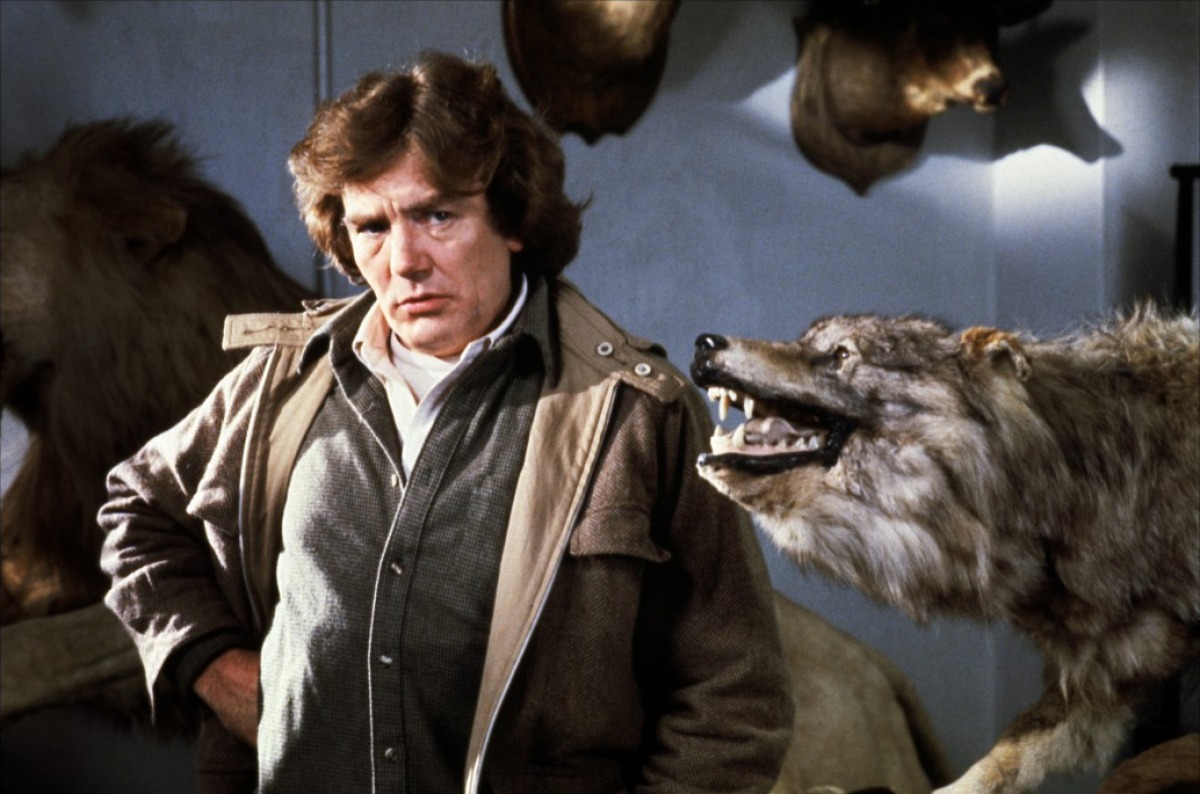
This is a mixture of gory horror, police procedural and social commentary.  While the different aspects of the film don't always hang together particularly well, it is a slick and often suspenseful monster movie.  Albert Finney is very good as the cynical rumpled detective for whom carnivorous wolf spirits are just one more story in the Naked City.  Diane Venora is good as the criminal psychologist who Wilson is partnered with, and there is good support from Gregory Hines, as Wilson's pathologist friend, Edward James Olmos, as a Native American activist, and Tom Noonan as a sinister wolf expert.  The film gets good milage out of the run-down inner city setting, and it has some really effective horror moments.  It uses a kind of electronic effect to depict the point of view of the Wolfen, which is slightly overused but effective, and also features a few too many fake scares where a character is startled only for them (and the audience) to realise that it's nothing.  The Wolfen themselves are kept mostly off screen only appearing fully towards the end of the film.  The explanation as to what the Wolfen actually are (a kind of Native American animal spirit) is muddled, particularly at the end.  While the Wolfen aren't strictly speaking werewolves, they are lycanthropic enough for the film to be lumped in with the other, better known, werewolf movies released at the time, namely The Howling (1981) and An American Werewolf in London (1981), both of which were more successful at the Box Office.  Despite its flaws, Wolfen is consistently suspenseful, and intriguing, the police procedural elements and the New York setting are effective, and the script has a welcome vein of cynical, hard-boiled humour.  The plot is intelligent, and while the different themes don't always hang together, the film deserves credit for trying to do something different with some well-worn tropes. 


Albert Finney and furry friend in Wolfen


Saturday, 22 July 2023

She Said

 Year:  2022

Director:  Maria Schrader

Screenplay:  Rebecca Lenkiewicz, based on the book She Said by Jodi Kantor and Megan Twohey

Starring:  Carey Mulligan, Zoe Kazan, Patricia Clarkson, Andre Braugher, Jennifer Ehle, Samantha Morton, Ashley Judd

Running Time:  129 minutes

Genre:  Drama


In 2017, New York Times journalists Jodi Kantor (Kazan) and Megan Twohey (Mulligan) investigate allegations by actresses Rose McGowan, Gwyneth Paltrow and Ashley Judd against powerful film producer Harvey Weinstein.  As they investigate the claims, Kantor and Twohey uncover a history of abuse by Weinstein stretching back decades, against numerous women.

When allegations against film producer Harvey Weinstein, co-founder and one time head of Miramax Films, with his brother Bob Weinstein, and later co-head of The Weinstein Company, first hit the headlines in late 2017 it had a seismic impact not just in Hollywood but around the world, helping to ignite the #MeToo movement against sexual abuse and harassment.  Megan Twohey and Jodi Kantor, who investigated and reported on the claims for The New York Times, detailed their investigation in the 2019 book She Said.  The world of journalism has always provided a rich source for filmmakers, and the film certainly echoes the classics of the genre, such as All the President's Men (1973) and Spotlight (2015).   However, the film moves away from the some of the cliches of boozy, chain-smoking, fast-talking men, barreling down corridors, shouting, instead the journalists are depicted as hard-working, dedicated, professionals who have full lives outside the newsroom, and we see both Kantor and Twohey at home with their respective young families, and Twohey's struggle with postpartum depression, having recently given birth.  Carey Mulligan and Zoe Kazan both give strong, empathic performances in the lead roles, and Samantha Morton and Jennifer Ehle give powerful performances as two of Weinstein's victims.  With such a recent, high profile and important case, filmmakers have to perform a very delicate balancing act, between creating a compelling piece of drama, while more importantly not exploiting, or sensationalising the horrific crimes.  The film mostly plays as a docudrama and, wisely, the decision is made not to centre Weinstein, who is only glimpsed once in the film, towards the end and only seen from behind amidst a huddle of people striding through the New York Times building.  Mike Houston provides Weinstein's voice on the phone rasping insults and threats to the journalists.  Weinstein's crimes are not dramatised.  Instead we have victims giving their accounts over images of empty hallways and dishevelled hotel rooms.    At one point a recording of voice recording of Weinstein harassing and threatening Ambra Gutierrez is played.  The film's main issue is that the story is so recent, and has been so well-covered, that most viewers will already be familiar with it all.  However, even while the story may be familiar, and the pacing is sometimes uneven, this is a compassionate and gripping film.  


Zoe Kazan and Carey Mulligan in She Said

Wednesday, 28 June 2023

The Killing of a Chinese Bookie

 Year:  1976

Director:  John Cassavetes

Screenplay:  John Cassavetes

Starring:  Ben Gazzara, Timothy Agoglia Carey, Seymour Cassel, Azizi Johari

Running Time:  135 minutes (cut to 109 minutes)

Genre:  Drama, thriller

Cosmo Vittelli (Gazzara) owns and operates the sleazy, failing nightclub Crazy Horse West in Los Angeles.  To make matters worse Cosmo owes a large gambling debt to the Mob.  The gangsters order Cosmo to kill a bookmaker, Harold Ling (Soto Joe Hugh).  After some less than gentle persuasion, Cosmo reluctantly accepts his task, but soon finds the hit is much more complex than he had expected.

Writer, director and actor John Cassavetes appeared as an actor in a number of big Hollywood movies such as The Dirty Dozen (1967), for which he received an Academy Award nomination for Best Supporting Actor, and most notably a starring role as Mia Farrow's traitorous husband in Rosemary's Baby (1968).  However, he is most influential as a writer and director, and his echo is still felt today in the world of Independent Cinema.  Despite its seemingly conventional thriller plot, in terms of style and approach, The Killing of a Chinese Bookie is anything but conventional.  More a character study than a thriller, the film focuses on the dilemmas and pressures of Cosmo Vittelli, a man whose entire world is this sleazy club, and who puts all of the money he earns back into the club, as well as spending a lot of time and effort writing and directing the cheesy cabaret acts, hosted by the club compere "Mr. Sophistication" (Meade Roberts), even though he knows that the audience only care about seeing naked women.  He also has a severe gambling problem.  To celebrate making his last payment on a previous debt to a loan shark, he immediately goes out on a night on the town and ends up losing everything on poker.  Ben Gazzara, who saw Vittelli as a kind coded version of Cassavetes himself, gives a great performance, giving Vittelli a kind of down-at-heels charm, and a cocktail of hope and despair.  As is common with Cassavetes' work, the film has a loose, documentary style look, filmed guerrilla-style on the streets and in nightclubs, restaurants and homes.  The performances, which include Cassavetes regular Seymour Cassel and veteran gangster movie actor Timothy Carey, have a naturalistic, improvised feel about them.  The film was originally released in 1976 with a running time of 135 minutes, and immediately tanked at the box office, being withdrawn from general release after a week, with even Gazzara stating that it "was too long".  Cassavetes re-released the film in 1978 in a much shortened version of 109 minutes, with scenes drastically rearranged and some new footage.  For a long time this was the only version available, but in 2004 the 109 minute and 135 minute versions were released on DVD, so now you can watch both, should you care to.

The eagle-eyed viewer may notice a familiar face in some of the crowd scenes.  David Bowie sat in on much of the filming, just to watch Cassavetes at work, although he was not involved in the film.  However he can be glimpsed in the audience during some of the nightclub scenes.


Ben Gazzara in The Killing of a Chinese Bookie


Tuesday, 11 April 2023

Cold Light of Day

 Year:  1989

Director:  Fhiona Louise

Screenplay:  Fhiona Louise

Starring:  Bob Flag, Martin Byrne-Quinn, Geoffrey Greenhill, Mark Hawkins, Andrew Edmands, Claire King

Running Time:  81 minutes

Genre:  drama, true crime, horror


In a police interview room, unassuming middle-aged civil servant Jordan Marsh (Flag) is interrogated about a series of murders, which are depicted through a series of flashbacks.


True crime is a perennially popular genre in all kinds of media.  This film is based on the true story of serial killer Dennis Nilsen.  Sometimes dubbed "The British Jeffrey Dahmer", Nilsen murdered at least twelve young men and boys between December 1978 and January 1983.  His crimes were discovered in February 1983 when some human remains were found to be blocking drains in the building where Nilsen lived in an attic flat.  While this is not as good as the three part miniseries Des (2020) which starred David Tennant as Nilsen, this low-budget, low key drama is fairly effective in its own right.  Here Dennis Nilsen is called Jordan March and played by Bob Flag, who is probably best known as the face of Big Brother in 1984 (1984).  Saddled with a terrible wig, Flag gives a striking performance as the repellant Marsh, alternately arrogant, petulantly angry or cringing under his increasingly aggressive police interrogation.  Marsh however does have some moments of kindness, when he helps an elderly downstairs neighbour.  Written and directed by Fhiona Louise, who at the time was a 21 year old drama student, the film suffers from a very low budget, it's technically very crude, the performances are variable, sometimes the sound is hard to hear particularly under the loud soundtrack of pulsating breathing and tolling bells.  There are several flashbacks to Marsh's rural childhood and the death of his beloved grandfather (where his mother tells him that his grandfather is "just sleeping").  Even though it is short, the film seems to move at a snail's pace, and everything is bleak, depressing and grimy - which may be the best approach for a film about a serial killer.  There is stuff to admire here, but very little to really like.  


Bob Flag in Cold Light of Day


Saturday, 25 February 2023

A Streetcar Named Desire

 Year:  1951

Director:  Elia Kazan

Screenplay:  Tennessee Williams, Elia Kazan and Oscar Saul, based on the play A Streetcar Named Desire by Tennessee Williams

Starring:  Vivien Leigh, Marlon Brando, Kim Hunter, Karl Malden

Running Time:  125 minutes

Genre:  Drama


Faded Southern belle Blanche DuBois (Leigh) leaves her hometown under a cloud and arrives at the home of her sister Stella (Hunter) and brother-in-law Stanley (Brando), in a rundown tenement in the French Quarter of New Orleans.  Under pressure from the brutal Stanley, Blanche begins a slow descent into insanity.


This is the best known of several screen adaptations of Tennessee Williams' Pulitzer Prize winning 1947 play.  Retaining most of the cast of the original Broadway play, with the exception of Jessica Tandy, who played Blanche on Broadway, and was replaced in the film by Vivien Leigh, because the studio wanted a bigger name.  Vivien Leigh, in an Oscar winning performance, is fantastic as the brittle Blanche, clinging to the past, with her affected gentility and manners and shunning the light to mask her true age.  The film however belongs to Marlon Brando as Stanley Kowalski, a controlling, suspicious, violent man, who buses his wife Stella and treats Blanche with varying degrees of contempt, suspicion and violence.  Blanche often refers to Stanley as an "ape" and Brando has an animalistic quality in his performance, while Blanche wants to escape into a world of dreams and magic, Stanley is all ferocious physicality and violent sexual energy.  There is almost. strange vulnerability to him at times, such as in the film's most famous scene, where Stella leaves him and goes to the flat upstairs and Stanley stands at the bottom of the staircase, his tee-shirt torn to shreds, bellowing her name over and over again, like a wounded animal, falling to his knees as she appears and slowly walks down to him.  Kim Hunter is good as Stella torn between the love of and fear for her sister and the love of and fear of her husband.  While Blanche wanted to retain the faded dreams of youth, she went for the more physical charms of Stanley Kowalski and her own nightmare.  Karl Malden plays Stanley's poker buddy Mitch who falls for Blanche.  Mitch is a very different type of man to Stanley, seemingly more sensitive and intelligent, and yet just as capable of cruelty.  Stylishly directed by Elia Kazan, the film has a fecund, overheated quality, in fact the heat seems to radiate from the screen, the actors all seemingly drenched in sweat, and the sultry jazz score by Alex North.  This is one of the greatest of all American films.


Vivien Leigh and Marlon Brando take A Streetcar Named Desire

Wednesday, 22 February 2023

Women Talking

Year:  2022

Director:  Sarah Polley

Screenplay:  Sarah Polley, based on the novel Women Talking by Miriam Toews

Starring:  Rooney Mara, Claire Foy, Jessie Buckley, Judith Ivey, Ben Whishaw, Frances McDormand

Running Time:  104 minutes 

Genre:  Drama


In an isolated Mennonite colony women are drugged and raped over a period of years.  Their claims are dismissed by the colony's authorities as either supernatural attacks or "wild female imagination".  Until, that is one of the attackers is caught, and he promptly names the others.  The attackers are arrested and taken to the nearest city to stand trial.  The other men of the colony accompany them in order to pay their bail.  The colony elders order the women to forgive their attackers by the time they return in two days or be banished from the colony.  Left alone, the women debate how to proceed:  Should they stay and obey their orders?  Stay and fight the men?  Or leave and found a new colony?


Based on the 2018 novel by Miriam Toews, which itself was based on a real life incident that occurred in a Mennonite colony in Bolivia.  The film doesn't focus on the attacks, instead it focuses on the women's response, and most of the film is the debate on how they should proceed.  In fact men are more or less entirely absent from the film with the notable exception of August (played by Ben Whishaw), the gentle schoolteacher who was educated away from the colony, and takes the minutes of the meetings, because none of the women have been taught how to read and write.  In the novel he narrates the story, but in the film the voice-over narrator is the yet unborn daughter of one of the women. The other exception is Melvin (played by August Winter) a transgender man who was raped and refuses to speak except to the youngest children who he cares for while the women are debating.  However men and male violence is the spectre that haunts the entire film.  The women live in an extremely patriarchal society where they are completely subservient to the men.  The film doesn't really come down against the Mennonite way of life, none of the women want to abandon their faith they just want to interpret it in a better and more fair way.  The film has a muted, washed out colour scheme, that evokes old photographs from the 19th century.  It is briefly mentioned that the year is 2010, but the only vision of modernity is a census taker driving through the colony in an old truck, with a loudspeaker on the roof playing the song "Daydream Believer".  The film boasts excellent performances, particularly from Rooney Mara, Claire Foy, Jessie Buckley and Ben Whishaw.  This is a great film, wonderfully directed by Sarah Polley, who keeps the drama tight and intense, but provides enough brief glimpses of the world away from the meetings, so it doesn't feel to claustrophobic, and also lets up the tension with some flashes of mordant humour.  It's a moving and powerful piece of quiet rebellion.


Women Talking

Thursday, 9 February 2023

The Swimmer

Year:  1968

Director:  Frank Perry

Screenplay:   Eleanor Perry, based on the short story by "The Swimmer" by John Cheever

Starring:  Burt Lancaster, Janet Landgard, Janice Rule

Running Time:  95 minutes

Genre:  Drama 


Middle-aged businessman Ned Merrill (Lancaster) is visiting with some friends when he gets the idea to swim home, using the outdoor swimming pools of his neighbours as a makeshift "river".  As his journey progresses his interactions with his neighbours, become increasingly strained and confrontational, as it appears that they know troubling things about himself and his family that Ned either can't, or won't, remember.

Based on an acclaimed short story by John Cheever, which was first published in The New Yorker in 1964, this surreal film, did not do well on it's original release, and yet it's reputation has grown, and it has come to be seen as something of a cult film.  The film starts on a bright, sunny summer afternoon, with Ned Merrill, a fit, middle-aged man emerging from the forest, wearing only a set of swimming trunks.  Merrill comes across a pool party hosted by friends, all of whom are nursing hangovers, but still knocking back the gin and martinis.  They seem surprised, but happy to see Merrill, who has apparently been away somewhere (although it is not revealed where he has been or for how long).  Looking out over the valley that houses the wealthy, suburban neighbourhood, Merrill works out that all the various swimming pools make a kind of river, that he can use to go home.  Right from the start it becomes apparent that there is some secret which his friends know, but that Merrill is seemingly oblivious to.  The journey becomes increasingly uncomfortable, as it appears from his interactions with others that Merrill is in severe personal and financial difficulties, although the nature of it is never made clear.  It also becomes apparent that Merrill's family life is not as idyllic as he claims.  As the film progresses the weather seems to change as well, becoming increasingly colder and more autumnal.  If you want to plunge in the deep end, you could read the film as being about American masculinity, the middle-class, suburban life, middle-aged disillusionment, or anything.  While the film may be too strange for some tastes, it has a strange, nightmarish power, with scenes such as Merrill's frantic dash across a busy motorway, a busy public pool becoming a wet and wild inferno, and the powerful final image packing a punch that lingers for a long time.  Burt Lancaster, who spends the entire film barefoot and clad only in swimming trunks, gives a powerful performance as a man who falls apart before our eyes, and what starts as a seeming jape becoming a grim odyssey into a suburban heart of darkness.  Lancaster subsequently rated The Swimmer as his best film.  The film boasts an impressive score by Marvin Hamlisch, and features the acting debut of comedian Joan Rivers.  


Burt Lancaster in The Swimmer
   

Tuesday, 31 January 2023

Tár

 Year:  2022

Director: Todd Field

Screenplay:  Todd Field

Starring: Cate Blanchett, Noémie Merlant, Nina Hoss, Sophie Kaur, Julian Glover, Allan Corduner, Mark Strong

Running Time:  158 minutes

Genre:  Drama

Lydia Tár (Blanchett), an acclaimed American conductor, prepares for a live recording of Mahler's Fifth Symphony with the Berlin Philharmonic Orchestra.  While living in Berlin and rehearsing the orchestra, Tár receives a series of increasingly disturbing communications from a former lover, who blames Tár for blacklisting her from various orchestras.  Meanwhile Tár becomes attracted to young Russian cellist Olga (Kaur).  However, as the pressures on Tár mount up, her personal and professional reputation is threatened by allegations of sexual impropriety.


This intense psychological drama is basically a character piece, portraying composer Lydia Tár, a driven, charismatic, talented, ruthless woman who is capable of both great kindness and extreme cruelty.  Cate Blanchett, who is on screen for pretty much the entire film, gives possibly her best ever performance.  Classical cellist Sophie Kaur plays Olga, the latest object of Tár's affections.  The film opens unconventionally, with most of what would usually be the closing credits, being placed at the beginning of the film, with only the cast and music credits at the end.  The film focuses entirely on Lydia Tár, even when she is not on screen, scenes are filmed as if from her point of view,  and she is a fascinating monster, accused of abusing her position to seduce young hopefuls with promises of plum roles in the orchestra, and cruelly vindictive to anyone who crosses her, as well as ruthlessly discarding friends, lovers and colleagues, when they are no longer of any use to her.  In Berlin she seems to lead two lives, living with her wife Sharon (played by Nina Hoss) and their adopted daughter Petra (played by Mila Bogojevic), while keeping a furnished flat which she uses for composing and rehearsals.  Despite being dominated by Cate Blanchett's performance, the rest of the cast are all excellent.  Staring as an actor, with roles in films by Woody Allen and Stanley Kubrick among others, this is only writer/director Todd Field's third film as a director and his first in 15 years.  Slow-moving, with a stylish, almost documentary style look, contrasted with surreal dream sequences, and an increasingly fragmented editing style, matching Lydia Tár's increasingly disintegrating sense of reality.  This is a great film.


Cate Blanchett in Tár


Saturday, 10 December 2022

Funeral Parade of Roses

 Year:  1969

Director:  Toshio Matsumoto

Screenplay:  Toshio Matsumoto

Starring:  Peter (Shinnosuke Ikehata), Osamu Ogasawara, Yoshio Tsuchiya, Emiko Azuma

Running Time: 105 minutes

Genre:  Drama


Eddie (Peter), a young transgender woman living in Tokyo, works in a gay bar called the Genet, where she is having a relationship with the bar's owner (Tsuchiya), who is already living with and in a relationship with the bar's "madame", Leda (Ogasawara).

This film is essentially an updated, gay take on the Ancient Greek tragedy Oedipus Rex by Sophocles.  The movie is a fragmented, kaleidoscopic range of cinematic techniques and storytelling styles.  The narrative flashes back and forth in time, cuts in news footage, skewed camera angles, on-screen captions, fast editing, and in one sequence dialogue is shown in comic-style speech bubbles.  There are also documentary style sequences throughout where the actors are interviewed as themselves about the film they are making and about their lives, gender identity and sexuality.  The soundtrack moves from classical music, '60s pop and updated versions of traditional Western music.  The famous tune "The More We Get Together" is a recurring musical theme throughout the film.  The film is often frustrating, frequently baffling, sometimes very shocking and also often very funny.  The constant exuberance and invention means that it never gets boring, and there are strong performances, particularly from Peter, the stage name for singer, dancer and actor Shinnosuke Ikehata, in the lead role.  Some of the film's themes, about the political tensions as well as the Tokyo avant-garde scene of the time, don't really translate well to modern, non-Japanese audiences, but it is worth watching as a snapshot of the underground scene of late sixties Tokyo, as well as a milestone of LGBTQIA cinema.  One of the film's notable fans was director Stanley Kubrick, who credited the film as one of his stylistic inspirations for A Clockwork Orange (1971).


Funeral Parade of Roses

Tuesday, 11 October 2022

Death in Venice

 Year:  1971

Director: Luchino Visconti

Screenplay:  Luchino Visconti and Nicola Badalucco, based on the novella Death in Venice by Thomas Mann

Starring:  Dirk Bogarde, Björn Andrésen, Mark Burns, Romolo Valli, Nora Ricci, Marisa Berenson, Carole André, Silvana Mangano

Running Time:  130 minutes

Genre:  Drama


At the dawn of the 20th Century, ailing composer Gustav von Aschendbach (Bogarde), finding his physical and mental health suffering after a disastrous concert, travels to Venice for a quiet holiday to recuperate.  In a palatial hotel on the Lido, Aschenbach notices teenager Tadzio (Andrésen) and becomes increasingly obsessed with him.  Meanwhile, Aschenbach becomes aware of rumours of an outbreak of cholera sweeping Venice.

Based on a 1912 novella by German writer Thomas Mann, this is possibly one of the best known films of celebrated Italian filmmaker Luchino Visconti.  British actor Dirk Bogarde, who previously worked with Visconti on The Damned (1969), plays fastidious German composer Gustav von Aschenbach, who is obsessed with the pursuit of ideal beauty.  Failing to find it in his music, he believes he has found it in the adolescent Tadzio.  The film is seen more or less through Aschenbach's eyes, and Tadzio is seen as an object of desire, and it is unclear as to whether Aschenbach's fixation on Tadzio is carnal or if he sees Tadzio as having the perfect beauty of a statue or painting.  The two never speak, Aschenbach stays watching Tadzio in hotel dining rooms, on the beach just outside the hotel, and takes to following Tadzio and his family through the winding streets of Venice.   The two exchange glances, but that is it.  However Aschenbach does at one point fantasise about warning Tadzio's mother, played by Silvana Mangano, of the outbreak in Venice.  The film's narrative in Venice is broken by flashback to Aschenbach's past and dreams.  Dirk Bogarde gives a great performance as Aschenbach, snapping at hotel staff and guards in a train station, discussing aesthetics with a friend, he becomes ultimately a pathetic and rather tragic figure, with his face painted white, lips painted red and hair dyed black to make himself look younger.  Bogarde manages to convey a lot without dialogue, depicting his yearning through longing looks.  The film looks beautiful with every frame carefully composed and features some beautiful images, complemented by a classical score, famously featuring Gustav Mahler's Third and Fifth Symphonies.  This is a slow, languid film, which is nevertheless surprisingly moving.  The story's premise of an adult's infatuation with an adolescent is, to put it mildly, uncomfortable and problematic, although it is a powerful work of art.  Aschenbach is a man who knows he is dying, who knows that his time has passed, alone and forgotten in the stately grandeur of a bygone age, in a place where even the air is making him feel increasingly sick, he sees in Tadzio the youth, life and beauty that he craves but that he can never have.

Björn Andrésen, who plays Tadzio, and who was 16 at the time of the film's release, has since criticised the film and the unwelcome and often predatory attention that he received during it's production and following it's release.  The Most Beautiful Boy in the World, a documentary about Andrésen, was released in 2019.


Dirk Bogarde in Death in Venice


Thursday, 6 October 2022

Scum

Year:  1979

Director:  Alan Clarke

Screenplay:  Roy Minton

Starring:  Ray Winstone, Mick Ford, Julian Ford, John Blundell, Phil Daniels, Ray Burdis, Alrick Riley

Running Time:  97 minutes

Genre:  Drama

Three teenage boys arrive at a British "borstal" (a type of youth detention centre):  Carlin (Winstone) is being transferred for assaulting an officer at his previous borstal, Angel (Riley) has been convicted of stealing cars, and Davis (Ford) escaped from an open borstal.  Once in the prison Angel suffers racist abuse from both inmates and guards, and Davis, who is perceived as weak, is also victimised.  Meanwhile Carlin is targeted by the inmates, for his tough reputation, and the guards, who want revenge for the officer he hit.  In order to survive carlin embarks on a desperate, violent struggle to become the top dog, or "daddy", in the borstal.

Scum started out as a television movie made in 1977 for the BBC's groundbreaking Play for Today series.  However, the BBC got cold feet due to the violent content and pulled it form transmission.  Prolific TV director Alan Clarke, who directed the original TV play, and writer Roy Minton decided to remake Scum as a feature film, with most of the original cast of the play returning.  Scum was intended as an indictment of a failing prison system,  Despite the fact that borstal was supposed to be more about rehabilitation than punishment, there is very little attempt at rehabilitation shown, with the staff just as cruel and brutal as the prisoners (or "trainees" as they are called).  The borstal staff are almost all depicted as brutal thugs in suits, the elderly governor is portrayed as a hypocrite who insists that "there is no violence here" despite the fact that violence is almost constant in the institution.  Even the staff who deem to genuinely want to help their charges, such as the Matron (played by Jo Kendall), the film's only female character, don't have the resources, freedom or skill to do anything,  This is a very brutal film, the filmmakers took full advantage of the greater freedom a feature film allowed them to increase the level of violence.  There is a lot of racism and homophobia, frequent violent scenes, a brutal rape scene and a very bloody suicide.  The actors are disturbingly good, particularly Ray Winstone as the film's nominal hero, and Mick Ford as the intelligent, eccentric Archer, one of the film's few likeable characters, whose deadpan humour brings a little light into the darkness.  The film is shot in an almost documentary style, with the stark, white interiors and bleak wintery landscapes outside emphasising the hopelessness of the characters.  In the years since it's release, Scum has become something of a cult film in Britain.  It's worth watching, although I would advise to approach with caution.  It's a harrowing experience.


Ray Winstone in Scum

Thursday, 28 July 2022

The Master

 Year:  2012

Director:  Paul Thomas Anderson

Screenplay:  Paul Thomas Anderson

Starring:  Joaquin Phoenix, Philip Seymour Hoffman, Amy Adams

Running Time:  137 minutes

Genre:  Drama


Freddie Quell (Phoenix), a troubled, heavy drinking World War Two veteran, finds it difficult to adjust to postwar American society.  His drinking, coupled with his violent, erratic behaviour, causes him to be fired from several jobs, as he drifts across the States.  In San Francisco, Freddie meets Lancaster Dodd (Hoffman) the founder and leader of a movement known as "The Cause", which claims to help people using a confrontational technique called "Processing".  Freddie becomes fascinated by The Cause and the charismatic Dodd, and soon becomes a devoted follower.


This complex and often bleak drama, inspired by the early years of Scientology, is a powerful and sometimes disturbing piece of work.  Joaquin Phoenix gives one of his best performances as the violent alcoholic Freddie Quell.  The lecherous, mercurial Quell is often a deeply unlikeable character, but Phoenix gives us a glimpse of the humanity at his core.  Philip Seymour Hoffman is perfectly cast the charming, garrulous Dodd.  With Hoffman you can see how someone might fall for Dodd's line.  Dodd and Quell form a kind of father-son relationship, with Dodd frequently talking to him as if he's a small child, despite the fact that Hoffman was only seven years older than Phoenix.  There are moments, however, when Dodd's genial facade slips in brief explosions of rage.  Amy Adams plays Dodd's wife, Peggy, a quiet woman, who is a true believer in Dodd and The Cause, who is a mixture of charm, calm rage and steely determination.  There are also appearances from Laura Dean, Jesse Plemons and Rami Malek.  The film is far more than just a drama about a cult, it deals with America in the late 1940s early 1950s, the need to belong and the deep human will to believe in something.   Most of all it's about the strange connection between two men who are polar opposites and yet have a strange attachment.  Even when Freddie's bad behaviour alienates almost everyone around him, Dodd still insists in bringing him back into the fold.  The film's principal weakness is that it is quite meandering, it's one of those films where the story seems to have reached a conclusion, but there is still more to come.  However, this is a small criticism, since this is a truly great film.


Joaquin Phoenix, Philip Seymour Hoffman and Rami Malek in The Master
  

Monday, 25 July 2022

5x2

Year:  2004

Director:  François Ozon

Screenplay:  François Ozon and Emmanuèle Bernheim

Starring:  Valeria Bruni Tedeschi, Stéphane Freiss

Running Time:  90 minutes

Genre:  Drama

Over the course of five episodes, the film tells the story of a married couple in reverse.  It opens with Marion (Tedeschi) and Gilles (Freiss) in a lawyer's office finalising their divorce, and then moves back to  tense dinner with Gilles' brother (Antoine Chappey) and his partner (Marc Ruchmann),   the birth of Marion and Gilles' son, their wedding and concluding with their meeting in an idyllic Spanish seaside resort.  


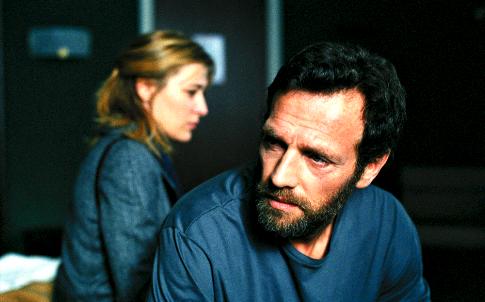
This French film, the title of which is Five Times Two in English, is a dark drama which uses a reverse chronology to chart the gradual disintegration of a marriage.  Going from the acrimonious divorce, and a shocking scene where Gilles sexually assaults Marion, to their initial holiday romance.  With the benefit of hindsight we can see how things go wrong, and where the cracks form in the relationship.    The reverse structure had been used in a couple of other films that came out in the early 2000s, most notably the thriller Memento (2000) and the controversial Irréversible (2002), but Ozon's stated inspiration was the 1986 Australian TV movie Two Friends, directed by Jane Campion, that depicted the end of a friendship in reverse.  Valeria Bruni Tedeschi and Stéphane Freiss are perfectly cast as the couple.  Ozone directs with style and the script is clever and witty.  There is s lot to admire in the film, however I would proceed with caution, it's very bleak.  For one thing this is arguably one of the least romantic films ever made.  Every couple in the film is miserable and/or doomed.  It's not a film for Date Night.  If you are single however, this might make you feel a bit better about it.


Valeria Bruni Tedeschi and Stéphane Freiss in 5x2

Wednesday, 22 June 2022

As Good as It Gets

 Year:  1998

Director:  James L. Brooks

Screenplay:  Mark Andrus and James L. Brooks

Starring:  Jack Nicholson, Helen Hunt, Greg Kinnear, Cuba Gooding Jr., Skeet Ulrich, Shirley Knight

Running Time:  139 minutes

Genre:  Romantic comedy, drama

New York City:  Best-selling romance novelist Melvin Udall (Nicholson) is bigoted, misanthropic and suffers from obsessive compulsive disorder.  Every day he eats lunch at the same Manhattan restaurant where he insists on sitting at the table and being served by the same server, Carole Connelly (Hunt), the only one who can tolerate his obnoxious behaviour.  Carole herself is struggling to make ends meet while caring for her ill son.  When Melvin's neighbour, gay artist Simon (Kinnear) is beaten and robbed in his apartment, Melvin is pressured into caring for his pet dog while Simon is in hospital, despite the fact that Melvin frequently bullies Simon and hates the dog.  However, Melvin and the dog end up bonding, and, in spite of himself, he finds himself increasingly drawn into the lives of the people around him.


This is an enjoyable, romantic comedy-drama, in the Woody Allen mould, which doesn't really break much new ground.  Jack Nicholson is ideal as the grouchy, offensive Melvin.  Helen Hunt, who at the time was probably best known for the sitcom Mad About You (1994-1999), won an Academy Award for Best Actress for her role as Carole, and she has real spark as the troubled, but loving Carole who is able to find some kind of humanity in Melvin.  Greg Kinnear is good as the sensitive artist, Simon, who becomes something of a tragic character as his life collapses following his attack.  The film is often uneven in tone, being really quite dark in places, which sometimes sits uneasily with the more broadly comic scenes, and sentiment.  It's also too long, with a running time of two hours and twenty minutes, and the conclusion seems very unlikely.  However, the characters are engaging, and there are some great performances and it's often very funny.  There is nothing new here, but it is an engaging and ultimately warm film, although you kind of wonder how happy the characters will be in the long term.  Also, Melvin is so obnoxious and offensive for most of the film it may be hard for some viewers to warm to him at all, even if he's ultimately shown to be warm hearted softy.  


Jack Nicholson in As Good as It Gets

Wednesday, 15 June 2022

Masculin Féminin

 Year:  1966

Director:  Jean-Luc Godard

Screenplay:  Jean-Luc Godard

Starring:  Jean-Pierre Léaud, Chantal Goya, Marlène Jobert, Michel Debord, Catherine-Isabelle Duport

Running Time:  104 minutes

Genre:  Drama

Paris, the mid 1960s:  Paul (Léaud), an idealistic political activist, falls for pop singer Madeleine (Goya), and the two start up a complex relationship, which includes Madeleine's two roommates: Catherine (Duport) and Elisabeth (Jobert), against the turbulent backdrop of Parisian politics and youth culture.


Jean-Luc Godard was one of the leading lights of the French nouvelle vague (New Wave) and became something of an art-house darling throughout the 1960s, until his films became increasingly inaccessible, experimental and political.  Masculin Féminin (or, to give it it's full title, Masculin féminin: 15 faits précis which translates as Masculine Feminine: 15 Specific Events) was made at the time when Godard was increasingly interested in making more political films, while still retaining some of the humour and verve of his earlier work.  Jean-Pierre Léaud was quite a star in France having appeared in François Truffaut's long running series of semi-autobiographical films about the character Antoine Doinel, which began with The 400 Blows (1959).  Chantal Goya, who plays singer Madeleine, was a model turned successful yé-yé singer (yé-yé music was a kind of light catchy pop music that was popular in France in the 1960s).  This was Goya's first film and she wasn't an actress, but Godard who had seen her perform on a TV show deliberately wanted someone who was "untrained" and more naturalistic.  As frequently happens in Godard the film uses a lot of unconventional techniques, including interspersing the main action of the film with captions on title cards (including the film's most famous quote: "THE CHILDREN OF MARX AND COCA-COLA"), and almost documentary style footage, including a long and slightly creepy sequence in which a model is brusquely interrogated about politics by an unseen interviewer.  Godard intended the film to reflect the lives of young people in Paris, although he doesn't seem to even the slightest liking or sympathy for them.  The male characters spout off long speeches on Marxist philosophy at any opportunity, although they seem more interested in hitting on girls than a revolution, the female characters only seem to care about music, shopping and their hair.  Godard was angry when the film was ruled unsuitable for anyone under the age of 18 when it was first released, commenting that they are not letting young people see the film because it's "about them".   However, in a sign of the changing times, the film is now rated "12" in the UK (the equivalent of the American "PG-13").  It's not one of Godard's best films, but it is inventive enough and the cast have enough charisma to hold the interest.  


The children of Marx and Coca-Cola: Jean-Pierre Léaud, Chantal Goya and Marlène Jobert in Masculin Féminin

Tuesday, 14 June 2022

Top Gun: Maverick

Year:  2022

Director:  Joseph Kosinski

Screenplay:  Ehren Kruger, Eric Warren Singer and Christopher McQuarrie, from a story by Peter Craig and Justin Marks

Starring:  Tom Cruise, Miles Teller, Jennifer Connelly, Jon Hamm, Glen Powell, Lewis Pullman, Ed Harris, Val Kilmer

Running Time:  131 minutes

Genre:  Action, drama


US Navy test pilot, Captain Pete "Maverick" Mitchell (Cruise) is ordered to return to the elite fighter training school known as "Top Gun" train some of the best Top Gun graduates for a seemingly impossible mission.  To complicate matters, one of Maverick's students, Bradley "Rooster" Bradshaw (Teller), is the son of Maverick's former co-pilot and close friend Goose, who was killed in an accident during their time at Top Gun in the 1980s.


Top Gun (1986) is possibly one of the most beloved films of the 1980s, and it is extremely risky to return to such a popular film over thirty years later.  Top Gun: Maverick opens with a virtually shot-for-shot remake of the opening of the original Top Gun, the same music, the same opening text explaining what Top Gun is, the same scenes of fighter jets lifting off of aircraft carriers to the strains of Kenny Loggins' "Danger Zone" and even the same typeface for the credits.  After this, Top Gun: Maverick settles down to it's own thing, while still delivering enough call backs and references to the original to satisfy nostalgic '80s kids. Maverick follows the same basic plot structure as the original but, in the original, the goal for the pilots is to win the Top Gun Trophy, in this film the goal is to complete this almost impossible mission and return alive, immediately raising the stakes.  While the first Top Gun is bookended by aerial scraps against the enemy (who are not identified in either film, but you can probably guess who they are supposed to be) they almost seem like add ons to provide some drama and action.  In both films the enemy pilots are completely dehumanised, rendered faceless by the black visors and full face masks.  Tom Cruise, reprising his star making role, does what he does best, with his mega-watt smile and movie star charisma undimmed despite the passage of years.  Miles Teller is good as Rooster, the son of Maverick's best friend Goose, who dies in the first film.  Rooster hates Maverick, blaming him not only for his father's death, but also for apparently sabotaging his career.  Jennifer Connelly does what she can with a fairly underwritten role as bar-owner Penny, Maverick's love interest.  As with the first film, women don't have much to do, however at least here there are a couple of female pilots.  The film is tense, and has some real excitement in the aviation sequences.  It has humour, drama and some emotion.  While the film is as pro-military as the first, and will doubtless cause applications to the US Navy to climb higher and faster than one of Maverick's jets, it is most of all a perfect example of a real summer blockbuster.


Tom Cruise in Top Gun: Maverick


Wednesday, 25 May 2022

Bringing Out the Dead

 Year:  1999

Director:  Martin Scorsese

Screenplay:  Paul Schrader, based on the novel Bringing Out the Dead by Joe Connelly

Starring:  Nicolas Cage, Patricia Arquette, John Goodman, Ving Rhames, Tom Sizemore

Running Time:  121 minutes

Genre:  Drama


New York City, the early 1990s:  Burned-out paramedic Frank Pierce (Cage) works the night shift.  Depressed, unable to sleep, and wracked with guilt for those he has not been able to save, Frank begins to hallucinate the patients he has lost.  After responding to a call about a man suffering cardiac arrest, Frank forms a tentative friendship with the man's daughter Mary (Arquette).


On it's release in 1999, this bleak urban drama was seen as a follow-up to Taxi Driver (1976), another collaboration between director Martin Scorsese and screenwriter Paul Schrader.  Both films tell the stories of nocturnal workers in a hellish urban environment, and have strong themes of guilt and redemption.  However, while Robert De Niro, as Travis Bickle in Taxi Driver, finds his salvation in violence, Frank Pierce is essentially a compassionate man, trying to do the right thing in a broken, fallen world.  The film take place over the course of a weekends Frank and his fellow paramedics make the rounds tending to the sick and wounded of night-time New York, and delivering them to the overcrowded, understaffed and under equipped hospital.  Nicolas Cage gives one of his best performances as the haunted Frank Pierce, deathly pale, with sunken red-rimmed eyes, he looks like someone who hasn't slept in weeks, his slow drawl fitting Frank's laconic narration, and even the scenes where Cage delivers some of his more trademark over the top moments, it fits with Frank's mania at that point in the film.  Patricia Arquette delivers a quietly powerful performance as compassionate drug addict Mary, who becomes Frank's angel of mercy.  Sharing Frank's season in hell are Larry (John Goodman), Frank's friend,  Marcus (Ving Rhames), an eccentric devoutly religious paramedic who enjoys flirting with the dispatcher and organises a prayer circle among clubbers while he and Frank try and save an overdose victim; and Tom (Tom Sizemore), a wild paramedic who enjoys beating people up when he's bored.  This is a violent, and dark film, which is sometimes hard to watch and often disturbing, but it is visually impressive, with the fast cutting between flashing ambulance lights, and the camera tearing down the streets of New York, it's also very funny, albeit with humour of the darkest variety, such as Frank begging his boss to fire him at the start ion every shift, and some surprisingly surreal imagery.  It is a tough watch, and failed at the box office when it was released, but it is one of Scorsese's most powerful and underrated works.


Nicolas Cage in Bringing Out the Dead