Showing posts with label thriller. Show all posts

Saturday, 13 April 2024

Duel

Year:  1971

Director:  Steven Spielberg

Screenplay:  Richard Matheson, based on the short story Duel by Richard Matheson 

Starring:  Dennis Weaver

Running Time:  90 minutes

Genre:  Action, thriller


Middle aged travelling salesman David Mann (Weaver) sets off on a long drive through rural California to meet a client, but the uneventful journey soon turns into a desperate battle for survival when Mann finds himself involved in a deadly cat-and-mouse game with a deranged truck driver (Carey Loftin).

Originally made as a television "Movie of the Week", this film is possibly most notable as the feature film debut from director Steven Spielberg, who at the time only had a few episodes of television shows under his belt, including episodes of Night Gallery and an episode of Columbo.  The original 74 minute TV movie was so successful with critics and audiences that the studio allowed Spielberg to shoot extra footage to increase the running time for a theatrical release.  Aside from several brief encounters with people he meets on his journey, the film almost entirely focusses solely on Mann.  The truck driver is almost entirely unseen, and never seen in full.  A couple of times we see a beefy forearm cocked out of the window, his hands on the steering wheel, and his booted feet, but that's all we see of the driver.  The antagonist becomes the huge, menacing truck itself, with its dirty windows, bellowing air horn and belching black fumes, like a vast mechanical dragon.  Aside from the anonymity of Mann's attacker, the randomness of the pursuit itself is scary, with Mann seemingly targeted for no reason.  Throughout the film, Mann seems almost painfully out of place, during the opening credits we travel from the comfortable suburbs, into the Californian deserts, and even when he is not in danger, Mann, in his suit and tie, seems to be uncomfortable in the blue-collar diners and truck stops where he finds himself.  In an early scene, he telephones his wife (Jacqueline Scott), providing the only glimpse we have of his home life, and she criticises him for not standing up for her against an offensive colleague of his at a party the previous night.  Ultimately, Mann has to shed his veneer of suburban civilisation to find a more primal survival instinct, if he is to defeat his enemy.  While the film doesn't entirely keep up its momentum throughout its entire running time, it is still a gripping suspense film, with plenty of excitement and a thrilling climax.


Keep on truckin':  Dennis Weaver in Duel

Saturday, 30 September 2023

Lost Highway

 Year:  1997

Director:  David Lynch

Screenplay:  David Lynch and Barry Gifford

Starring:  Bill Pullman, Patricia Arquette, Balthazar Getty, Robert Blake, Natasha Gregson Wagner, Gary Busey, Robert Loggia

Running Time:  135 minutes

Genre:  Thriller, drama, horror

Jazz saxophonist Fred Madison (Pullman) and his wife Renee (Arquette) are disturbed to receive a series of mysterious VHS tapes of their large Los Angeles house.  Fred is convicted of Renee's murder, and sentenced to death.  In his jail cell, Fred transforms into Pete Dayton (Getty), a mechanic who has seemingly no connection to Fred.  The authorities release Pete, who comes under the influence of violent gangster Mister Eddy (Loggia), and finds himself drawn to Eddy's moll, Alice (Arquette again).

David Lynch saw in the 1990s on a critical and commercial high, with his cult TV series Twin Peaks (1989-1991, 2017) at the peak (no pun intended) of it's success, and his film Wild at Heart (1990) winning the Palme d'Or at the Cannes Film Festival.  However, Twin Peaks came to an end and Wild at Heart received mixed reviews and underperformed at the US Box Office.  Lynch's next film, Twin Peaks: Fire Walk With Me (1992), seemed like a guaranteed hit, however, the film, which leaned heavily into all the darkness, violence and weirdness that he was unable to put on mainstream TV in the early '90s baffled and dismayed both fans and critics, and was a commercial disappointment (except in Japan where it was a smash hit).   

The five years between Fire Walk With Me and Lost Highway were the longest gap between film projects of Lynch's career to that date.  Lynch's inspiration came from coming across the term "lost highway" in Barry Gifford's book Night People (1992), and also the O. J. Simpson murder case.  Lynch, who knew Gifford after adapting his novel Wild at Heart, teamed up with the author to work on the film's screenplay.  The film is a "2 A. M." movie.  Whatever time of the day or night you put it on, it feels like it is two o'clock in the morning.  That kind of night time delirium, where the world feels like it made of shadows and ghosts.  Lost Highway does not offer up its secrets easily or willingly, working as it does with a kind of dream logic.  Among the cast, Robert Blake, who would be accused of murder in 2001, although he was acquitted, is genuinely terrifying as the "Mystery Man", dressed in black, with slicked back, black hair, white makeup and black lips and eyes.  Patricia Arquette appears as the mysterious woman in both Fred and Pete's lives (although as Renee she has dark hair, and as Alice she is blonde), who may in fact be the same person, or may not be.  Gary Busey appears as Pete's dad, and Richard Pryor has a cameo as Pete's boss.  Robert Loggia plays the seemingly affable but threatening gangster, in one of the film's standout scenes, he violently attacks a tailgating driver, yelling lessons on road safety while savagely pistol-whipping the man, in a scene that could have come from a Quentin Tarantino film.  Lynch regular Jack Nance appears in a small role as Pete's coworker, however Nance died before the film was released, following injuries sustained in a brawl outside a donut shop.

The film's baffling narrative, surrealism and graphic sex and violence, put off many viewers and critics.  However, it has its own beauty.  Lynch is a master at using sound and visuals, and this is a film that benefits hugely from being seen with the best possible screen and sound system.  Lynch started out as a painter, and the film has some beautifully composed shots, and a complex sound design, ranging from sinister low rumbling, and quiet whispering, to loud industrial rock from the likes of Marilyn Manson and the Nine Inch Nails.  If some of Lynch's films are dreams wrapped in nightmares, this is like a nightmare in hell with dreams of heaven.


  Patricia Arquette and Bill Pullman in Lost Highway


Saturday, 2 September 2023

The Big Heat

 Year:   1953

Director:  Fritz Lang

Screenplay:  William P. McGivern, based on the novel The Big Heat by William P. McGivern

Starring:  Glenn Ford, Gloria Grahame, Jocelyn Brando, Alexander Scourby, Lee Marvin

Running Time:  90 minutes

Genre:  Thriller

While investigating the apparent suicide of a police officer, detective Sergeant Dave Bannion (Ford) finds himself pitted against a powerful crime syndicate that effectively owns the city including the police department.  When Bannion's wife is killed by a bomb that was intended for him, his pursuit for justice becomes a quest for vengeance.

This is a powerful slice of film noir from legendary director Fritz Lang, who began with such ground-breaking films as Metropolis (1926) and M (1931) before moving to America where he specialised in bleak crime dramas.  Beginning as a serial in the Saturday Evening Post by writer William P. McGivern, who subsequently published the story as a novel and wrote the screenplay for the film, the tale is tense and exciting, with often darkly witty, hard-boiled dialogue.  Beginning as a square jawed heroic tough guy, and devoted family man, Glenn Ford's Dave Bannion devolves into an obsessive antihero increasingly consumed by his desire for vengeance.  Gloria Grahame is impressive as the gangster's moll who becomes consumed with her own quest for vengeance as well as offering salvation of a kind for the tormented Bannion.  Jocelyn Brando, the older sister of Marlon Brando, doesn't really get to make much of an impression as the devoted wife before she gets blown up.  The film is surprisingly violent for the time, in particular the notorious scene where Lee Marvin throws boiling coffee in Gloria Grahame's face.


Gloria Grahame and Glenn Ford in The Big Heat

Wednesday, 28 June 2023

The Killing of a Chinese Bookie

 Year:  1976

Director:  John Cassavetes

Screenplay:  John Cassavetes

Starring:  Ben Gazzara, Timothy Agoglia Carey, Seymour Cassel, Azizi Johari

Running Time:  135 minutes (cut to 109 minutes)

Genre:  Drama, thriller

Cosmo Vittelli (Gazzara) owns and operates the sleazy, failing nightclub Crazy Horse West in Los Angeles.  To make matters worse Cosmo owes a large gambling debt to the Mob.  The gangsters order Cosmo to kill a bookmaker, Harold Ling (Soto Joe Hugh).  After some less than gentle persuasion, Cosmo reluctantly accepts his task, but soon finds the hit is much more complex than he had expected.

Writer, director and actor John Cassavetes appeared as an actor in a number of big Hollywood movies such as The Dirty Dozen (1967), for which he received an Academy Award nomination for Best Supporting Actor, and most notably a starring role as Mia Farrow's traitorous husband in Rosemary's Baby (1968).  However, he is most influential as a writer and director, and his echo is still felt today in the world of Independent Cinema.  Despite its seemingly conventional thriller plot, in terms of style and approach, The Killing of a Chinese Bookie is anything but conventional.  More a character study than a thriller, the film focuses on the dilemmas and pressures of Cosmo Vittelli, a man whose entire world is this sleazy club, and who puts all of the money he earns back into the club, as well as spending a lot of time and effort writing and directing the cheesy cabaret acts, hosted by the club compere "Mr. Sophistication" (Meade Roberts), even though he knows that the audience only care about seeing naked women.  He also has a severe gambling problem.  To celebrate making his last payment on a previous debt to a loan shark, he immediately goes out on a night on the town and ends up losing everything on poker.  Ben Gazzara, who saw Vittelli as a kind coded version of Cassavetes himself, gives a great performance, giving Vittelli a kind of down-at-heels charm, and a cocktail of hope and despair.  As is common with Cassavetes' work, the film has a loose, documentary style look, filmed guerrilla-style on the streets and in nightclubs, restaurants and homes.  The performances, which include Cassavetes regular Seymour Cassel and veteran gangster movie actor Timothy Carey, have a naturalistic, improvised feel about them.  The film was originally released in 1976 with a running time of 135 minutes, and immediately tanked at the box office, being withdrawn from general release after a week, with even Gazzara stating that it "was too long".  Cassavetes re-released the film in 1978 in a much shortened version of 109 minutes, with scenes drastically rearranged and some new footage.  For a long time this was the only version available, but in 2004 the 109 minute and 135 minute versions were released on DVD, so now you can watch both, should you care to.

The eagle-eyed viewer may notice a familiar face in some of the crowd scenes.  David Bowie sat in on much of the filming, just to watch Cassavetes at work, although he was not involved in the film.  However he can be glimpsed in the audience during some of the nightclub scenes.


Ben Gazzara in The Killing of a Chinese Bookie


Saturday, 22 April 2023

Searching

Year:  2018

Director:  Aneesh Chaganty

Screenplay:  Aneesh Chaganty and Sev Ohanian

Starring:  John Cho, Debra Messing, Michelle La, Sara Sohn, Joseph Lee, Steven Michael Eich

Genre:  Thriller

Running Time:  102 minutes


San Jose, California:  David Kim (Cho) desperately searches for his missing 16 year old daughter, Margot (La).


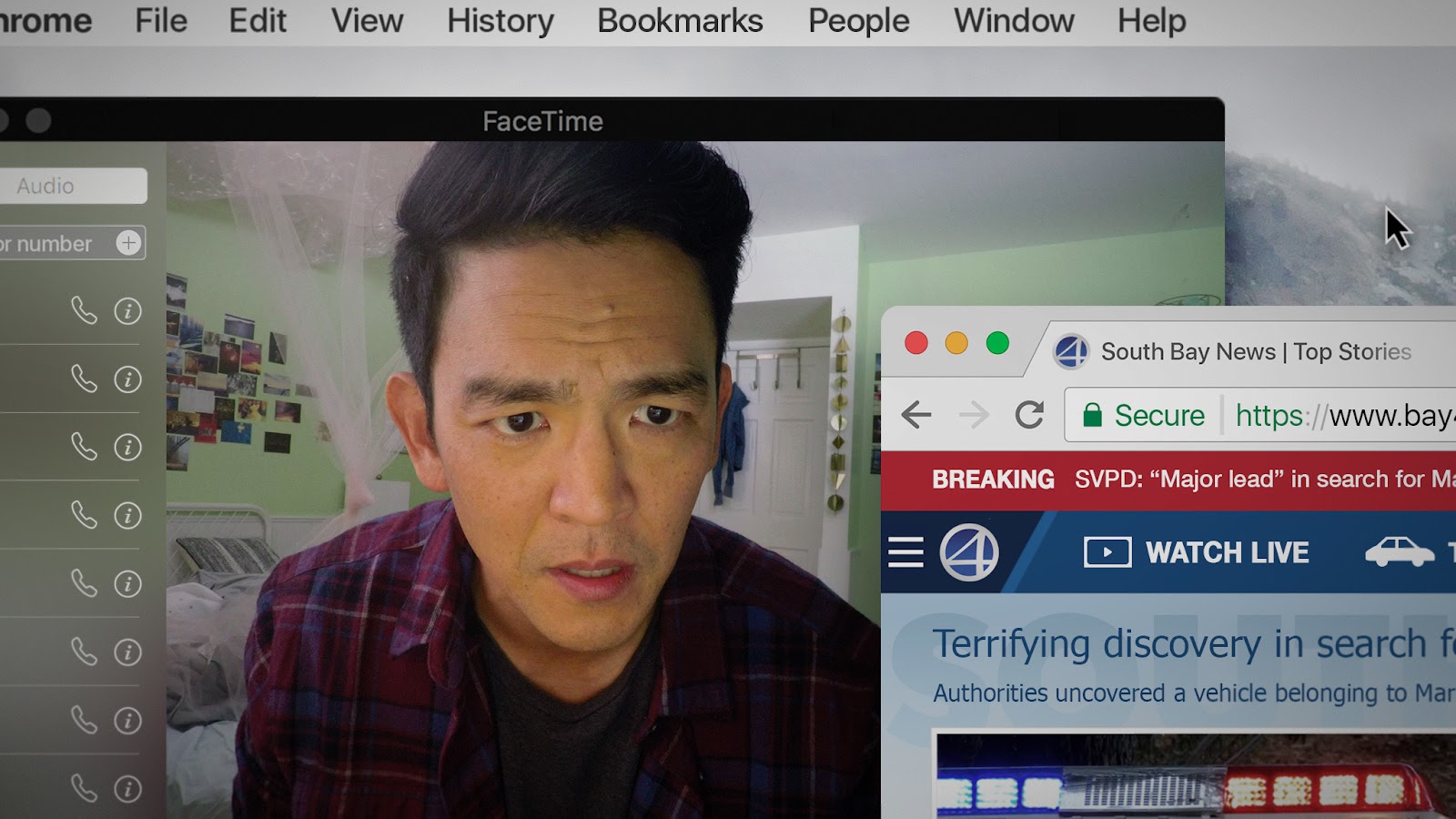
There is very little that you can say about the plot of this film without giving away one of its many twists.  The storyline is, in many ways, a traditional mystery thriller in which a widowed father desperately searches for his missing daughter, following clues, chasing down red herrings, and investigating suspects. However, what is innovative here is that the whole film takes place on computer screens.  David conducts his investigation mostly from his own home, searching through his daughter's social media feeds, Skypeing and WhatsApping potential witnesses and suspects, and finding clues through CCTV footage that he has been sent by the detective investigating the case (Debra Messing).  The film opens with a moving sequence of the family in happier times before David's wife and Margot's mother's death by cancer, depicted through the family's various screens, setting up family accounts on their new computer, videos of birthdays and holidays, online posts and calendar appointments.  Although the film was released two years before Covid, in a way it feels more pertinent in a covid and post-Covid world, now that we are living our lives more online than ever.  John Cho gives a strong performance as the tormented father, who for most of the film is sitting looking directly at the camera (his various screens).  The film mixes traditional detective story elements with modern technology, and at times the many twists and turns of the narrative strain credulity, but it is involving throughout, and the style manages to be more than just a gimmick.  The computer screen subgenre of found footage film is a difficult one to make work, partly because they look dated very quickly, due to how quickly computer technology moves forward.  Searching, however, is well worth the time.  


John Cho in Searching
  

Saturday, 8 April 2023

The Long Good Friday

 Year:  1980

Director:  John Mackenzie

Screenplay:  Barrie Keeffe

Starring:  Bob Hoskins, Helen Mirren

Running Time:  114 minutes

Genre:  Thriller


Harry Shand (Hoskins) is a powerful, ruthless gangster, who has plans to go legitimate with a scheme to redevelop the London Docklands with the aid of mafia investors from New York.  However, on the day of the mafiosi fly into London, Harry's empire is threatened by a series of bombings, and the stabbing of one of his closest associates.  Tasking his mistress, Victoria (Mirren) with handling the negotiations, Harry sets out on a violent quest to put a stop to the attacks.


This is one of the great, underrated classics of British gangster films.  The film mixes themes of political and police corruption, and the IRA, as well as an optimism about Britain becoming a European powerhouse, which in these days rings bitterly hollow.  Bob Hoskins had made a name as the star of the 1979 TV series Pennies from Heaven, but this was his first major film role.  He gives a fantastic performance as the brutal Harry Shand, mixing affability with menace, presenting himself as a legitimate, reasonable businessman but turning on friend or foe alike with brutal ferocity when crossed.  Helen Mirren is also memorable as the icy, intelligent Victoria, who serves almost as Shand's PA, and the acceptable face of his organisation.  The rest of the cast is full of now familiar faces from British TV and film, including Pierce Brosnan in his film debut as an IRA hitman.  The script is intelligent, with moments of dark humour, and the direction is slick, and the film maintains tension throughout, along with frequent, and often shocking moments of explosive violence.


Bob Hoskins in The Long Good Friday

Saturday, 18 March 2023

Marathon Man

Year:  1975

Director:  John Schlesinger

Screenplay:  William Goldman, based on the novel Marathon Man by William Goldman

Starring:  Dustin Hoffman, Laurence Olivier, Roy Scheider, William Devane, Marthe Keller

Running Time:  125 minutes

Genre:  Thriller

In New York City, history student Thomas "Babe" Levy (Hoffman), who is also training to run a marathon, becomes embroiled in a conspiracy involving sadistic Nazi Christian Szell (Olivier) and his attempt to obtain a cache of stolen diamonds.

Based on the 1974 novel by William Goldman, who also wrote the film's screenplay, this is not the film to watch just before your next visit to the dentist, as the film's most memorable scene involves Szell torturing Thomas by drilling into his teeth while intoning over and over again "Is it safe?... is it safe?... is it safe?..."  However it may be seen by the good people of the dental profession, this is an effective thriller, as with many films of the seventies there is a chilling air of paranoia that hangs over proceedings.  It does take a long time to get going, and several of the narrative threads don't really hang together, but for the most part it works really well, and has some genuinely exciting scenes.  Dustin Hoffman gives a great performance as the fresh-faced, wide-eyed marathon runner, who becomes increasingly haunted and hollow-eyed, as he is used to the limits by his torments.  Laurence Olivier is memorably chilling as the Nazi, with his collection of dental instruments and retractable knife hidden in his shirtsleeve.  One of the most famous behind the scenes anecdotes about the film is method actor Hoffman informing Olivier that he stayed up for three days to look tired on screen, to which Olivier replied "Why don't you just try acting?  It's much easier."  Roy Scheider is also good as Hoffman's older brother who is leading a double life.    


Laurence Olivier and Dustin Hoffman in Marathon Man

Monday, 19 December 2022

Touch of Evil

 Year:  1958

Director:  Orson Welles

Screenplay:  Orson Welles, based on the novel Badge of Evil by Whit Masterson

Starring:  Charlton Heston, Janet Leigh, Orson Welles, Joseph Calleia, Akim Tamiroff, Marlene Dietrich, Zsa Zsa Gabor

Running Time:  111 minutes

Genre:  Crime, thriller, film noir

In an unnamed town on the Mexican-U.S. border, a wealthy American businessman and his girlfriend are killed by a bomb planted in the car.  Upstanding Mexican cop Miguel Vargas (Heston) and his new bride, Susie (Leigh), witness the explosion and cut short their honeymoon while Vargas becomes drawn into the investigation, coming up against powerful, corrupt police captain Hank Quinlan (Welles).


This is one of the best, as well as one of the last, of the classic film noir.  The term film noir was coined by French film critics to describe a run of stylish American thrillers and crime dramas that featured bleak, cynical and often nihilistic attitudes, and which flourished in the 1940s and '50s.  Based on the 1956 novel Badge of Evil by Whit Masterson, this is a surprisingly dark thriller, with it's striking visuals, including run-down locations, off-kilter camera angles, extreme close-ups, grotesque characters, and stark, black and white photography, the film has a genuinely nightmarish feel.  The main flaw is its racially insensitive casting, with white actors, such as Charlton Heston and Marlene Dietrich, cast as Mexican characters.  Although it is worth pointing out that the Mexican Vargas (albeit played by Heston) is the noble hero, while the white American Quinlan is the chief antagonist.  In the character of Hank Quinlan, Orson Welles creates one of the screen's most memorable monsters.  A racist, corrupt cop who plants evidence to frame suspects, and has all the powerful people in the town in his pocket, and who seem to orbit him like satellites around a planet.  The ageing, gargantuan Quinlan, an alcoholic, who constantly eats candy bars, and walks with a cane, he seems almost to be falling apart in front of our eyes, and yet there are flickers of the tattered remnants of nobility in his small, narrow eyes, and in his relationship with ex-lover Tana (Marlene Dietrich under very heavy makeup), who appears to be the only person who really knows and cares about him, there is a kind of tenderness, making him more damaged than truly evil.  A miscast Charlton Heston (who looks kind of like a young Sean Connery here) is okay, and Janet Leigh is good as Vargas' new wife, Susie, even if she doesn't have much to do.  The scene where she is attacked in a remote motel almost foreshadows her most famous role in Psycho (1962).  The film was taken away from Welles and re-edited by the studio without his approval.  For example, in Welles' version there are no opening credits, and the film opens with a famous sequence where a ticking time bomb is placed in the boot of a car.  An unsuspecting couple get in the car and drive off.  We follow the car through the streets, there is no score, instead we hear street sounds:  Music spilling from bars and restaurants, police whistles, car noises, muffled conversations, and then the car explodes.  In the release version, the credits are splashed over Welles' carefully composed shots, and the street sounds replaced by loud, brassy music.  A furious Welles penned a 58 page memo outlining his vision for the film.  In 1998, the film was restored and re-edited according to Welles' instructions.  Now it can be seen for the masterpiece it is.


Orson Welles, Victor Millan, Joseph Calleia and Charlton Heston in Touch of Evil


Friday, 4 November 2022

The Parallax View

 Year:  1974

Director:  Alan J. Pakula

Screenplay:  David Giler and Lorenzo Semple Jr., based on the novel The Parallax View by Loren Singer

Starring:  Warren Beatty, Hume Cronyn, William Daniels, Paula Prentiss

Running Time:  102 minutes

Genre:  Thriller


Three years after a politician is murdered at the Seattle Space Needle, the witnesses seem to be dying of apparent accidents or natural causes.  Television journalist Lee Carter (Prentiss) who witnessed the murder is convinced that the witnesses are being deliberately killed, and that she is next on the list.  She contacts her ex-boyfriend, hard-bitten newspaper reporter Joe Frady (Beatty) for help.  Joe doesn't believe her at first, until Lee dies of an apparent drug overdose.  Joe starts to investigate and finds himself drawn into a complex and dangerous conspiracy, centred around the sinister Parallax Corporation.

 As American as apple pie

Based on the 1970 novel by Loren Singer, with an intelligent and sometimes darkly funny screenplay by David Giles and Lorenzo Semple Jr., The Parallax View is a surprisingly bleak work, with a genuinely shocking conclusion, but it still has all the ingredient of an exciting thriller: fights, chases (including an impressive car chase), and a desperate race against time.  Warren Beatty gives an impressive performance as the tough, but surprisingly vulnerable reporter, whose silver tongue and quick fists do little to top him quickly getting out of his depth.  Director Alan J. Pakula, who had previously made Klute (1971) and would go on to make All the President's Men (1976) creates an atmosphere of chilly menace.  Throughout the film there is this constant sense of a vast conspiracy, even the way the film is photographed, with many scenes being viewed from a distance, or from overhead, putting the viewer in the place of a spy observing the proceedings.  The film's most impressive set-piece is the striking assassin training sequence where a series of fragmented still images and words are flashed in quick sensation.  Following the assassinations of John F. Kennedy, Robert Kennedy and Martin Luther King, not to mention Watergate and Richard Nixon, the 1970s were an era of bleak political thrillers, but the theme of paranoia, alienation and conspiracy still feels very much of the moment.  


The Parallax View
  

Saturday, 15 October 2022

To Live and Die in L.A.

 Year:  1985

Director:  William Friedkin

Screenplay:  William Friedkin and Gerald Petievich, based on the novel To Live and Die in L.A. by Gerald Petievich

Starring:  William Petersen, Willem Dafoe, John Pankow, Debra Feuer, John Turturro, Darlanne Fluegel, Dean Stockwell

Running Time:  116 minutes

Genre:  Action, crime, thriller


When his partner is killed investigating a counterfeiting operation, corrupt Secret Service Agent Richard Chance (Petersen) is determined to bring down master counterfeiter Rick Masters (Dafoe) by any means necessary.  However, Chance is forced to team up with by-the-book agent John Vukovich (Pankow), who opposes Chance's anything goes philosophy.

Adapted from the 1984 novel by Gerald Petievich, this gritty crime thriller returns director William Friedkin to the seamy world of amoral cops and brutal criminals that he previously explored in The French Connection (1974), the film that made his name.  In fact, aside from being set in Los Angeles rather than New York and dealing with counterfeiters rather than international drug runners, there are some similarities between To Live and Die in L.A. and The French Connection, both deal with ruthless cops (or, more accurately, Secret Service agents in To Live and Die) who will break any rules they have to to bring down a powerful enemy,  and To Live and De in L.A. also features it's own spectacular car chase set piece.  Despite being set in December and January, Los Angeles seems to burn under blazing sunlight, and beautiful pink evening skies (I don't know, I've never been to Los Angeles, maybe it really is like that in the bleak midwinter).  The film looks beautiful throughout, and has a pulsing score from British new wave band Wang Chung.  There is a gritty, authentic feel to the proceedings, which are filmed in some of the less glamorous parts of the city.  The cast is impressive with a number of actors who weren't well known at the time, but later went on to become major stars, notably Willem Dafoe and John Turturro.  William Petersen is believably callous as the repellant Richard Chase, who is the film's nominal hero and extorts his informer Ruth (Darlanne Fluegel) for information and sexual favours, under threat of having her parole revoked.  Willem Dafoe is good as the murderous counterfeiter,  John Turturro is convincingly desperate as the member of Dafoe's gang who Chance arrested and tries to make a deal with.  Darlanne Fleugel takes the acting honours as the unfortunate collateral damage in Chance's war on crime, and her desperation to break free and make a fresh start is heartbreaking.  The big problem with the film is, as good as it is, there is really no-one to root for here.  The ostensible "heroes" aren't much better than the crooks they are chasing.  However, this is an involving and exciting slice of '80s action thriller.


William Petersen and John Pankow in To Live and Die in L.A.

Wednesday, 7 September 2022

Rope

 Year:  1948

Director:  Alfred Hitchcock

Screenplay:  Hume Cronyn, based on the stage play Rope by Patrick Hamilton

Starring:  James Stewart, John Dall, Farley Granger, Joan Chandler, Sir Cedric Hardwicke, Constance Collier, Douglas Dick, Edith Evanson

Running Time:  80 minutes

Genre:  Thriller

New York City:  Two students, Brandon (Dall) and Philip (Granger), murder their friend David (Dick Hogan) for no other reason than the thrill of it.  After hiding the body in a large antique chest, they throw a party to which they invite David's family and friends, as well as their former teacher (Stewart).

Based on a 1928 stage play by Patrick Hamilton, which was itself loosely based on the notorious 1924 Leopold and Loeb murder case, this is one of Alfred Hitchcock's most experimental films.  Aside from the opening credit sequence, the entire film is set within the confines of Brandon and Philip's palatial New York apartment, and it is filmed to appear as if it is almost one continuous take.  The camera moves are impressive, although due to the fact that the cameras of the time could only hold a maximum of ten minutes worth of film, the camera frequently has to move close into the backs of people's jackets or furniture in order to hide the edit when the film had to be replaced.  This was the first of three films that James Stewart made for Hitchcock and he was critical of the film, commenting that the "really important thing being rehearsed here is the camera, not the actors," and stating much later that "it was worth trying... But it really didn't work."  Hitchcock himself dismissed the continuous take technique as "a stunt."  The film's main set of the apartment's living room is impressive, with a large window looking out over a steadily darkening New York City skyline, all of which was achieved in the studio.  While the film isn't entirely successful, it is an entertaining thriller.  The suspense comes not from David's fate, or the identity of the murderers, the film opens with the murder and the hiding of the body, but on when and how the "perfect murder" will unravel.  The film was very controversial on it's original release, possibly because of the strong homosexual subtext, the fact that Brandon and Philip are in a relationship is made pretty much as blatant as it could be in a mainstream movie in 1948.  For the most part the film manages to be more than just an innovative experiment, with sharp dialogue, strong performances, and the steadily building tension.  However, there are points where the technique overrides the content and your left admiring the camera work, rather than being involved in the story.


What a swell party: Farley Granger, James Stewart and John Dall in Rope


Friday, 24 June 2022

Primal Fear

 Year:  1996

Director:  Gregory Hoblit

Screenplay:  Steve Shagan and Ann Biderman, based on the novel Primal Fear by William Diehl

Starring:  Richard Gere, Edward Norton, Laura Linney, John Mahoney, Alfre Woodard, Frances McDormand

Running Time:  130 minutes

Genre:  Thriller 

Chicago:  A beloved archbishop is brutally murdered in his apartment.  Shy, polite 19 year old altar boy Aaron Stampler (Norton) is found covered in blood, fleeing the crime scene, and is arrested for the murder.  Given the evidence and the lack of any other suspects, a conviction seems a certainty.  Ambitious, arrogant defence attorney Martin Vail (Gere) decides to defend Aaron, and becomes increasing convinced of his innocence. As he digs into the case to find evidence, Vail discovers some dark secrets.


This courtroom thriller, based on a 1993 novel by author William Diehl, is a genuinely gripping mystery, and elevated by strong performances and well-rounded characters.  Richard Gere is ideally cast as the slick, arrogant and often quite unlikeable lawyer, who nevertheless is redeemed by his strong belief in justice.  Edward Norton, in his film debut, was nominated for the Academy Award for Best Supporting  Actor for his intense performance as the tormented, stammering Aaron Stampler, who spends most of the film either in the courtroom or in a jail cell, verbally sparring with Gere or Frances McDormand, who plays a psychiatrist sent to analyse him.  Laura Linney really elevates what could be a one-note role as the attorney for the prosecution, who has a history with Vail.  Some of the various plot twists probably won't surprise many mystery aficionados, but the story moves along well, and there is plenty of real tension.  Director Gregory Hoblit, a veteran of TV dramas such as Hill Street Blues, L.A. Law and NYPD Blue, as well as the notorious '80s police musical Cop Rock, directs with style and keeps the plot moving along, even while the narrative diverges into more conspiratorial elements.  The script is clever with some sharp, witty dialogue.  


 Edward Norton and Richard Gere in Primal Fear

Tuesday, 10 May 2022

The Walker

 Year:  2007

Director:  Paul Schrader

Screenplay:  Paul Schrader

Starring:  Woody Harrelson, Kristin Scott Thomas, Lauren Bacall, Ned Beatty, Moritz Bleibtreu, Mary Beth Hurt, Lily Tomlin, Willem Dafoe

Running Time:  107 minutes

Genre:  Thriller, drama


Washington, D. C.:  Carter Page III (Harrelson) is a "walker" - he is paid to accompany wealthy wives to events, and act as companion, confidante, and cards partner.  One of his clients, Lyn Lockner (Scott Thomas), who is married to a powerful United States Senator, is having an affair with a lobbyist, but when she discovers her lover's murdered body, Carter reports the crime in order to cover up her affair.  However, Carter almost immediately becomes the prime suspect in the enquiry.  As he attempts to uncover the truth and clear his name, he finds himself embroiled in a dangerous political conspiracy.


The character of the "gay best friend" has become almost a stereotype in any number of dramas and comedies.  Usually the character comforts and helps the female lead with bitchy remarks and sharp-tongues comments, adding some humour and park to the proceedings.  Woody Harrelson's Carter Page III is almost like a "gay best friend" for hire.  The last of a distinguished Southern family, we meet him at the card table in a luxury hotel suite with the three older women that he escorts, playing canasta and holding court with arch remarks and witticisms.  Immaculately dressed, urbane, debonair with a strong line in clever remarks, and an extensive knowledge of all the best things in life.  Carter, who is gay, acts as friend and companion, but doesn't sleep with his clients.  The character is still in the long tradition of Paul Schrader's troubled, lonely men.  He lives alone in an immaculate apartment, and spends much of his time, perfecting his appearance, including his wig, which he removes only once, briefly, and researching his topics of conversation.  Although he has a boyfriend, they never seem to be all that close, and no-one else appears to be allowed into Carter's golden kingdom.  In fact, Carter's whole life seems to be a succession of facades that he puts up for other people.  This is the problem with Schrader's film, despite a fantastic performance by Harrelson, there doesn't really appear to be anything behind Carter's genteel politeness, and immaculate suits, except the briefest flickers which we see when he is angered or upset.  The supporting cast is full of great performances, including Lauren Bacall as the Grand Dame of Washington, who rivals Carter in her command of waspish remarks.  Kristin Scott Thomas is very good as the unfaithful wife, terrified of discovery.  Ned Beatty is perfectly oily as a rich, nasty, old Senator.  Originally conceived as a sequel to Schrader's 1980 film American Gigolo, this is a cleverly written film, but it feels surprisingly bland and workmanlike for Schrader.  Despite being set in Washington, the film was mostly filmed in Britain and the Isle of Man, and despite the strong cast, it has the feel of a TV movie about it, and the references to the Iraq War seem shoehorned in to give the film some contemporary relevance.  However the film has a witty and intelligent script, and it is worth seeing for the performances.  


  Kristin Scott Thomas and Woody Harrelson in The Walker

Thursday, 17 March 2022

The Batman

Year:  2022

Director:  Matt Reeves

Screenplay:  Matt Reeves and Peter Craig, based on characters from DC Comics

Starring:  Robert Pattinson, Zoë Kravitz, Paul Dano, Jeffrey Wright, John Turturro, Peter Sarsgaard, Andy Serkis, Colin Farrell

Running Time:  176 minutes

Genre:  Action, superhero, crime, thriller

On Halloween night, the mayor of Gotham City is brutally murdered by a masked individual calling himself The Riddler (Dano), who leaves a series of cryptic clues aimed at masked vigilante, the Batman (Pattinson), the secret identity of reclusive billionaire Bruce Wayne, who has been fighting crime in Gotham for two years.  As Batman investigates, he realises that The Riddler is just getting started, as more and more of the great and good in Gotham turn up murdered.  With the help of nightclub waitress Selina Kyle (Kravitz), who has her own secret, the Batman uncovers a vast criminal conspiracy, which hits uncomfortably close to home.  

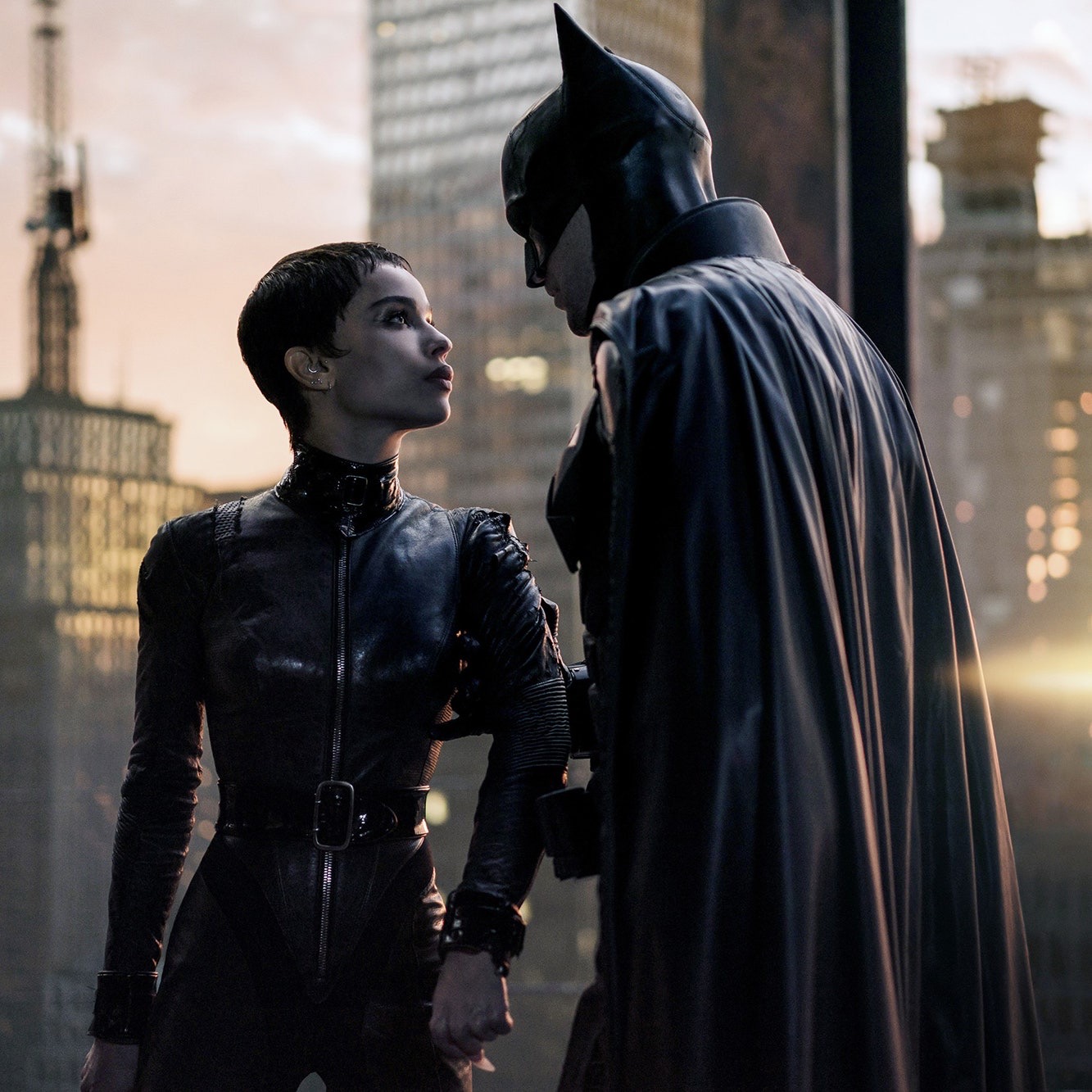
It's tempting to roll the eyes at the thought of yet another Batman film, or indeed yet another superhero film as the last ten years has seen a seemingly endless stream of them.  The tendency, particularly of the Batman films, has been to get increasingly dark and gritty, which to be fair is in keeping with the character's origins in the pages of Detective Comics in 1939, but a long way from the colourful, campy Batman TV series with Adam West and Burt Ward which defined the character for decades, at least until the 1989 Tim Burton Batman film.  Despite Batman Forever (1995) and Batman and Robin (1997) the character seems to get darker and grittier with each new iteration, and this is possibly the bleakest yet.  Devoid of light (literally for the most part, the film takes place almost entirely at night in gloomy, cavernous rooms, and strobe-lit nightclubs), humour and mostly any sense of hope, this is Batman for the 2020s.   It is less of a superhero action film, although there are some very good action scenes, including a spectacular car chase, it's more of a gritty crime thriller, closer to films such as Se7en (1995).  Batman is more of a detective here, trying to crack the case by solving the clues and interviewing witnesses and suspects.  Robert Pattinson is good as Batman, and his Bruce Wayne is a very different take on the character.  Instead of the traditional billionaire playboy, his Bruce is a recluse lurking around the Batcave, always in black, listening to Nirvana and writing his thoughts in a journal. and seems to be more than. little bit disturbed, closer to characters such as Travis Bickle in Taxi Driver (1976) or Rorschach in the comic series Watchmen (1986-87), who incidentally was inspired by Batman.  Andy Serkis plays Alfred, Bruce's one connection to a normal life.  Zoë Kravitz is very good as Selina Kyle aka Catwoman, who helps Batman for her own purposes and whose moral ambiguity challenges Batman's black-and-white worldview.  Paul Dano is chilling as the Riddler, turning the character from a gimmicky prankster to a genuinely frightening killer.  Jeffrey Wright is good as Commissioner Gordon, Batman's friend on the police force, and one of the few honest cops in a corrupt city.  Colin Farrell is almost completely unrecognisable under layers of makeup as mobster and club owner the Penguin.  While the Batmobile does make an appearance in the film, and very impressive it is too, Batman uses less gadgets than usual in these films, mostly allowing his targets to hear his heavy footfalls as he looms from the shadows  This is an impressive and complex film which spins out an intriguing mystery and remains gripping throughout what could politely be described as a generous run time.  While this may be too dark and sombre for many people's tastes it feels right for the character, and I liked the fact that it was a smaller scale than most recent superhero films, and I also liked the portrayal of Batman as a crime-solving detective.

Catwoman (Zoë Kravitz) and Batman (Robert Pattinson) in The Batman

Saturday, 5 March 2022

The Hound of the Baskervilles

Year:  1959
Director:  Terence Fisher
Screenplay:  Peter Bryan, based on the novel The Hound of the Baskervilles by Sir Arthur Conan Doyle
Starring:  Peter Cushing, André Morell, Christopher Lee, Marla Landi, David Oxley
Running Time:  87 minutes
Genre:  Mystery, thriller

According to legend, since the 1700s when notorious squire Hugo Baskerville (Oxley) met a gruesome end, the Baskerville family of Dartmoor have been cursed by a ghastly Hell Hound.  When Sir Charles Baskerville dies under mysterious circumstances, his best friend Dr. Richard Mortimer (Francis de Wolff) consults the famous detective Sherlock Holmes (Cushing) and Dr. Watson (Morell).  To make matters more urgent, the last surviving Baskerville, Sir Henry (Lee), intends to return to the ancestral seat of Baskerville Hall on Dartmoor.  Legend or no legend, Holmes is convinced that Sir Henry's life is in serious danger.


First serialised in the Strand magazine from 1901 to 1902, The Hound of the Baskervilles is probably the single best known of Sir Arthur Conan Doyle's evergreen Sherlock Holmes stories, and with it's plot revolving around old family curses and iconic imagery of the huge, ghostly Hound on the mist shrouded moors a perfect choice for Britain's Hammer Films, and their signature "Hammer Horror" style.  The film sticks more or less to the plot of the original story, and the narrative moves along at a brisk pace.  Peter Cushing, who was a fan of the original Sherlock Holmes stories, makes for an energetic Holmes with a nice line in acidic retorts.  André Morell anchors the film with his charismatic, heroic Watson.  Christopher Lee is good as ever as the stern, sceptical Sir Henry Baskerville, except the scenes where he is being threatened never really seem that convincing, one of Lee's glares would be enough to send even the most fearsome Hound of Hell scampering back to it's kennel.  Marla Landi plays the mysterious Spanish born daughter of a local farmer who falls for Sir Henry's grim charms.  The film has plenty of gothic atmosphere, with plenty of mist shrouded ruins and strange lights.  The hound never really looks as fearsome as it should, however.  It's an enjoyable slice of vintage mystery with some impressive performances, and also one of the more faithful Holmes adaptations.


 Peter Cushing and Christopher Lee in The Hound of the Baskervilles

Wednesday, 2 March 2022

Deep Red

Year:  1975

Director:  Dario Argento, 

Screenplay:  Dario Argento and Bernardino Zapponi

Starring:  David Hemmings, Daria Nicolodi, Gabriele Lavia, Macha Méril, Clara Calamai

Running Time: 126 minutes 

Genre:  Horror, thriller


One night Marcus Daly (Hemmings), a jazz pianist living in Turin, witnesses the gruesome murder of his upstairs neighbour, psychic medium Helga Ulmann (Méril).  Daly rushes to help, but is too late, however he sees the raincoat clad killer escape into the night.  Haunted by the idea that he saw something important which he cannot quite remember, Daly teams up with ambitious journalist Gianna Brezzi (Nicolodi) to hunt the killer, but the killer is hunting them.

This stylish murder-mystery is one of the classic giallo films.  Giallo was a sub-genre of horror and mystery films that came out of Italy in the 1960s and became hugely popular during the '70s.  Often seen as the fore-runner to later "slasher" films, these films were usually very stylish and showcased elaborate, stylised murders and violence, but were more focussed on the mystery and detection elements than piling up the bodycount.  The term giallo (Italian for "yellow") came from a hugely popular series of cheap paperback mystery novels which were published with distinctive yellow covers.  Deep Red features elaborate, over the top and extremely gory set pieces and a constantly moving camera, but it also has an intriguing and complex mystery plot.  As with most Argento films the dazzling, excessive visuals cover the fact that a lot of it doesn't really make any sense.  However it doesn't really matter, because as labyrinthine and bizarre as the film is, it is full of unforgettable elements, with bizarre sequences and characters, such as the mechanical killer doll (which surely must have been an influence on the Saw films) and the pulsing soundtrack from prog-rock band Goblin.  David Hemmings is charismatic in the lead role, but the film is stolen by Daria Nicolodi as the energetic and funny journalist.  Nicolodi would go on to appear in five more Argento films, and the two were married for a time.  This is definitely one of Argento's best films, and possibly the best example of the giallo genre.  Argento turned the film into a stage musical in 2007, and adopted the film's Italian title "Profondo Rosso" as the name for his horror memorabilia shop and museum in Rome.  


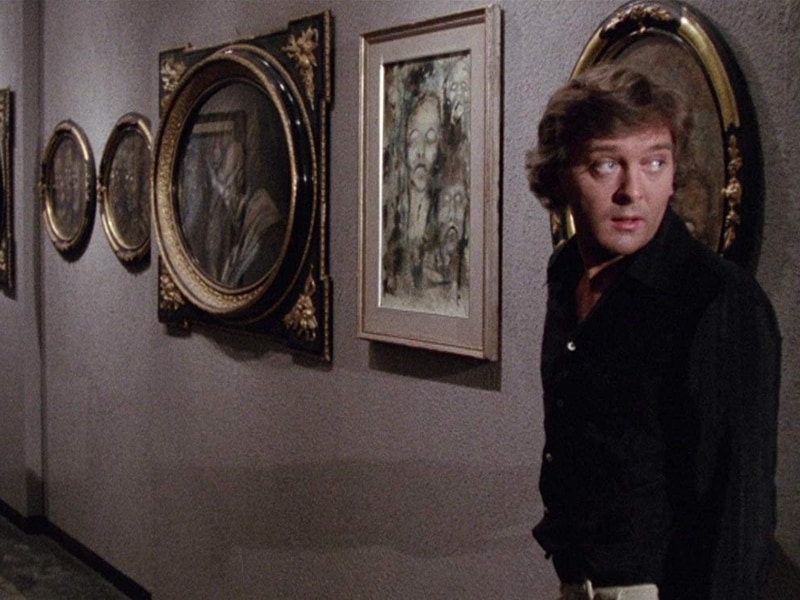
 David Hemmings in Deep Red

Wednesday, 23 February 2022

Vertigo

Year:  1958

Director:  Alfred Hitchcock

Screenplay:  Alec Coppel and Samuel Taylor, based on the novel D'entre les morts by Pierre Boileau and Thomas Narcejac

Starring:  James Stewart, Kim Novak, Barbara Bel Geddes, Tom Helmore, Henry Jones

Running Time:  128 minutes

Genre:  Thriller


San Francisco police detective John "Scotty" Ferguson (Stewart) resigns from the force after a rooftop chase results in the death of a fellow police officer and leaves him with crippling acrophobia (fear of heights) and vertigo.  Some time later Scotty is approached by an old schoolfriend, Gavin Elster (Helmore), who wants to hire him to follow his wife, Madeline (Novak), who Ester fears is suicidal.  Scotty accepts the assignment, however in the course of the investigation he falls in love with Madeline.  However his vertigo prevents him form saving her when she plummets from a church bell tower.  A year later, still dealing with his trauma, Scotty becomes obsessed by Judy (Novak), a woman who bears a remarkable resemblance to Madeline.


This is one of the Master of Suspense's strangest and darkest films.  While it still made money on it's original release, it was not as big a hit as Alfred Hitchcock's previous few films, and was widely criticised by fans (including fellow director Orson Welles) and critics.  However it's reputation has grown considerably in recent years, and it is frequently named as one of the greatest films ever made.  James Stewart, who is probably best known for playing All-American nice guys in such films as It's a Wonderful Life (1946), plays against type as an ambiguous antihero.  While the term "toxic masculinity" was probably not coined in 1958, John "Scotty" Ferguson is a perfect example of it.  The most disturbing passage in the film is where Scotty tries to make Judy into the image of the dead Madeline, changing her clothes, hair colour, hair style, makeup, everything - whether she likes it or not.  The act of looking is a major element in Vertigo:  Scotty's vertigo is triggered when he looks down (the sense of vertigo is depicted by the film's signature "reverse zoom" technique, where the camera is moved backwards which zooming in creating a kind of telescoping effect); spying on the blonde, statuesque Madeline, Scotty falls in love with her without ever speaking to her (of course Alfred Hitchcock had a penchant for blondes in his films); Scotty is doomed to watch helplessly as she plunges to her fate, mirroring the fate of his police colleague at the beginning of the film; and when he meets Judy he becomes obsessed with her purely because of her resemblance to Madeline, completely dismissing Judy as a person in her own right.  Madeline herself is obsessed with a portrait of a long dead relative which she spends hours staring at and prompts Elster to comment that she might be possessed by the ghost of the woman in the portrait.  In the opening half an hour or so of the film, it almost seems to be shaping up to be ghost story, and in a way it is, only not in a supernatural sense.  Scotty and Judy are both haunted by Madeline, and Scotty's attempts to turn Judy into Madeline could be seen almost like a possession.  The plot reveals it's mystery about a third of the way into the film, in an almost throwaway scene, indicating that the plot isn't really important, and in fact the reveal is kind of disappointing, but the mysterious atmosphere of the film lingers.  It's very well made, with a beautiful sense of colour.  James Stewart is fantastic, both pitiable and disturbing in the lead role, and Novak is great in the dual role of Madeline and Judy, although the 49 year old James Stewart and the 24 year old Kim Novak make for a very unlikely romantic pairing.  Barbara Bel Geddes provides some humour and some much needed warmth to the film as Scotty's friend Midge, who of course is madly in love with him.  Vertigo is one of Alfred Hitchcock's best films, and while it might not be the greatest film ever made, which of course is a debate which will never end as long as film exists, it is a truly great film.


James Stewart and Kim Novak in Vertigo


Monday, 14 February 2022

Peeping Tom

Year:  1960

Director:  Michael Powell

Screenplay:  Leo Marks

Starring:  Carl Boehm, Moira Shearer, Anna Massey, Maxine Audley

Running Time:  101 minutes

Genre:  Horror, thriller


London:  Mark Lewis (Boehm) is a quiet, polite, soft-spoken young man who works in a film studio, and supplements his income by taking nude photographs of models which are sold in a seedy newsagents.  However Mark also has an obsession with filming fear, to which end he films himself murdering women with a spike concealed in the leg of his camera's tripod, he also uses a mirror so that his victims can see themselves as they die, which Mark believes heightens their terror.  


"The only really satisfactory way to dispose of Peeping Tom would be to shovel it up and flush it down the nearest sewer, and even then the stench would remain" howled the thoroughly outraged review in London's Tribune magazine at the time of the film's release.  This was pretty much the standard reaction in the British press to the film at the time, with the Monthly Film Bulletin comparing Michael Powell to the Marquis de Sade.  The hysterical response to the film now seems almost comically quaint, but it did pretty much destroy Michael Powell's career.  Alongside producer Emeric Pressburger, Michael Powell was one of the most successful and acclaimed British filmmakers of the 1940s and 50s with such classics as The Life and Death of Colonel Blimp (1943), A Matter of Life and Death (1946), Black Narcissus (1947) and The Red Shoes (1948), and possibly part off the reason for the film's overwhelmingly negative response is that it seemed so off-brand for Powell.  More recently, the film has been recognised as the classic that it is, praised by critics and directors such as Martin Scorsese.  The fact is that the film is one of the greatest horror films ever made.  The film is visually striking, creating an authentically cluttered and seedy looking London, it also uses a fluid, mobile camera reflecting the killer's point of view, and what he sees through the end of his own small camera, which he constantly has with him.  The film allows us to spend time with the victims.  They are not just disposable but people with hopes and dreams, and their deaths have some real weight.  Austrian-German actor Karlheinz Böhm (billed as Carl Boehm) plays the killer, Mark Lewis, who has been warped by his scientist father's attempts to film his son's terror.  Incidentally Michael Powell played Mark's father in the grainy home movies that Mark watches, and Powell's own son Columba played the young Mark.  Böhm gives a powerful, and genuinely moving performance as the killer, who tries but is unable to control his murderous impulses.  Anna Massey gives a very good performance as Helen, an aspiring author who lives with her blind mother in the flat below Mark and strikes up a friendship with him.  Modern horror fans may be disappointed by the lack of blood 'n' guts, but it was certainly strong stuff for the time, particularly in regards to the sexual content, which is also mild by modern standards.  This is a beautiful, powerful film, which is still disturbing today.  One of the best horror films ever made, it is also one of the darkest films made about the nature of film and filmmaking.  Who exactly is the Peeping Tom?  Is it Mark himself? Mark's camera? Or us, the audience?  As Helen's mother (played by Maxine Audley) tells Mark: "All this filming isn't... healthy."


Karlheinz Böhm (Carl Boehm) and Anna Massey in Peeping Tom
  

Thursday, 27 January 2022

Nightmare Alley

Year:  2021

Director:  Guillermo del Toro

Screenplay:  Guillermo del Toro and Kim Morgan, based on the novel Nightmare Alley by William Lindsay Gresham

Starring:  Bradley Cooper, Cate Blanchett, Toni Collette, Willem Dafoe, Richard Jenkins, Rooney Mara, Ron Perlman, Mary Steenburgen, David Strathairn

Running Time: 150 minutes

Genre:  Thriller

In 1939, Stanton "Stan" Carlisle (Cooper) is on the run from a shady past when he finds refuge in a travelling carnival, befriending fortune teller Zeena the Seer (Collette), her alcoholic husband (Jenkins), Clem (Dafoe) who runs the carnival's "geek show" and exhibition of "human oddities", and Molly (Mara) whose act consists of her being electrocuted.  Learning the secrets of the inner workings of the carnival, and particularly the tricks behind pretending to be clairvoyant, Stan approaches Molly with a proposition that they work the scam together on wealthier marks.  Two years later, Stan and Molly are successfully working their act for the wealthy elite of New York City, when Stan is approached by Dr. Lilith Ritter (Blanchett), who has her own idea for a scam, but as the stakes are raised to more dangerous levels it becomes increasingly unclear who is playing who.

Guillermo del Toro is probably best known for his work in the horror and fantasy genre, most notably Pan's Labyrinth (2006) and The Shape of Water (2017), this however is not a supernatural or a fantasy film, although it is pretty horrific at times.  This is a modern day film noir, in fact the novel by William Lindsay Gresham has been filmed before in 1947, in the heyday of the film noir.  This film presents a throughly bleak portrait of human nature, almost everyone in the film is working some kind of scheme, or con, although some more innocent than others.  Bradley Cooper is good as the silver tongued charmer who hides very dark secrets and is capable of occasionally lashing out with shocking violence.  Cate Blanchett plays psychologist Lilith Ritter as a classic femme fatale all blood-red lipstick and golden gowns.  Toni Collette plays the smalltime carnival fortune teller who teaches Stan the tricks of the trade.  Rooney Mara plays the innocent, wide-eyed Molly who becomes the conscience of the film and, crucially, the only one perceptive enough to see where they are headed.  Willem Dafoe has a ball as the cruel Clem who keeps a caged man as the sideshow "geek", forcing him to bite the heads off chickens.  The twilight world of the carnival is brilliantly evoked, all mud and dirt and broken-down seedy glamour.  Del Toro is a master of disturbing but beautiful images, and he evokes a cold, bleak world, even New York is wintery streets and palatial but sterile hotel rooms and offices, The film has a complex, twisting plot, punctuated by occasional, brief, shocking bursts of violence.  While it may be too bleak for some viewers, it is a striking latter day film noir, and one of the best new thrillers that I've seen in a long time.         


Bradley Cooper and Rooney Mara in Nightmare Alley

Tuesday, 18 January 2022

Gaslight

Year of Release:  1940

Director:  Thorold Dickinson

Screenplay:  A. R. Rawlinson and Bridget Boland, based on the stage play Gas Light by Patrick Hamilton

Starring:  Anton Walbrook, Diana Wynyard, Frank Pettingell

Running Time:  85 minutes

Genre:  Drama, thriller


In Victorian London a newly married couple, Paul (Walbrook) and Bella Mallon (Wynyard), move into a house where twenty years earlier an elderly woman was brutally murdered by an unknown robber.  Before long, Bella begins to notice small objects going missing, strange sounds in an empty upstairs room, and the light in the gas lamps flickering strangely.  Her husband also begins to act increasingly cold and harsh towards her.  Bella begins to worry that she is losing her mind.  The truth however is even more sinister.


You've probably read or heard the term "gaslighting" which refers to someone manipulating another person to make them doubt their perception of reality, and the term comes from the title of the 1938 play Gas Light and the two film versions, the 1940 British film which we are concerned with here, and the 1944 American film directed by George Cukor and starring Ingrid Bergman, Charles Boyer and Joseph Cotton.   The central story concerns an evil husband manipulating his wife into making her think that she is going mad.  This isn't a spoiler, it's revealed pretty much from the outset that that is what he is doing.  While the 1940 version isn't as well known as the 1944 film, it is a pretty good little thriller.  Anton Walbrook gives a great villainous performance as the cruel husband, either silkily persuasive or hissing venom at his long-suffering wife, even if there are times when you half expect him to start twirling his moustache, he's so gleefully wicked.  The wide-eyed Diana Wynyard is impressive as the tormented Bella, even if there are times you wish she was less quietly passive, however the scene where she turns the tables on him is wonderfully suspenseful.  Frank Pettingell plays the happily pleased with himself former policeman turned stable owner who decides to conduct a private investigation into Mallon.  The film is creaky by today's standards, but it is suspenseful and exciting and, despite being very obviously studio bound, the lighting and camera work is effective.  The story moves at a quick pace, the dialogue is well-written.  Anton Walbrook makes a memorable villain and Diana Wynyard is affecting as the manipulated Bella.