Showing posts with label comedy. Show all posts

Sunday, 1 October 2023

There's Nothing Out There

 Year:  1991

Director:  Rolfe Kanefsky

Screenplay:  Rolfe Kanefsky

Starring:  Craig Peck, Wendy Bednarz, Mark Collver, John Carhart, Bonnie Bowers

Genre:  Comedy, science-fiction, horror

Running Time:  91 minutes

Seven students head off to a remote house in the woods, and soon come under attack from a vicious alien creature.  However, one of the group, Mike (Peck), is able to use his extensive knowledge of horror movies to help them defeat the creature.

This low-budget blend of comedy and horror is most notable as an early example of post-modern horror, five years before Wes Craven's hugely successful Scream (1996) popularised the genre.  The film parodies the various tropes of teen slasher films, which are discussed at length by sarcastic movie fan Mike.  Bits of the film are clever and funny, such as a character escaping the monster by grabbing the hanging microphone boom and using it to swing to safety, while the soundtrack plays a riff on the "Indiana Jones" theme.  It's the kind of film that would probably work best if played at a horror festival or convention or towards the end of an all-night horror movie marathon, when an audience might be more kindly disposed to laugh at it.  The film suffers from low production values, atrocious performances, and terrible special effects.  The monster is a puppet that looks like a cross between a giant frog and a fish with large teeth and shoots green rays out of it's eyes, which enable it to take control of the minds of its victims.  The female characters really have nothing to do except run around wearing as little as possible, and the film's ostensible hero is extremely unlikeable, with his constant sarcastic comments.  The film is an interesting curio for fans of horror, but has little real value as a movie.  


Sally (Lisa Grant) in There's Nothing Out There

Friday, 17 March 2023

The Adventures of Baron Munchausen

Year:  1988

Director:  Terry Gilliam

Screenplay:  Terry Gilliam and Charles McKeown

Starring:  John Neville, Eric Idle, Sarah Polley, Oliver Reed, Uma Thurman, Jonathan Pryce, Robin Williams, Valentina Cortese

Running Time:  126 minutes

Genre:  Fantasy, adventure, comedy


The 18th Century, "The Age of Reason":  A European city is under siege.  As battle rages, the flamboyant, eccentric Baron Munchausen (Neville) offers to rescue the city, but first has to reunite his disparate group of superpowered assistants.  The Baron sets off, along with young stowaway Sally (Polley), on a surreal adventure.


Inspired by a real-life figure from the 18th century, who became something of a celebrity for spinning outlandish tall tales about his various exploits, Baron Munchausen has appeared in books, plays, radio and television shows as well as several other films.  It's easy to imagine that director Terry Gilliam probably saw more than a little of himself in the figure of the outlandish Baron, who refuses to accept reality for what it is.  Best known for his part of the Monty Python comedy troupe, Gilliam had already made a name for himself with bizarre, outlandish fantasy films, and for his refusal to compromise his vision.  Gilliam's epic struggle with Universal over the final cut of Brazil (1985) had already become the stuff of Hollywood legend.  With it's intricate puzzle box structure, tales within tales within tales, and audacious visuals and freewheeling plot, as well as the constant feeling of barely suppressed anarchy, this is a kind of Hollywood filmmaking that we are unlikely to see again, a big budget epic in service to one person's vision and imagination.  Terry Gilliam was a director who really put everything at the service of his film, regardless of the cost and it is unlikely that in modern Hollywood he would be given this much freedom again.  This may not entirely be a bad thing.  Sarah Polley, who was nine years old at the time of filming, has written that she was terrified and exhausted the whole time she worked on the film.  Although she did give her blessing for people to still watch and enjoy the film, and commented that it was still "a great film".  Even Gilliam's fellow Python Eric Idle commented that, in regard to Terry Gilliam films, "you don't want to be in them".  The film itself is a fantastic epic.  It doesn't always work, there are slow passages, and it doesn't always hang together, but there are also indelible images and delightfully bizarre moments, as well as plenty of offbeat cameos, including Robin Williams as the King of the Moon, with a detachable flying head; Oliver Reed at his most satanic as the Roman god Vulcan, depicted here as an arms manufacturer dwelling in a volcano and building a prototype of nuclear bomb; and Uma Thurman making her film debut as Venus. Right from the start where the Baron bursts in upon a theatrical depiction of his story where the cardboard sets become a lavish Sultan's palace, the film is unexpected, and sometimes disturbingly eccentric.   Gilliam saw the film as the third part of a loose "Trilogy of Imagination" beginning with Time Bandits (1981) and continuing with Brazil (1985).  


John Neville and Sarah Polley in The Adventures of Baron Munchausen


Monday, 2 January 2023

Glass Onion: A Knives Out Mystery

 Year: 2022

Director:  Rian Johnson

Screenplay:  Rian Johnson

Starring:  Daniel Craig, Edward Norton, Janelle Monáe, Kathryn Hahn, Leslie Odom Jr., Jessica Henwick, Madelyn Cline, Kate Hudson, Dave Bautista

Running Time:  139 minutes

Genre:  Mystery, comedy

May 2020:  Tech billionaire Miles Bron (Norton) invites some of his closest friends and rivals to play a murder mystery game on his private greek island.  Celebrated detective Benoit Blanc (Craig) also receives an invitation .  As the weekend progresses it becomes apparent that everyone present has motive to murder Bron, but it becomes increasingly unclear who is the victim and who is the perpetrator.

This enjoyable, lighthearted murder mystery piles on twists and laughs in roughly equal measure.  Daniel Craig reprises his role as detective Benoit Blanc from writer/director Rian Johnson's previous film Knives Out (2019).  The cast, which includes a number of celebrity cameos, including Ethan Hawke, Hugh Grant, Stephen Sondheim, Yo-Yo Ma, Angela Lansbury, Kareem Abdul-Jabbar, Natasha Lyonne and Serena Williams, all seem to be enjoying themselves immensely, particularly Edward Norton as obnoxious Elon Musk-alike "tech bro" Miles Bron, and Daniel Craig once more adopting an extraordinary Southern accent as the detective Benoit Blanc.  Among the eclectic cast,  Janelle Monáe is the standout as Bron's enigmatic former partner.  Despite a generous running time the film still manages to be consistently funny, as well as having enough twists and turns to satisfy fans of traditional murder-mysterys.  


Daniel Craig and Janelle Monáe in Glass Onion: A Knives Out Mystery

Wednesday, 5 October 2022

Scream 3

Year:  2000

Director:  Wes Craven

Screenplay:  Ehren Krueger, based on characters created by Kevin Williamson

Starring:  Neve Campbell, David Arquette, Courteney Cox Arquette, Patrick Dempsey, Jenny McCarthy, Parker Posey, Deon Richmond, Emily Mortimer, Scott Foley, Lance Henriksen

Running Time:  117 minutes

Genre:  Comedy, horror

Sidney Prescott (Campbell) is now living in self-imposed seclusion after surviving the killing sprees in her home town of Woodsboro and Windsor College.  Until, that is a new killer, once again wearing a Ghostface mask, starts picking off the cast of new horror movie Stab 3, based on Sidney's story.  Sidney has to travel to Hollywood and reunite with fellow survivors tabloid TV news journalist Gale Weathers (Cox Arquette) and former small town cop turned security guard Dewey Riley (Arquette) to uncover the new killer.

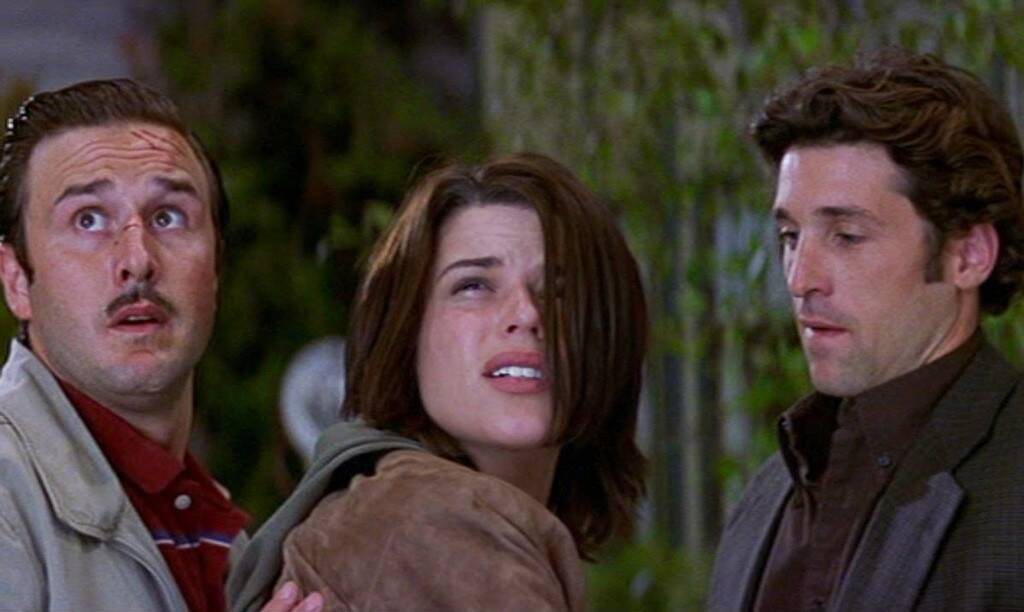
The original Scream (1996) was a true game changer in the horror field, which really revitalised the slasher film genre, at a time when it seemed to have had it's day.  Scream 2 (1997), while not as good as the original, was still a strong sequel.  However, Scream 3 was the point where the franchise dipped.  Kevin Williamson, who wrote the first two films, bowed out of screenwriting duties to be replaced by Ehren Kruger, and Williamson's distinctive voice is certainly missed here.  Wes Craven returns as the film's director and once again stages some impressive action scenes, most notably a scene where Sidney is chased by the killer through a studio mockup of Woodsboro.  Due to concerns over the portrayal of violence in media following the 1999 Columbine Massacre, the level of violence is heavily toned down from the previous films, and the film leans more towards comedy than horror.  Neve Campbell, David Arquette and Courteney Cox Arquette are as engaging as ever, even if Courteney Cox Arquette (who was married to co-star David Arquette at the time) is saddled with a a truly dreadful hairstyle.  Also in the cast is genre veteran Lance Henriksen, popular model-turned-actress Jenny McCarthy, indie film veteran Parker Posey and an early role for Emily Mortimer.  The film also features cameos from legendary B-movie producer Roger Corman, Kevin Smith and Jason Mewes as Jay and Silent Bob, and in the film's funniest moments Carrie Fisher as a washed-up actress working in the studio archives, still bitter over the fact that the role of Princess Leia went to "the one that slept with George Lucas".  Another fun element is Parker Posey as the actress playing Gale Weathers teaming up with Courteney Cox Arquette as the real Gale Weathers, in order to get into character.  The film is not as funny or suspenseful as the previous films, but the Hollywood setting adds an interesting element, and the final act of the film does work, even if it feels more like a cross between Agatha Christie and film noir than a Scream film.  There is also a character who is a creepy movie producer who preys on young actresses and delivers the line "there are plenty of criminals in this town whose careers are flourishing", which has an added resonance in the post-Weinstein world.  Ironically, Harvey Weinstein was one of the film's executive producers.


David Arquette, Neve Campbell and Patrick Dempsey in Scream 3


Tuesday, 4 October 2022

Scream 2

Year:  1997

Director:  Wes Craven

Screenplay:  Kevin Williamson

Starring:  Neve Campbell, Courteney Cox, David Arquette, Jamie Kennedy, Jerry O'Connell, Timothy Olyphant, Laurie Metcalfe, Jada Pinkett, Sarah Michelle Gellar, Liev Schreiber

Running Time:  120 minutes

Genre:  horror, comedy

 Two Windsor College students are brutally murdered at a preview of the new horror film Stab, based on the serial murders in the small town of Woodsboro.  Sidney Prescott (Campbell), one of the survivors of the Woodsboro murders, is also a student at Windsor and soon realises that she is once more being targeted by a ghost-mask wearing killer.  As the bodies and suspects mount up, it becomes clear that someone is trying to make a sequel to the previous killing spree.

Given the immense success of Scream (1996) a sequel was almost inevitable, and the filmmakers certainly didn't waste any time, with Scream 2 in cinemas only a year after the original.  Given the short time between the films it is surprising that Scream 2 is as good as it is.  While the original film both celebrated and commented on the tropes of traditional slasher horror films, this film does the same with horror sequels, including a scene which mirrors a famous sequence in the original where the film nerd Randy (played by Jamie Kennedy) outlines the rules of sequels.  Horror veteran Wes Craven returns to directing duties and orchestrates everything on a much bigger scale with some memorable set pieces, the opening sequence in the cinema, featuring Omar Epps and Jada Pinkett, is one of the highlights of the whole Scream series, and the ensemble cast, which features a number of future stars, as well as veterans such as David Warner, all give good performances.  Neve Campbell is good in the lead, and there is real connection between Courteney Cox and David Arquette, who were in a relationship at the time and later got married. The script by Kevin Williamson is witty, clever and full of pop-culture references.  This film also introduced film-within-a-film Stab, which would become a recurring feature in the Scream franchise, allowing the filmmakers to comment on and poke fun at the franchise itself.  the film inevitably lacks the freshness of the original.  There also some glaring plot holes, and a reliance on red-herring scares.  It is still a very good film, and definitely a superior sequel.


Neve Campbell and Courteney Cox in Scream 2


Wednesday, 22 June 2022

As Good as It Gets

 Year:  1998

Director:  James L. Brooks

Screenplay:  Mark Andrus and James L. Brooks

Starring:  Jack Nicholson, Helen Hunt, Greg Kinnear, Cuba Gooding Jr., Skeet Ulrich, Shirley Knight

Running Time:  139 minutes

Genre:  Romantic comedy, drama

New York City:  Best-selling romance novelist Melvin Udall (Nicholson) is bigoted, misanthropic and suffers from obsessive compulsive disorder.  Every day he eats lunch at the same Manhattan restaurant where he insists on sitting at the table and being served by the same server, Carole Connelly (Hunt), the only one who can tolerate his obnoxious behaviour.  Carole herself is struggling to make ends meet while caring for her ill son.  When Melvin's neighbour, gay artist Simon (Kinnear) is beaten and robbed in his apartment, Melvin is pressured into caring for his pet dog while Simon is in hospital, despite the fact that Melvin frequently bullies Simon and hates the dog.  However, Melvin and the dog end up bonding, and, in spite of himself, he finds himself increasingly drawn into the lives of the people around him.


This is an enjoyable, romantic comedy-drama, in the Woody Allen mould, which doesn't really break much new ground.  Jack Nicholson is ideal as the grouchy, offensive Melvin.  Helen Hunt, who at the time was probably best known for the sitcom Mad About You (1994-1999), won an Academy Award for Best Actress for her role as Carole, and she has real spark as the troubled, but loving Carole who is able to find some kind of humanity in Melvin.  Greg Kinnear is good as the sensitive artist, Simon, who becomes something of a tragic character as his life collapses following his attack.  The film is often uneven in tone, being really quite dark in places, which sometimes sits uneasily with the more broadly comic scenes, and sentiment.  It's also too long, with a running time of two hours and twenty minutes, and the conclusion seems very unlikely.  However, the characters are engaging, and there are some great performances and it's often very funny.  There is nothing new here, but it is an engaging and ultimately warm film, although you kind of wonder how happy the characters will be in the long term.  Also, Melvin is so obnoxious and offensive for most of the film it may be hard for some viewers to warm to him at all, even if he's ultimately shown to be warm hearted softy.  


Jack Nicholson in As Good as It Gets

Tuesday, 21 June 2022

Eating Raoul

 Year:  1982

Director:  Paul Bartel

Screenplay:  Richard Blackburn and Paul Bartel

Starring:  Paul Bartel, Mary Woronov, Robert Beltran, Ed Begley Jr., Buck Henry, Richard Paul, Susan Saiger

Running Time:  83 minutes

Genre:  Dark comedy

Los Angeles:  Paul Bland (Bartel) is a wine snob who works in a cheap liquor store, his wife Mary (Woronov) is a nurse and nutritionist, who constantly has to fend off groping patients.  They live in a run down apartment building, where the neighbours frequently hold wild swinger's parties.  The presence of the swingers offends the prudish Blands, who seem to hate the whole idea of sex.  When Paul accidentally kills a drunk swinger who attacks Mary, the couple realise that these swingers tend to carry a lot of cash.  The Blands decide to lure rich swingers to their flat to rob and kill them in order to finance the couple's dreams of opening their ideal restaurant: Paul and Mary's Country Kitchen.  Professional thief Raoul (Beltran) discovers their scheme and makes a deal with them.  However things become more complicated when Raoul falls for Mary, and decides he wants Paul out of the way,


Paul Bartel was a prolific writer, actor and director who made a name for himself with cult science-fiction film Death Race 2000 (1975) for legendary B movie producer Roger Corman.  Mary Woronov first made a name for herself as one of Andy Warhol's "superstars" appearing in several of his films, including Chelsea Girls (1966), before moving on to Roger Corman films, including Bartel's Death Race 2000.  Eating Raoul is a clever, gleefully tasteless comedy, which satirises 1980s consumerism and entrepreneurship,  as well as the "permissive society".  Paul works, and is fired from, a cheap liquor store where he refuses to sell the cheap, nasty plonk that the shop is selling ("But it's so cheap!" "So's lighter fluid, but I wouldn't serve it to my dinner guests.").  Mary is a nurse and seems to be lusted after by every male she comes across.  All they want to do is to move out and open a fine dining restaurant.  Some of the film's funniest moments comes when Mary has to entertain people with a wide variety of peccadilloes in the Bland's flat, at least until Paul has a chance to whack them on the head with a frying pan.  The film is never as gruesome or offensive as it might be, although the treatment of attempted sexual assault for laughs may be problematic.  Paul Bartel and Mary Woronov make a strangely well matched odd couple, and they ended up making 17 films together, usually playing husband and wife.  Robert Beltran, who would later find stardom in the TV series Star Trek: Voyager (1995-2001), is good as the charismatic but duplicitous Raoul.  Oscar nominated writer and actor Buck Henry has a very funny role as a lecherous bank manager.  Ed Begley Jr. plays an obnoxious hippie, and Edie McClurg (who went on to scene-stealing turns in '80s comedy classics Ferris Bueller's Day Off (1986) and Planes, Trains and Automobiles (1987)) plays a guest at a swinger's party.  Movies directors John Landis and Joe Dante can also be seen in uncredited cameos.  This has become something of a cult film and it is a funny, entertaining movie which delivers consistent laughs throughout. A proposed sequel, Bland Ambition, never came to pass, but Bartel and Woronov did reprise their roles as the Blands in the science-fiction/horror film Chopping Mall (1987) about killer robots running wild in a shopping mall.


Paul Bartel and Mary Woronov in Eating Raoul

Thursday, 19 May 2022

Everything Everywhere All at Once

 Year:  2022

Directors:  Dan Kwan and Daniel Scheinert

Screenplay: Dan Kwan and Daniel Scheinert

Starring:  Michelle Yeoh, Stephanie Hsu, Ke Huy Quan, Jenny Slate, Harry Shum Jr., James Hong, Jamie Lee Curtis

Running Time:  139 minutes

Genre:  Science-fiction, action, comedy

Evelyn Wang (Yeoh) is having a very bad day.  The laundromat she runs with her husband, Waymond (Quan), is struggling; her elderly father Gong Gong (Hong) who has effectively disowned her has arrived from China to be cared for by Evelyn and her family; she has a difficult relationship with her daughter, Joy (Hsu); and Waymond is trying to serve her with divorce papers.  To make matters worse, they are being audited by the IRS and have an appointment with severe auditor Deirdre Beaubeirdra (Curtis).  The last thing Evelyn needs is to learn that she has to connect with multiple alternate versions of herself from parallel universes in order to defeat a powerful force which threatens to destroy all of the infinite realities.


This film is a wild, unpredictable mix of genres and styles, taking in family drama, science-fiction, martial arts action and surreal comedy.  The result is one of the most imaginative, vibrant, and funniest films to come along in a very long time.  The basic concept is that for every decision that is made, the alternative outcome is played out in a parallel universe.  Through a technique called "verse jumping" which involves a special portable headset and performing a completely improbable action an individual can connect to their counterpart in a particular parallel universe that has the skills or abilities that they want to access.  In this way Evelyn is treated to glimpses of her life if she had made different choices, such as ending up as a skilled martial artist, a famous film star, a chef and more bizarre realities including one where humans have hot dogs instead of fingers, and one where she ends up as a rock.  Michelle Yeoh is great in the lead role and convincingly depict Evelyn's change from stressed and unhappy wife, mother and business owner, to action hero; Ke Huy Quan, who is possibly best known as a child actor in Indiana Jones and the Temple of Doom (1984) and The Goonies (1985), is affecting as Evelyn's gentle and goofy husband; Stephanie Hsu is good as Evelyn and Waymond's troubled daughter and Jamie Lee Curtis gives a great comic performance as the tough IRS investigator.  In all the film's wildness and goofiness it doesn't lose sight of the more serious issues such as Evelyn's inability to accept the fact that her daughter is gay and has a girlfriend, and the importance of accepting people as they are and not how we may want them to be. Evelyn is someone who has had endless dreams and hopes but has abandoned them thanks to cruel reality, and now seems to see life itself as something of a miserable chore, but when she opens herself to the limitless possibilities, the experience is both frightening but ultimately liberating for her. The film also examines themes of Chinese-American cultural identity and existential despair.  The film is surprisingly emotional, and by the end is genuinely moving.  While at times it can be overwhelming, even with the generous run time of two hours and twenty minutes it seems to shoot past at breakneck speed with little pause for breath, this is one of the best films that I have seen in a very long time.


Michelle Yeoh in Everything Everywhere All at Once


Tuesday, 17 May 2022

Ghostbusters: Afterlife

 Year:  2021

Director:  Jason Reitman

Screenplay:  Gil Kenan and Jason Reitman, based on Ghostbusters written by Dan Ackroyd and Harold Ramis

Starring:  Carrie Coon, Finn Wolfhard, Mckenna Grace, Paul Rudd, Logan Kim, Celeste O'Connor, Annie Potts, Ernie Hudson

Running Time:  124 minutes

Genre:  Fantasy, comedy

Single mother Callie (Coon) and her two children, teenager Trevor (Wolfhard) and precocious 12 year old Phoebe (Grace), inherit a lonely farmhouse from Callie's estranged father.  After being evicted from their Chicago apartment, the family move in to the house, which Phoebe quickly realises is haunted.  As she investigates she realises that her grandfather, who she never met, was a Ghostbuster.  Soon the nearby town and the area around it become plagued with strange supernatural activity  and Phoebe and Trevor dust off and repair their grandfather's old equipment and, along with some of their new friends, set out to do some ghostbusting of their own.


The 1984 film Ghostbusters remains one of the most beloved films of the 1980s.  A sequel, Ghostbusters II, was released in 1989, and a controversial remake of the first film was released in 2016.  Ghostbusters: Afterlife follows on from the first two films, and has no connection to the 2016 Ghostbusters.  Despite the trappings of the present day, there is a character called Podcast, people watch YouTube videos and use Google etc. this could almost be a 1980s kids movie.  And for the most part, the film seems to be heading in it's own direction, albeit one heavily influence by the films of the 1980s.  This is emphasised by the casting of Finn Wolfhard (star of 1980s-set science-fiction show Stranger Things (2016- ))in a lead role.  Towards the end however it settles into a heavily sentimentalised  retread of the end of Ghostbusters.  However, for all the film's flaws, it has a real charm to it.  Personally, I sat down to it not expecting much, but by the end it had won me over.  Similar to Star Wars: The Force Awakens (2015), the film breathes life into the franchise with new characters and a new set-up, while still providing enough cameos and call-backs to the first film to satisfy anyone's nostalgia cravings.  Finn Wolfhard is good as the teenager trying to impress local girl Celeste O'Connor.  Logan Kim is funny as an aspiring podcaster, and Mckenna Grace is very good as the scientifically minded Phoebe.  Among the adults, Carrie Coon grounds the film as the struggling single mother, trying to deal with her long standing resentment of her father for abandoning the family, and Paul Rudd is funny as the nerdy geology teacher who shows the kids horror movies such as Cujo (1983) and Child's Play (1988) on VHS, and develops a crush on Callie.  Jason Reitman, son of Ivan Reitman who produced and directed the first Ghostbusters, directs with obvious affection for the material, and there is a sweet tribute to the late Harold Ramis, who co-wrote and starred in the first two films.  The film is tonally uneven, some of the humour is a little too broad and silly, and, of course, it lacks Bill Murray, although he does appear in a cameo.  Another thing is that some of the fan service, and references to the earlier films are pretty heavy handed.  For the most part, however, it is a very enjoyable, light-hearted family adventure, which should appeal both to children and nostalgic adults.    It's no masterpiece, but it is a good piece of entertainment.


Finn Wolfhard, McKenna Grace and Logan Kim in Ghostbusters: Afterlife

Friday, 29 April 2022

Planes, Trains and Automobiles

 Year:  1987

Director:  John Hughes

Screenplay:  John Hughes

Starring:  Steve Martin, John Candy

Running Time:  92 minutes

Genre:  Comedy


Uptight advertising executive Neal Page (Martin) is desperate to get from his business meeting in New York City to spend Thanksgiving with his family in Chicago.  However, when his plane is diverted to Wichita, Kansas, Neal embarks on a race against time, packed with disasters and misadventures.  To make matters worse, he is in the company of good-natured, but very irritating, salesman Del Griffith (Candy).

Writer/director John Hughes made his name with teen films such as Sixteen Candles (1984), The Breakfast Club (1985), Weird Science (1985) and Ferris Bueller's Day Off (1986), and this was seen as something of a change of pace, but the plot and structure are fairly similar, in many ways, to National Lampoon's Vacation (1983), which Hughes wrote, and which also deals with a disastrous road trip.  The film starts off with a very realistic and relatable situation.  Steve Martin as Neal Page is desperate to get back to Chicago from New York, but the business meeting is running frustratingly long due to his indecisive client, then he has to get to the airport, but the streets of New York are chockablock with people trying to get away for their Thanksgiving weekends, and then when he finally does get on to the plane, which is delayed, he s downgraded from first class to coach, and has to sit next to overly friendly salesman Del Griffith, and the plane is diverted to Wichita due to a snow storm in Chicago.  Then the situations become ever more absurd and farcical as Neal desperately tries to get back to Chicago by any means necessary before Thanksgiving, which is three days away.  Also he is unable to shake off Del, who both helps and hinders his efforts.   This is a road movie and, like most road movies, is very episodic, but the jokes and comical situations come thick and fast, even if they don't always land, enough of them do to make it consistently funny.  Steve Martin and John Candy were both great comedians and they bounce off each other very well.  Martin has a fine line in seething, buttoned down frustration, and Candy, of course, is the chatty slob who is lovable, but who you know would drive you to distraction after awhile.  The film has it's silly moments, which don't really sit with the more realistic tone of the earlier scenes, but it still works, and the inevitable friendship that springs up between Martin and Candy is well drawn and quite believable.  While it may not be a classic, it is a fun comic romp.  Kevin Bacon has a cameo early in the film as a businessman racing Steve Martin for a taxi.  


Steve Martin and John Candy in Planes, Trains and Automobiles

Thursday, 28 April 2022

The Unbearable Weight of Massive Talent

 Year:  2022

Director:  Tom Gormican

Screenplay:  Tom Gormican and Kevin Etten

Starring:  Nicolas Cage, Pedro Pascal, Sharon Horgan, Tiffany Haddish, Ike Barinholtz, Alessandra Mastronardi, Jacob Scipio, Neil Patrick Harris

Running Time:  107 minutes

Genre:  Action, comedy


Hollywood actor Nicolas Cage is struggling with his career, and is becoming increasingly estranged from his ex-wife (Horgan) and teenage daughter (Lily Sheen).  Reluctantly he accepts a lucrative assignment to travel to an island off Mallorca and appear at the birthday party of a billionaire super-fan, Javi (Pascal).  Shortly after he arrives, however, Cage is contacted by CIA agents Vivian (Haddish) and Martin Etten (Barinholtz) who inform him that Javi is an international arms dealer, who is behind the kidnapping of the teenage daughter of a prominent politician.  The CIA want Cage to act as a spy for them.


Nicolas Cage has had a strange and eclectic career.  Making his name with such films as the Coen Brothers' Raising Arizona (1987), Moonstruck (1987) opposite Cher, and David Lynch's Wild at Heart (1990), to action hero turns in The Rock (1996), Con Air (1997) and Face/Off (1997), and an Oscar-nominated performances in Leaving Las Vegas (1995) and Adaptation. (2002), and after a series of small, straight-to-video films, he has had something of career resurgence in recent years with cult horror films such as Mandy (2018) and Color Out of Space (2019), and finding critical success with Pig (2021).  Cage has also had a strange form of cult celebrity appearing in numerous internet memes and his face appearing on things such as mugs, clothes and even cushions, due to his eclectic career choices, his often flamboyant style of acting (which Cage himself described as "nouveau shamanistic") and his distinctive look and drawling voice.  In this film Cage doesn't just play a version of himself but also an imaginary version of his younger self, digitally de-aged and credited under his birth name of "Nicolas Kim Coppola", who crops up to give the older Cage advice or insults. Here he reminds us once again that he can still deliver a great performance and has a real gift for comedy.  Here he pokes fun, not only at his own career, but at his public image and even his financial troubles.  Pedro Pascal is funny and charismatic as the possible arms-dealer and Nicolas Cage super-fan, with whom the actor bonds.  Great comedy actors such as Sharon Horgan and Tiffany Haddish are a little underused in the supporting cast, but it is really the Nicolas Cage show.  Neil Patrick Harris also appears in a small role as Cage's agent.  The story turns into a fairly average buddy action film and it runs out of steam a little by the end, but the action scenes are well staged and there are consistent laughs throughout.  The performances elevate the film, and the concept of Nicolas Cage playing himself gives the film an extra dimension of fun.  


Pedro Pascal and Nicolas Cage in The Unbearable Weight of Massive Talent


Tuesday, 29 March 2022

Ghost World

Year:  2001

Director:  Terry Zwigoff

Screenplay:  Daniel Clowes and Terry Zwigoff, based on the comic Ghost World by Daniel Clowes

Starring:  Thora Birch, Scarlett Johansson, Steve Buscemi, Brad Renfro, Illeana Douglas

Running Time:  112 minutes

Genre:  Dark comedy, drama


In the bland suburbs of an unnamed American city, cynical teenage outcasts Enid (Birch) and Rebecca (Johansson) have just left high school.  However, a summer of wandering the streets, hanging out at kitschy diners and shops and tormenting people with their sarcastic quips and pranks is threatened by the fact that Enid has to take a remedial art class in order to graduate high school.  As the two slowly drift apart, Enid strikes up a friendship with eccentric, lonely middle-aged record collector, Seymour (Buscemi).


Ghost World started out as a slice-of-life comic series in writer-artist Daniel Clowes' Eightball between 1993 and 1997, before being published as a graphic novel in 1997.  Director Terry Zwigoff had previously made his name with the documentary Crumb, about controversial underground "comix" artist Robert Crumb.  Zwigoff shot the film in a deliberately flat, bland way, with very few extras in the streets, and the characters entered in the frame, to mimic the panels of the comic.  It also shows the alienation of the characters.  The streets are eerily quiet and empty all the time, and helps give the film it's odd, slightly surreal feel.  Thora Birch, who at the time was coming off the success of American Beauty (1999), gives a great performance as Enid, a character who is at the same time sympathetic, awkward, cool, sometimes cruel, disloyal and confused, and who wrecks havoc in the lives of her friends albeit unintentionally.  Steve Buscemi gives a very strong performance as the lonely record collector Seymour, who loves old ragtime music and collects odd old artefacts, and is mostly quiet and shy but still given to occasional fits of anger, and who the girls first encounter when he falls victim to one of their cruel pranks, but who Enid ends up developing. strong connection with.  Seymour could very easily have been very creepy character, but the way that he is written and the way Buscemi plays him, with a kind of naive sweetness, makes him a surprisingly likeable and sympathetic character.  The film marks the breakthrough role for Scarlett Johansson, who had previously gained some attention for her supporting roles in The Horse Whisperer (1998) and the Coen Brothers film The Man Who Wasn't There (2001).  She gives a very good performance as Rebecca, Enid's friend, who is just as cynical and sarcastic as her friend, but is the more popular half of the duo, and unlike Enid has solid plans for the future.  The film is billed as a comedy, and some scenes are very funny, but it is a surprisingly dark film, and it all ends on a strange, ambiguous note. Although some aspects of it have dated in the past twenty years, it is still a strange and bracing look at what it means to be lonely and trapped in the bland modern world.


Scarlett Johansson and Thora Birch in Ghost World


Friday, 25 March 2022

I've Heard the Mermaids Singing

Year:  1987

Director:  Patricia Rozema

Screenplay:  Patricia Rozema

Starring:  Sheila McCarthy, Paule Baillargeon, Ann-Marie MacDonald

Running Time:  83 minutes

Genre:  Comedy, drama


Toronto:  Quirky dreamer Polly (McCarthy) is an aspiring photographer who works as a temp.  Her latest job involves being a secretary for art gallery owner Gabrielle (Baillargeon).  As their professional relationship develops into something like a friendship, Polly becomes increasingly fascinated by her.  However, when she meets Gabrielle's younger lover, Mary(MacDonald), she learns a surprising secret.


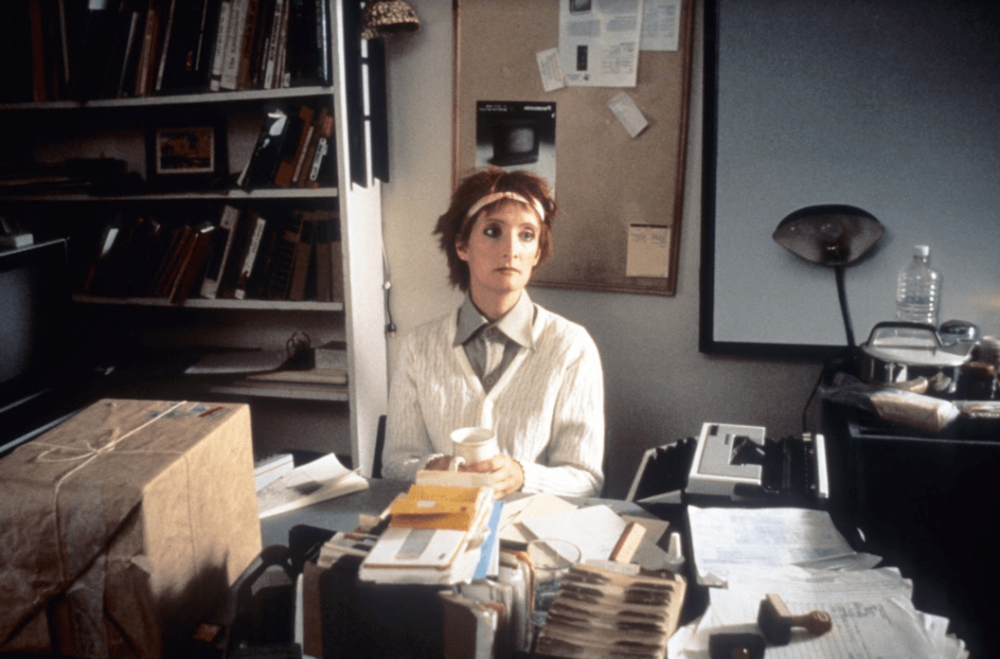
This very low-budget Canadian indie film is almost the epitome of quirky, indie comedy-dramas.  It's rough around the edges, and at times it's too whimsical for it's own good, but it does have enough charm and invention to sustain it, and make it something quite special.  The film moves from the "real" world (in colour) to black-and-white fantasy sequences depicting Polly's inner world.  It has it's own kind of grammar and style, for example, Gabrielle's own painting, which are supposed to be extremely beautiful, are never shown, being depicted instead as illuminated square panels, and the transition to Polly's dream worlds are depicted by fading out to red, instead of the traditional fade to black.  The performances are strong, with Polly in particular being an intriguing character, artistic and charming, but also impulsive, socially awkward, clumsy and with a habit of taking anything anyone says to her literally, she could be seen as a forerunner of the "Manic Pixie Dream Girl" trope of the '90s and 2000s.  The film does enter darker territory as it progresses, but it maintains it's charm.  It doesn't always work, it was originally conceived as an hour long TV film, before writer-director Patricia Rozema decided to lengthen it to feature length, and it does feel stretched in places.  However it's certainly worth checking out.    


Sheila McCarthy in I've Heard the Mermaids Singing

Saturday, 12 March 2022

Privilege

 Year:  1967

Director:  Peter Watkins

Screenplay:  Norman Bogner, from a story by John Speight

Starring:  Peter Jones, Jean Shrimpton, Mark London, Jeremy Child

Running Time:  103 minutes

Genre:  Comedy, drama, science-fiction, satire, 


Britain, the near future:  The country is ruled by an authoritarian coalition Government.  The biggest celebrity in the world is pop singer Steven Shorter (Jones), whose ruthless management have made a deal with the government to use Steven as a tool to keep the people in line.  When Steven meets sympathetic artist Vanessa (Shrimpton) he begins to see the need to rebel.


Director Peter Watkins made his name with the 1964 TV movie Culloden which depicted the 1746 Battle of Culloden in the style of modern TV news reportage, and the controversial 1966 TV film The War Game, about nuclear war, which was deemed so disturbing that the BBC refused to broadcast it.  Like Watkins' previous works Privilege is made as a pseudo-documentary following futuristic pop singer Steven Shorter.  Played by Manfred Mann lead singer Paul Jones, Steven is a shrunken, quiet, haunted figure, notably lacking in charisma, who is surrounded by people who pretend to care about him, but really just want to exploit him.  Jean Shrimpton's Vanessa, ironically the only one, initially, who couldn't care less about Steven Shorter, avoids the oily, slick media and political types to become the only one who really does care about him.  This is a horribly dated film, which screams late sixties in almost every frame, but it is funny (particularly a scene involving the filming of an advert to promote apples and the director calls: "I want you all to think like apples, act like apples, be apples!"), and frightening in it's depiction of government control of mass media to hypnotise and control the people.  It is certainly ripe for a remake.


Arthur Pentelow and Paul Jones in Privilege


Saturday, 26 February 2022

The Driller Killer

Year:  1979

Director:  Abel Ferrara

Screenplay:  Nicholas St. John

Starring: Abel Ferrara, Carolyn Marz, Baybi Day, Harry Schultz, Allan Wynroth

Running Time:  101 minutes (96 minutes theatrical release)

Genre:  Drama, comedy, horror


New York City, the late 1970s:  Reno Miller (Ferrara) is a struggling artist who lives with his girlfriend Carol (Mark) and her lover Pamela (Day), in a cramped, cluttered apartment.  Reno is working on a painting that will make him a lot of money, providing that Dalton (Schultz), the gallery owner who commissioned the piece, likes it.  Unable to pay his rent or bills, Reno knows full well that this is really his one chance, but is overcome with anxiety that he is reluctant to actually finish the piece.  To make matters worse a punk band have moved into the flat next door and practice loudly day and night.  Desperate for some peace and time to think, Reno takes to wandering the New York streets, where he becomes disgusted by the large numbers of people living on the streets, and terrified that he may very soon be joining them.  Eventually Reno snaps, and takes to the streets armed with a power drill, embarking on a killing spree targeting the unhoused population of New York.


After spending the 1970s making short, experimental films and a pornographic film, this marked the (relatively) mainstream debut of controversial auteur Abel Ferrara who becomes something of a cult figure in the '80s and '90s with exploitation films such as Ms .45 (1981), more mainstream crime dramas such as King of New York (1990) and The Funeral (1996), the hugely controversial Bad Lieutenant (1992), as well as science-fiction horror film Body Snatchers (1993), and bizarre vampire film The Addiction (1995).  More recently he has turned to making more experimental films in Italy and documentary features.  Those coming to The Driller Killer expecting grisly thrills may be disappointed because, while it is violent and gruesome, it isn't really as gory as the title and advertising promise, with the exception of a couple of very gruesome scenes, including a notorious scene where one unfortunate gets drilled in the head.   It's also a long time before any murders are committed.  Before then there are long rambling arguments and discussions, and a lot of punk music, as well as a gratuitous lesbian shower scene.  There are a lot of scenes of the band playing, and you could take out all the murders and have, basically, a punk comedy-drama.  This is an obviously very low-budget film filmed in an almost documentary style on the streets of New York, with much of the dialogue being so badly delivered and recorded that it is difficult to make out what the characters are saying.  Ferrera is a very good visual director and there are some scenes of unexpected beauty, and his talent does shine through at several points.  However, acting is not one of his skills.  Ferrara plays the lead role (under the pseudonym of Jimmy Laine) and seems to be spending the film doing a Robert De Niro impression.  The rest of the performances can be politely described as enthusiastic, with Carolyn Marz delivering by far the best performance.  The film does work as something of a time capsule of the underground scene in late 1970s New York.  Unusually for a horror film, Reno Miller's main trigger for his rampage is his financial woes rather than sexual frustration, also unusually almost all of his victims are men.  When it comes to the female characters it is left unclear whether he attacks them or not.  The Driller Killer does have it's unexpected place in film history due to it being almost singlehandedly responsible for the notorious "video nasty" scare in Britain in the 1980s.  Not the film itself but the gruesome VHS cover which depicted a close-up of the head drilling scene and the charming tagline "The Blood Flows in Rivers... And Still the Drill Keeps Tearing Through Flesh and Bone."  When this appeared in video trade magazines in the early 1980s, Conservative politicians clutched their pearls in horror and, by the mid '80s even such relatively innocuous films as The Exorcist (1973), The Texas Chainsaw Massacre (1974) and The Evil Dead (1983) were legally unavailable in Britain.  The recent film Censor (2021) is a good look at the video nasty period.  


Abel Ferrara is The Driller Killer


Friday, 18 February 2022

Annie Hall

Year:  1977

Director:  Woody Allen

Screenplay:  Woody Allen and Marshall Brickman

Starring:  Woody Allen, Diane Keaton, Tony Roberts, Paul Simon, Carol Kane, Janet Margolin, Shelley Duvall, Christopher Walken, Colleen Dewhurst

Running Time:  93 minutes

Genre:  Comedy

In New York City, neurotic comedian Alvy Singer (Allen) and Annie Hall (Keaton), an aspiring singer form the Midwest embark on an on-again, off-again romance.


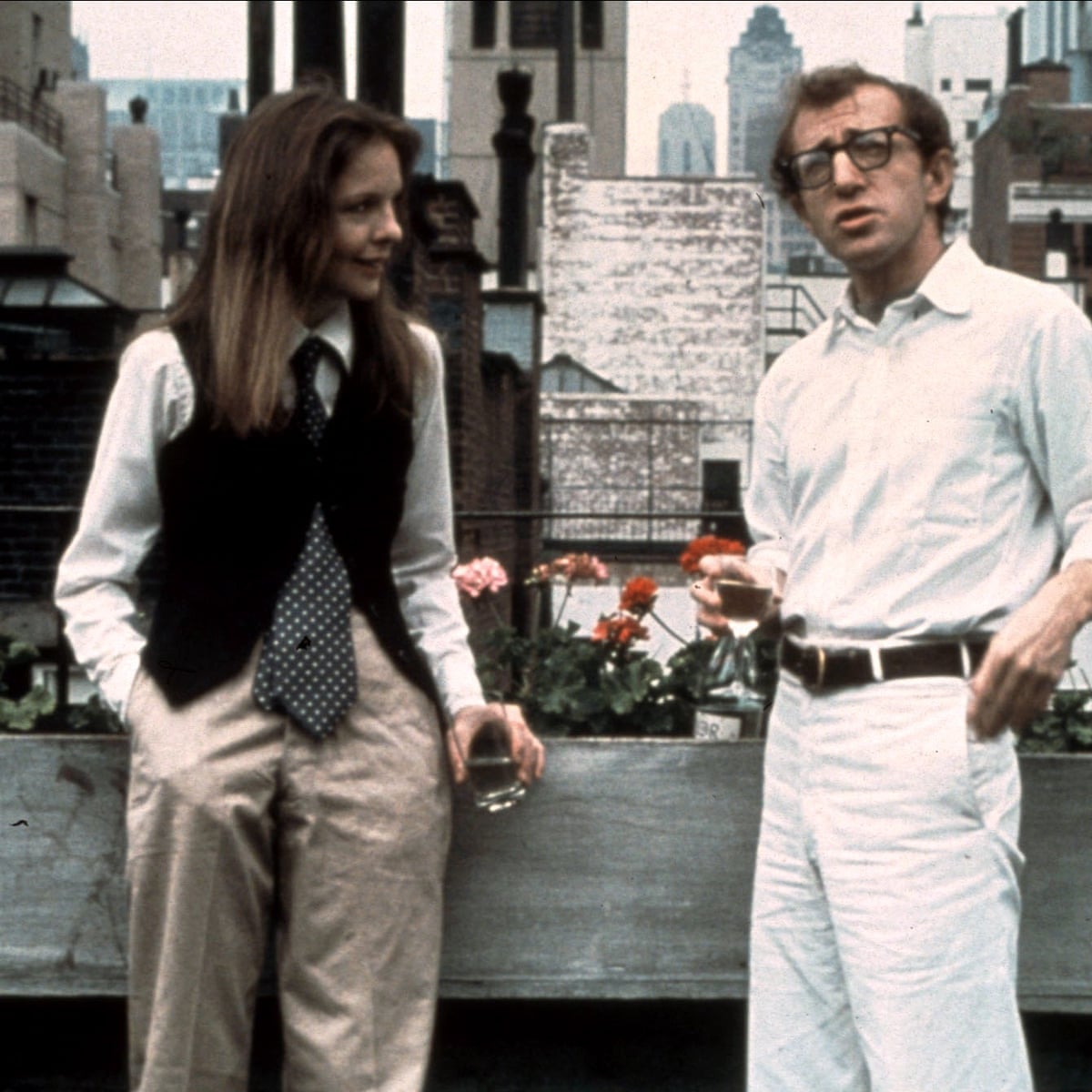
Woody Allen has made approximately 50 films in his career, many of which he not only writes and directs but also stars in.  His early films were pure comedies, where everything was about the jokes, and the plot was basically just a string to hang a series of gags on.  Most of them revolved around the neurotic, intellectual, weedy, uptown New Yorker Woody Allen character, that he had honed in his standup act, being thrust into unlikely situations.  By the end of the 1970s, however, Allen became interested in working with more substantial, dramatic plots, and indulging in some of his more philosophical interests.  Annie Hall is kind of a crossover film, while it is a comedy, it also has some more dramatic elements.  These days Woody Allen is something of a controversial figure, due to his private life, but his influence on American cinema is undeniable, and Annie Hall is probably the quintessential Woody Allen film.  If you have never seen any of his films, and are curious to give them a try, then this is probably the one to go for.  It is a very simple story, told in a very inventive way.  There are flashbacks, Woody Allen frequently breaks the forth wall and addresses the camera directly, in one scene Allen and Keaton are having a conversation and their thoughts appear as subtitles, there is even an animated sequence where Allen imagines himself dating the Evil Queen from Snow White and the Seven Dwarfs (1937).  Allen essentially plays the typical Woody Allen character.  Diane Keaton shines as Annie Hall, who is kind of an early example of the "manic pixie dream girl" stereotype, but the part is elevated by Keaton's performance.  Also in the cast is singer Paul Simon and early appearances from Christopher Walken as Annie's creepy brother, Dwayne,  Jeff Goldblum as an LA party guest on the phone to his guru, complaining that he has "lost his mantra", and a very early non-speaking appearance from Sigourney Weaver as one of Alvy's dates.  It is a very funny, well-constructed, clever film, and while it has inevitably dated, it is certainly one of Allen's finer, if not finest, works.


Diane Keaton and Woody Allen in Annie Hall

Sunday, 6 February 2022

My Life as a Courgette

 Year:  2016

Director:  Claude Barras

Screenplay: Céline Sciamma

Starring:  Gaspar Schlatter, Sixtine Murat, Pauline Jaccound, Nick Offerman, Amy Sedaris, Elliot Page, Will Forte

Running Time:  65 minutes

Genre:  Animated, drama


When nine year old Icare's alcoholic single mother dies, he is sent to a children's home.  At first Icare, who prefers to be called "Courgette", finds it difficult to fit in but, thanks to some new friends, including a kindly police officer, Icare finally begins to find some acceptance.


This animated Swiss/French film is beautifully realised in colourful stop-motion.  However it's bright colours, odd title and flashes of humour hide a surprisingly dark tale.  Essentially it is a gentle, warm-hearted tale about a boy finding love and acceptance, it's also a story about grief, loneliness and loss, which doesn't shy away from the tragic histories of many of the children in the home.  Despite a brief running time the film moves at a sedate pace.  The script by Céline Sciamma (writer and director of acclaimed dramas such as Water Lilies (2007), Tomboy (2011) and A Portrait of a Lady on Fire (2019)) is funny and moving, and the animation and character design is striking.  A re-dubbed English language version was released as My Life as a Zucchini with a voice cast including Nick Offerman, Amy Seders, Will Forte and Elliot Page.  While it may be too dark for younger children, this is certainly worth checking out for adults as well as children.


My Life as a Courgette

Tuesday, 25 January 2022

Big Eyes

Year:  2014

Director:  Tim Burton

Screenplay:  Scott Alexander and Larry Karaszewski

Starring:  Amy Adams, Christoph Waltz, Danny Huston, Jon Polito, Krysten Ritter, Jason Schwartzman, Terence Stamp

Running Time:  106 minutes

Genre:  Drama, comedy, biography


In 1958 aspiring artist Margaret Ulrich (Adams) leaves her husband and travels with her young daughter to San Francisco, where she meets unsuccessful but charismatic painter Walter Keane (Waltz), and they soon get married.  While Walter paints nondescript landscapes, Margaret specialises in pictures of waif-like children with oversized eyes.  As Walter continues to have no success with his own works, he begins to pass off Margaret's work as his own (she signs her paintings simply as "Keane").  The paintings become extremely successful, and Walter becomes something of a celebrity, but Margaret is increasingly dissatisfied at doing all of the work and getting none of the credit.

You may not be familiar with Margaret and Walter Keane and the slightly creepy paintings of sad children with huge eyes (which look now for all the world like the sinister Black Eyed Kids of modern urban legend).  However in the 1960s Walter Keane was a big celebrity, and the paintings were hugely popular.  It turned out of course that the paintings were all the work of his wife, Margaret.  It's a strange and interesting story, and this is an interesting film.  Director Tim Burton and screenwriters Scott Alexander and Larry Karaszewski had previously explored the odd fringes of popular culture with Ed Wood (1994), and while this shares the often humorous take and appreciation of kitsch, Big Eyes is not as distinctive or impressive.  In fact it is a surprisingly conventional film from Tim Burton who made his name with bizarre, grotesque and slightly surreal films, the main stylistic element here is that everything seems overly bright and colourful.  Amy Adams gives a muted, nuanced performance as Margaret Keane, but Christoph Waltz goes completely over the top as the charismatic conman Walter Keane, who comes across as something between a gameshow host and a sleazy used car salesman, he constantly talks about his travels throughout France, and it turns out that he spent all of a week there, and when it come to art he has far more confidence than talent.   Together Amy Adams and Christoph Waltz seem to be making two completely different films.  Amy Adams, a drama about a woman trying to find her voice, and Christoph Waltz, a broad comedy about a lovable rogue.  The film is interesting and always entertaining, but it is quite conventional.  It's certainly worth your time, but probably won't linger very long after the end credits have rolled.  


Amy Adams in Big Eyes
   

Monday, 3 January 2022

Licorice Pizza

 Year of Release:  2021

Director:  Paul Thomas Anderson

Screenplay: Paul Thomas Anderson

Starring:  Alana Haim, Cooper Hoffman, Sean Penn, Tom Waits, Bradley Cooper, Benny Safdie

Running Time:  133 minutes

Genre:  comedy drama

San Fernando Valley, 1973:  15 year old high school student Gary Valentine (Hoffman) balances a successful career as a child actor with a number of entrepreneurial schemes.  One day he meets 25 year old photographer's assistant Alana Kane (Haim) and becomes instantly smitten with her.  Alana, however, is intrigued by Gary's chutzpah but considers him far too young for him.  Despite this the two forge a tentative friendship.


Paul Thomas Anderson is arguably one of the most important American filmmakers working today, as well as one of the most infuriating, but with Licorice Pizza, a tender, romantic comedy drama set in early '70s Los Angeles based on part on Anderson's own youthful experiences as well as those of his friend, producer and actor Gary Goetzman.  Cooper Hoffman, who is the some of the late, great actor Philip Seymour Hoffman, who appeared in several Anderson films, makes his film debut as Gary, and delivers a great performance making Gary romantic, infuriating, admirable and funny, often all at the same time.  Alana Haim, of the rock band Haim, pretty much steals the movie as Alana Kane, and, as with Hoffman, this was her debut film.  The way their relationship plays out is fascinating and moving.  Despite being a teenager, Gary appears more self-confident and assured, he is a fairly successful actor and he is always coming up with money-making schemes.  He walks into his favourite restaurant, and basically owns the place.   Despite being ten years older, Alana works a miserable job, where her boss slaps her butt as she walks by him, and doesn't really know what she wants from life.  She is also more idealistic than the cynical Gary.  The film features Sean Penn, as a self-obsessed ageing actor based on William Holden, Tom Waits, sounding more than ever like an elderly Dalek, as a drunk director, Bradley Cooper delivers a hilarious performance as real-life producer Jon Peters, and Benny Safdie, one half of the filmmaking Safdie Brothers (directors of Good Time (2017) and Uncut Gems (2919)) plays real-life politician Joel Wachs.  Alana Haim's two sisters and Haim bandmates Danielle and Este turn up as Alana Kane's sisters, along with their parents, Moti and Donna. Incidentally Anderson directed several of Haim's music videos, and Donna Haim was Anderson's art teacher at school.  This is not really a plot based film.  At times it feels more like a tour through a photo album of the sights and sounds of the period.  The fact is that this never gets wearying.  It may at times feel too loose, there are lots of interesting elements that don't really go anywhere, but such is life.  At the end of the film I was left so invested in the characters and their lives that I wanted more, and there can be no higher praise for a film than that.  It has a great seventies soundtrack too.


Cooper Hoffman and Alana Haim in Licorice Pizza
    

Wednesday, 29 December 2021

Husbands

Year of Release:  1970

Director:  John Cassavetes

Screenplay:  John Cassavetes

Starring:  Ben Gazzara, Peter Falk, John Cassavetes

Running Time:  140 minutes

Genre:  Comedy drama

Following the death of a mutual friend, three middle-aged New York family men: Harry (Gazzara), Archie (Falk) and Gus (Cassavetes) indulge in a days long binge of heavy drinking and soul-searching, including an impromptu trip to London.


John Cassavetes is possibly most familiar as an actor in Hollywood films such as The Dirty Dozen (1967), Rosemary's Baby (1968) and The Fury (1978), but his most important legacy rests with the groundbreaking independent films he made as director, writer and sometime actor.  After making a name with his directorial debut Shadows (1959), Cassavetes had his first sizeable success with Faces (1968), which allowed hims some studio backing for Husbands.  While Cassavetes came up with the film's story and scenes, the dialogue and action came out of long improvisation sessions with his fellow actors, and Gazzara, Falk and Cassavetes' characters were more or less based on the actors themselves.  The basic plot of Husbands, three guys go out on a booze filled bender for days on end, could apply to any number of comedies, both good and bad, but few go as dark as this does.  This is a film defined by absence.  It starts with a series of still snapshots of a barbecue or pool party where Gus, Harry and Archie are clowning around with their families and their friend Stuart, whose funeral opens the main action of the film.  We never learn anything about Stuart, but it seems as if he was the lynchpin that kept the gang together.  The other three spend the film seeming unmoored, and despite being very similar, they don't seem to like each other very much.  Also, despite the film's title, we never see much of their family lives.  Harry's wife appears briefly and they have a violent argument, and we see Gus' children, played by Cassavetes' own children Nick and Alexandra, but we see nothing of Archie's family.  It is hard to sympathise entirely with this pretty unpleasant trio of middle-aged, middle-class white guys who are creepy, mocking, violent or rude to almost any woman unlucky enough to cross their path.  Following Stuart's funeral they ride the subway, have an impromptu late-night basketball game and get drunk and sing in a bar, when it comes time for them to go to work and spend some time with their families, the three shoot off to London to drink, go to casinos and pick up women (including Jenny Runacre).  This is a tough film to watch, and it's often very uneven.  It's sometimes profound, often dull, sometimes cruel and occasionally funny.  It all ends on a very inconclusive note.


Peter Falk, John Cassavetes and Ben Gazzara are Husbands