Showing posts with label Woody Allen. Show all posts

Friday, 18 February 2022

Annie Hall

Year:  1977

Director:  Woody Allen

Screenplay:  Woody Allen and Marshall Brickman

Starring:  Woody Allen, Diane Keaton, Tony Roberts, Paul Simon, Carol Kane, Janet Margolin, Shelley Duvall, Christopher Walken, Colleen Dewhurst

Running Time:  93 minutes

Genre:  Comedy

In New York City, neurotic comedian Alvy Singer (Allen) and Annie Hall (Keaton), an aspiring singer form the Midwest embark on an on-again, off-again romance.


Woody Allen has made approximately 50 films in his career, many of which he not only writes and directs but also stars in.  His early films were pure comedies, where everything was about the jokes, and the plot was basically just a string to hang a series of gags on.  Most of them revolved around the neurotic, intellectual, weedy, uptown New Yorker Woody Allen character, that he had honed in his standup act, being thrust into unlikely situations.  By the end of the 1970s, however, Allen became interested in working with more substantial, dramatic plots, and indulging in some of his more philosophical interests.  Annie Hall is kind of a crossover film, while it is a comedy, it also has some more dramatic elements.  These days Woody Allen is something of a controversial figure, due to his private life, but his influence on American cinema is undeniable, and Annie Hall is probably the quintessential Woody Allen film.  If you have never seen any of his films, and are curious to give them a try, then this is probably the one to go for.  It is a very simple story, told in a very inventive way.  There are flashbacks, Woody Allen frequently breaks the forth wall and addresses the camera directly, in one scene Allen and Keaton are having a conversation and their thoughts appear as subtitles, there is even an animated sequence where Allen imagines himself dating the Evil Queen from Snow White and the Seven Dwarfs (1937).  Allen essentially plays the typical Woody Allen character.  Diane Keaton shines as Annie Hall, who is kind of an early example of the "manic pixie dream girl" stereotype, but the part is elevated by Keaton's performance.  Also in the cast is singer Paul Simon and early appearances from Christopher Walken as Annie's creepy brother, Dwayne,  Jeff Goldblum as an LA party guest on the phone to his guru, complaining that he has "lost his mantra", and a very early non-speaking appearance from Sigourney Weaver as one of Alvy's dates.  It is a very funny, well-constructed, clever film, and while it has inevitably dated, it is certainly one of Allen's finer, if not finest, works.
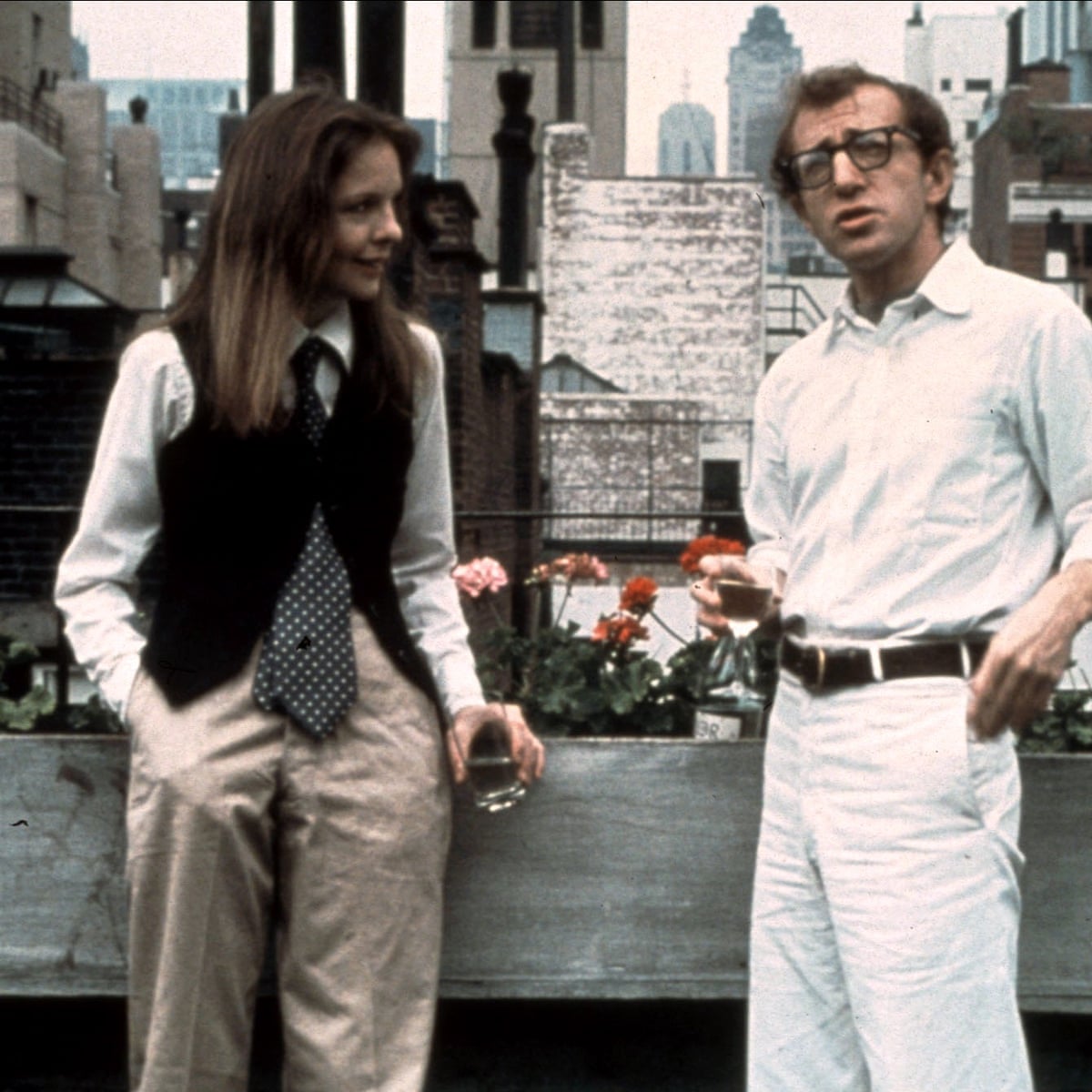


Diane Keaton and Woody Allen in Annie Hall

Thursday, 6 January 2022

Casino Royale

 Year of Release:  1967

Director:  John Huston, Ken Hughes, Robert Parrish, Joe McGrath, Val Guest

Screenplay:  Wolf Mankowitz, John Law, Michael Sayers, based on the novel Casino Royale by Ian Fleming

Starring:  David Niven, Peter Sellers, Ursula Address, Joanna Pettet, Orson Welles, Woody Allen, Deborah Kerr

Running Time:  131 minutes

Genre:  Comedy

Legendary British spy, Sir James Bond (Niven), is dragged out of retirement when British spies begin being systematically eliminated by SMERSH.

This sprawling, self-indulgent mess of a film has no less than five credited directors.  Whereas Ian Fleming's source novel, which first introduced the British super-spy James Bond to the world,  was a taut thriller, the adaptation is barely comprehensible and has only the most passing occasional similarity to the novel.  This is a huge big budget film with an all-star cast, including Hollywood names such as William Holden, George Raft and Charles Boyer, British comedians Ronnie Corbett, Chic Murray and Bernard Cribbins, French New Wave icon Jean-Paul Belmondo, and uncredited appearances from Peter O'Toole and racing driver Stirling Moss.  By the late 1960s, the Bond films were moving further away from Fleming's novels and introducing more comic elements, although they wouldn't become full self-parody until the Roger Moore films of the 1970s.  However this film spoofs Bond mercilessly, everything being played for broad comedy.  It looks like several different films shoved together, and it is a complete mess, at times it looks good, particularly the German expressionist design  of the Berlin spy school, at other times it looks really shoddy.  It manages to shove in UFOs, Frankenstein's monster, cowboys, and a sequence in Heaven among other things.  The climax is a complete mess.  David Niven, who in fact was Fleming's own choice to play Bond, provides some class to proceedings.  Peter Sellers is mostly quite good as the gambler posing as Bond, although he does occasionally fall back on his vaguely offensive funny accent routines.  Woody Allen is Woody Allen, enough said.  Orson Welles just about keeps his dignity as Le Chiffre, the gambler who bankrolls SMERSH.  Ursula Address, the original Bond girl from Dr. No (1962), seems to be having fun as the sinister spy who seduces Sellers.  The film introduces the idea of James Bond, and the 007 number being a code, and hints that the James Bond in the official series is a separate person using the same code name and number, and it does have some gags at the expense of the official Bond films (Sir James:  "Since when did secret agent become synonymous with sex maniac?  Speaking of which, how is my namesake?"). This film does feature about six different James Bonds (maybe something for Eon to consider, since it seems that everyone with an Equity card seems to be named, or has been named, as a possible Bond.  Or maybe it's best not to give them ideas).  Perhaps the best thing about the film is the music written by Burt Bacharach and Hal David and performed by Herb Alpert and the Tijuana Brass, and Dusty Springfield who sings "The Look of Love", which became a big hit.  I did laugh during the film, but it was kind of a laugh of disbelief, because I kept thinking that it was not going to get any more ridiculous or nonsensical, and yet it always did.  This is very much a product of it's time, and to put it mildly, it has aged very badly, and some elements are quite roblematic, so be warned.

A far more faithful adaptation of Casino Royale was released in 2006 starring Daniel Craig, Eva Green and Mads Mikkelsen.  Whatever you do, don't get the two films confused!


David Niven as Sir James Bond and Barbara Bouchet as Miss Moneypenny in Casino Royale

Wednesday, 30 December 2020

Manhattan Murder Mystery

 Year of Release:  1993

Director:  Woody Allen

Screenplay:  Woody Allen and Marshall Brickman

Starring:  Woody Allen, Diane Keaton, Alan Alda, Anjelica Huston, Jerry Adler

Running Time:  107 minutes

Genre:  Comedy, crime

Married couple Larry (Allen) and Carole (Keaton) befriend their elderly neighbours Paul (Adler) and Lillian (Lynn Cohen).  They are shocked when they learn that the seemingly perfectly healthy Lillian has suddenly died of an apparent attack, and are further disturbed by Paul's cheerful demeanour immediately afterwards.  Carole becomes convinced that Paul murdered Lillian, and begins to investigate with the help of her friend, playwright Ted (Alda).  Larry however is convinced that there is no mystery to solve, until it turns out that Lillian might not be dead after all.


This darkly comic mystery film was made at a very difficult time in Woody Allen's personal life as his relationship with Mia Farrow was collapsing among allegations which continue to dog Allen's reputation to this day.  This was an intentionally light, playful film which Allen made to take his mind off things, and reunites him with close friend and regular co-star Diane Keaton, and other Allen regulars Alan Alda and Anjelica Huston.  The film was originally conceived as a subplot in Annie Hall (1977), but was excised from the final script.  The film really hearkens back to Allen's "early funny ones", lacking the introspection and philosophical themes which dominated Allen's films throughout the 1980s and early 90s.  The film is overly long, and the murder plot is very convoluted, but it is funny and the chemistry between Allen and Keaton really sparkles.  The mystery plot is a welcome addition to the typical wisecracks and one-liners, and the climax is really quite exciting.  Alan Alda and Anjelica Huston provide reliable support.  The film also marks the screen debut of Zach Braff.  This is one of Allen's most purely enjoyable films, but there is an emotional core about Larry and Carole's marital difficulties.  Woody Allen fans will  certainly enjoy it, and it should appeal to newcomers as well.


Woody Allen and Diane Keaton are embroiled in a Manhattan Murder Mystery


Saturday, 24 February 2018

Melinda and Melinda

Year of Release:  2004
Director:  Woody Allen
Screenplay:  Woody Allen
Starring:  Radha Mitchell, Chloe Sevigny, Jonny Lee Miller, Chiwetel Ejiofor, Will Ferrell, Amanda Peet, Wallace Shawn
Running Time: 95 minutes
Genre:  Comedy drama

In a Manhattan diner, four friends discuss whether life is essentially comic or tragic.  To illustrate their points two playwrights take a simple premise (an emotionally fragile woman, Melinda (Mitchell), disrupts a dinner party) and tell their own versions of what happens to her. One version plays as a tragedy, and the other as a light romantic comedy.

It is an interesting premise, the problem is that the tone is very jarring throughout, most of the film is taken up with recounting Melinda's story interweaving the two versions moving from bleak drama to frothy comedy.  Some of the film is pretty repetitive, we see the same events play out in two different versions.  Radha Mitchell plays Melinda in both stories, with Chloe Sevigny, Jonny Lee Miller and Chiwetel Ejiofor starring in the tragic story, and Will Ferrell and Amanda Peet starring in the comedy version (which also features Steve Carell in a small role as Ferrell's friend).  The performances are good for the most part, with Mitchell in particular giving a stunning performance in the central role, although Will Ferrell's performance seems to consist mainly of him doing a Woody Allen impression.  The film feels very much like a filmed play at times, it has a fairly small cast of characters and is almost entirely dialogue driven, however the tragic storyline has muted colours and a slightly dull, slightly overcast look to it, while the comic sequences are bright, vibrant and sunlit.
While this is far from Woody Allen's best films, it still has it's moments.

Will Ferrell and Radha Mitchell in Melinda and Melinda.            

Thursday, 22 February 2018

Everything You Always Wanted to Know About Sex* (*But Were Afraid to Ask)

Year of Release:  1972
Director:  Woody Allen
Screenplay:  Woody Allen, based on the book Everything You Always Wanted to Know About Sex* (*But Were Afraid to Ask) by Dr. David Ruebens
Starring:  Woody Allen, Louise Lasser, John Carradine, Tony Randall, Burt Reynolds, Gene Wilder, Lynn Redgrave
Running Time:  84 minutes
Genre:  Comedy

This film is a selection of seven sketches inspired by questions relating to sex and sexual behaviour:  In medieval England a court jester (Allen) attempts to seduce the Queen (Redgrave); A respectable doctor (Wilder) falls in love with a sheep; An Italian man (Allen again) discovers that his wife (Lasser) can only reach orgasm in public places; A middle-aged married man (Lou Jacobi) takes to wearing women's clothing; A cheery 1950s game show attempts to teach America about sexual fetishes; A mad scientist (Carradine) unleashes a giant, monstrous breast on the world; A nervous sperm (Allen) prepares to leap into the great unknown.

The original book, Everything You Always Wanted to Know About Sex, was a serious sex manual, which became a huge bestseller and was one of the most popular and influential non-fiction books of it's time.  Allen, here, takes chapter headings from the book, and spins them off into the comedy sketches.  The kind of sketch comedy format, while it has often been popular on TV (maybe not in the past few years, but it certainly used to be), never really works in movies, partly because because sketches tend to be hit or miss,  and also because they tend to be very lightweight, they are really either too short to get into, or they are too long to sustain the joke.  By and large this is funny, with each segment having at least one good laugh in it.  It belongs to the early part of Allen's career, when he really was trying to make straightforward comedies, without the dramatic or philosophical concerns that would later come to dominate. The film pokes fun at Shakespeare, Italian cinema, and science-fiction and horror movies.  The best segment is the last one; which takes place in the hi-tech control centre of a man's brain while he's on a date, with Allen as a nervous, white-uniformed sperm.  That last segment is inventive and very funny.
It's certainly worth watching, but I would point out that this is a product of the early 1970s and has not dated well in terms of it's attitudes and some of it's humor, so proceed with caution.

Woody Allen is going to tell you Everything You Always Wanted to Know About Sex*  (*But Were Afraid to Ask)

Tuesday, 20 February 2018

Hannah and Her Sisters

Year of Release:  1986
Director:  Woody Allen
Screenplay:  Woody Allen
Starring:  Mia Farrow, Michael Caine, Barbara Hershey, Dianne Wiest, Woody Allen, Max von Sydow, Carrie Fisher
Running Time:  103 minutes
Genre: Comedy drama

This film concerns the lives of three sisters over the course of two years.  Hannah (Farrow), is kind, loving, strong and stable, her husband Elliot (Caine), while he loves Hannah, is infatuated with her sister Lee (Hershey), who is living with mercurial artist Frederick (Sydow).  Meanwhile, the third sister, Holly (Wiest), a former cocaine addict, struggles to achieve her dream of becoming an actor while managing a catering company with her friend and rival, April (Fisher).  Also Hannah's ex-husband Mickey (Allen), a hypochondriac television producer experiences an existential crisis when he becomes convinced he has a brain tumor.

This is possibly one of Woody Allen's finest films, managing the very tricky art of successfully balancing both comedy and drama.  It manages to be tender and sentimental without being saccharine, profound without being pretentious, warm without being cloying and, where necessary, being biting without being cruel.  Allen manages to get good performances out of his large cast, and seems to have genuine affection for all of his characters.  If you are familiar with Woody Allen movies, than you'll know the kind of humor on display here, mostly wry, neurotic, intellectual wisecracks.  Of course, these days Woody Allen is problematic to say the least, and also this is a film almost entirely about very wealthy white people, in Allen's New York, people of colour are barely glimpsed.  Although this is a very affecting film about sisterhood, love, ambition and just trying to find a meaning to life.


Mia Farrow, Barbara Hershey and Dianne Wiest are Hannah and Her Sisters   
    

Saturday, 20 January 2018

Zelig

Year of Release:  1983
Director:  Woody Allen
Screenplay:  Woody Allen
Starring:  Woody Allen, Mia Farrow
Running Time:  72 minutes
Genre:  Comedy, mockumentary

The film is structured as a documentary, exploring the phenomenon of Leonard Zelig (Allen), a nondescript individual who develops an ability to take on the personality and even the physical traits of people around him.  As the "Human Chameleon" Zelig unwittingly becomes one of the biggest sensations of the 1920s and 30s. 

This is one of the most innovative films Allen has made.  The film has the appearance and style of the newsreels of the 1920s and 30s, interspersed with interviews from contemporary intellectuals such as Susan Sontag and Saul Bellow.  Similar to Forrest Gump (1994), at various points throughout the film the actors are edited into contemporary photographs and footage from the 1920s and 30s enabling Zelig to appear with everyone from F. Scott Fitzgerald, to Charlie Chaplin, to Adolf Hitler.  The effects are quite astonishing, looking extremely convincing throughout, and the documentary format works well.  The film is pretty funny throughout, and there is a lot of fun to be had with the novelty songs about Zelig at the height of his popularity.  Leonard Zelig really just wants to be accepted and loved, but the cost of that is he drowns his own personality and identity to take on those of the people around him, and the film does have a point to make about the dangers of being too eager to be part of the crowd that you lose who you are.  One of the problems with the film is that so much of it seems to take second place to the technical aspects.  Mia Farrow never really gets to make much of an impression as the kindly psychiatrist who helps Zelig, neither really does Allen as Zelig, who of course is supposed to be kind of a blank slate.  It is one of Allen's most impressive films, if not one of his best.

Mia Farrow and Woody Allen in Zelig 


Saturday, 13 January 2018

Broadway Danny Rose

Year of Release:  1984
Director:  Woody Allen
Screenplay:  Woody Allen
Starring:  Woody Allen, Mia Farrow, Nick Apollo Forte
Running Time:  84 minutes
Genre:  Comedy

Danny Rose (Allen) is an unsuccessful talent agent, who is stuck with acts such as a one-legged tap dancer, balloon animal makers, and novelty bird acts.  The one act on his books that is showing any kind of promise is washed up lounge lizard, Lou Canova (Forte), who is enjoying a comeback due to a nostalgia craze.  Danny manages to get Lou a very prestigious gig, but Lou, who is already married, refuses to go on stage unless his girlfriend, Tina (Farrow), is in the audience.  He persuades Danny to not only go and pick up Tina but to pretend to be her boyfriend in public, in order to keep her and Lou's affair secret.  To make matters even more complex, Tina's ex-boyfriend is a gangster, who is convinced that Tina left him for Danny, and puts a hit on him. 

This film really is a romp.  It abandons the usual intellectual, up-town Woody Allen style of comedy for a more earthy style, with the humour coming more from situation and character than the usual Allen wisecracks and quips.   It also abandons the Manhattan elite setting more typical of Woody Allen films with Allen here playing the fast-talking agent,  and set in the swamps of New Jersey, seedy clubs, cheap offices and warehouses.  The film even has some action sequences with chases, and fights.  Mostly it is a nostalgic tribute to the New York showbiz world of the 1950s, despite apparently being set in the 1980s, it's filmed in black-and-white, and is bookended by scenes set in a deli where agents and ageing comics gather to tell jokes and showbiz stories.  Mia Farrow turns in a great performance as the loud, brassy Tina, all gravity-defying hairdos and huge sunglasses that hide half of her face.  It's not a great film and it's not hugely funny but it is very enjoyable and features a very funny shoot-out in a warehouse.       

Woody Allen and Mia Farrow in Broadway Danny Rose

Saturday, 3 September 2016

Cafe Society

Year of Release:   2016
Director:  Woody Allen
Screenplay:  Woody Allen
Starring:  Jesse Eisenberg, Kristen Stewart, Steve Carell, Blake Lively, Jeannie Berlin, Parker Posey, Corey Stoll, Ken Stott
Running Time:  96 minutes
Genre:  comedy-drama, romance

It always seems like with the release of any Woody Allen film the big question is whether or not he is once again back to his best.  In a career spanning almost fifty theatrical films, Cafe Society is not among his very best, but it is far from his worst.  Set in the 1930s, the story tells of naive, idealistic young Bobby Dorfman (Eisenberg) who moves to Los Angeles from New York City to work for his Uncle Phil (Carell), a big-time Hollywood agent.  Bobby soon finds himself in the glittering world of 1930s "cafe society", and falls in love with the beautiful Vonnie (Stewart), who happens to be already involved with a married man.

It's a comedy-drama film with the emphasis much more on the drama than the comedy.  It has some laughs, particularly a philosophical discussion between an elderly couple that walks the thin line between comedy and drama very well, and almost recaptures the feel of Allen's earlier works.  The trouble is that I couldn't shake the feeling, that, given another couple of drafts of the script, this could have been a really great film.  The performances are very good, Jesse Eisenberg managing not to fall into the trap of doing a prolonged Woody Allen impression as the lead, and Kristen Stewart once again showing that she is a great actress, lending real weight and heart to the role.

This also must be one of the best looking films that Allen has ever made.  Photographed by the great cinematographer Vittorio Storaro, each location and period in the story has it's own distinct palette and feel.  For example, the Hollywood scenes are bathed in a kind of golden glow, like a late afternoon in summer, while the earlier New York scenes have a more monochrome washed out palette, punctuated by vivid bursts of colour.

As another love letter form Woody Allen to the 1930s to his beloved New York City, which surely has seldom looked lovelier than it does at the end of this film, it delivers.  While far from his best, this is sure to please Allen fans, and should engage those wishing to unfamiliar with his work.

        Jesse Eisnberg and Kristen Stewart enjoy some Cafe Society

Saturday, 8 October 2011

Midnight in Paris

Year:  2011
Director:  Woody Allen
Screenplay:  Woody Allen
Starring:  Owen Wilson, Rachel McAdams, Marion Cotillard, Kathy Bates, Carla Bruni, Adrien Brody, Michael Sheen
Running Time:  100 minutes
Genre:  Comedy, fantasy, romance, time-travel

Have you ever wished that you could escape from the present day and live in an earlier time?  This is the question dealt with in writer/director Woody Allen's 41st film.  Hollywood screenwriter and aspiring novelist Gil Pender (Wilson) takes a holiday to Paris with his fiancee Inez (McAdams).  Gil falls in love with Paris while Inez is much more resistant to it's charms.  In particular Gil imagines what the city would have been like in the Golden Age of the 1920s.  While Inez is distracted by her friend Paul (Sheen), a pedantic pseudo-intellectual who she idolizes, Gil takes to wandering the city streets at night, until one night, at the stroke of midnight, he is picked up by a vintage car and finds himself whisked back to the Paris of the 1920s.  Soon Gil is spending every night partying with F. Scott and Zelda Fitzgerald (Tom Hiddleston and Allison Pill), Gertrude Stein (Bates), Salvador Dali (Brody), Ernest Hemingway (Corey Stoll), Cole Porter (Yves Heck), Luis Bunuel (Adrien de Van) and Pablo Picasso (Marcial Di Fonzo Bo).  He quickly finds himself becoming increasingly disenchanted with both the 21st Century and Inez, especially when he meets the alluring Adriana (Cotillard).  However Adriana herself is in love with the idea of her own Golden Age:  Paris in the 19th century Belle Epoque.

This is Woody Allen's best movie in recent years and probably one of the best movies that he is made.  An engaging and effortlessly charming film, which is genuinely funny and directed with a light touch.  The performances are uniformly brilliant and there is a genuine sense of magic .  Despite a brief, half-hearted discussion of contemporary politics (Inez's father (Kurt Fuller) is a fervent Republican and not a fan of the French) this is timeless.  It both celebrates and critiques the yearning for some nostalgic, long departed Golden Age.  Woody Allen's earlier films are often seen as being love letters to his native New York, and this is an unashamed love letter to Paris and is more affecting and beautiful than any of his earlier New York celebrations.  There is a sense here also of Woody Allen rediscovering the magic of cinema itself.  

Entertaining and funny, this is a perfect romantic movie and will appeal to more than just Woody Allen fans.  This film is going to do wonders for the Parisian tourist industry.

Marion Cotillard and Owen Wilson spend Midnight in Paris 

Friday, 22 July 2011

Whatever Works

Year: 2009
Director: Woody Allen
Screenplay: Woody Allen
Starring: Larry David, Evan Rachel Wood, Henry Cavill, Patricia Clarkson, Ed Begley Jr., Michael McKean
Running Time: 92 minutes
Genre: Comedy, romance

Summary: New York City: Boris Yelnikoff (David) is a misanthropic, hypochondriac chess teacher and one time professor of quantum physics. Hating the universe and pretty much everything in it, Boris has little regard for human weakness, but regards himself as a towering genius, frequently pointing out that he was almost nominated for a Nobel Prize. He avoids human contact as much as possible and his rudeness and constant criticisms manage to alienate everyone he comes into contact with. He is also given to long, angry rants about anyhting and everything, which he delivers to anyone who will listen (including the audience).
One night he comes across Melodie St. Anne Celestine (Wood), a 21 year old runaway from Mississipi, who is friendly, unfailingly cheerful and positive, and not particularly bright. Grudgingly, Boris allows her to stay in his flat, and as his attitude towards her gradually begins to thaw, the two fall for each other and eventually get married.
One year later, Marietta (Clarkson), Melodie's devoutly religious and strongly traditional mother, arrives and she and Boris hate each other instantly. Before too long the situation becomes more complex.

Opinions: This film marks Allen's return to New York City after shooting four films in Europe, and also marks a return to the type of comedy that made his name. Allen originally wrote the film in the late 1970s for Zero Mostel to star in, but shelved it after the actor's death. Allen claimed that the only changes he made to the script were to update the topical references.
In the lead role is Larry David, best known as the co-creator of smash hit sitcom Seinfeld (1992 - 1998) and as the writer and star of semi-improvised cult sitcom Curb Your Enthusiasm (2000 - ongoing). Here he plays the typical Woody Allen-esque leading man: Neurotic, wisecracking, New York intellectual. It is a perfect match for Larry David's own comedy persona. Evan Rachel Wood complements him well as the adorable, ditzy Melodie. Even though it is kind of diffuclt to see exactly what she sees in the patronising and rude grumpy old man.
The movie is very typical Allen, and will probably please his fans, and is funny and engaging enough to appeal to non-fans as well. The film starts slowly, and the film does feel padded in places, also some of the situations feel quite contrived, but it is entertaining. It features a running joke where Boris addresses the audience directly, much to the puzzlement of the other characters who apparently can't see the audience and believe that Boris is talking to himself.


"Love, despite what they tell you, does not conquer all, nor does it even usually last. In the end, the romantic aspirations of our youth are reduced to, whatever works."
-Boris Yelnikoff (Larry David) in Whatever Works


Larry David and Evan Rachel Wood in Whatever Works