Tuesday, 5 April 2022

She Wore a Yellow Ribbon

 Year:  1949

Director:  John Ford

Screenplay:  Frank Nugent and Laurence Stalling, based on the stories The Big Hunt and War Party by James Warner Bellah

Starring:  John Wayne, Joanne Dru, John Agar, Ben Johnson, Harry Carey Jr.

Running Time:  103 minutes

Genre:  Western

1876: At Fort Starke, a remote US Cavalry post, Captain Nathan Brittles (Wayne), six days away from retirement, is heading out for his last patrol: to prevent a new war between the Cheyenne and Arapaho  and the white colonists following the Battle of the Little Big Horn.  However, Brittles' task is complicated by a second order: to deliver his commanding officer's wife, Abbey Allshard (Mildred Natwick), and niece, Olivia Dandridge (Dru), to an eastbound stagecoach.  To make matters worse, two of the soldiers in the patrol are vying for Olivia's affections, causing tensions among the patrol.


Named for a popular US Army marching song,  She Wore a Yellow Ribbon was the second film in director John Ford's "Cavalry Trilogy" following Fort Apache (1948) and concluding with Rio Grande (1950).  Ford originally didn't want John Wayne for the lead, partly due to the fact that Wayne would be playing a character about twenty years older than he was at the time, and partly because he didn't think that Wayne had the acting skill to play the role.  However, Ford changed his mind after seeing Wayne in the film Red River (1948), which caused Ford to exclaim "I didn't know the big son of a bitch could act!"  Wayne himself considered She Wore a Yellow Ribbon as one of his best performances.  While the film has plenty of broad humour (Victor McLaglen as the stereotypical drunk Irish soldier), it has surprisingly little of the action you might expect from a film like this, although there are a few battles between the cavalrymen and the Native American braves, they are brief and far between. The film has aged pretty badly with it's attitude towards the Native Americans (although there is a sympathetic and layered Native American character, Pony-That-Walks played by Chief John Big Tree), it's sympathetic attitude towards the Confederacy, Victor McLaglen's comic relief Irish character, and also the blood-and-thunder militarism.  The film also gets bogged down in the love triangle subplot between the two soldiers (John Agar and Harry Carey Jr.) , who are pretty much indistinguishable except one has dark hair and one is blonde, and Olivia.  However, the film has a strongly elegiac tone, as Brittles, a lifelong soldier and widower, contemplates a life away from his beloved Army.  John Wayne is at his best here, delivering an unusually thoughtful performance, and Joanne Dru is good, although she really isn't given much to do.  As always in John Ford Westerns, the locations in Monument Valley look spectacular.  
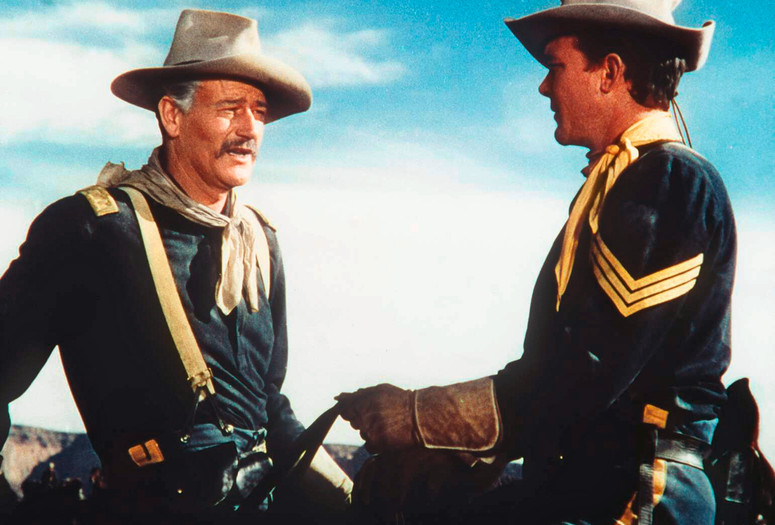

John Wayne and John Agar in She Wore a Yellow Ribbon
 

Oedipus Rex

Year:  1967

Director:  Pier Paolo Pasolini

Screenplay:  Pier Paolo Pasolini, based on the play Oedipus Rex by Sophocles

Starring:  Franco Citti, Silvano Mangano, Alida Valli, Julian Beck, Carmelo Bene, Ninetto Davoli, Luciano Bartoli, Ahmed Belhachmi

Running Time:  104 minutes

Genre:  Drama

As a baby, Oedipus (Citti) is abandoned on a mountain slope, but is rescued and raised by King Polybus (Belchami) and Queen Merope (Valli) of Corinth.  Now an adult, Oedipus suffers strange nightmares and leaves home to visit the Oracle at Delphi to learn what the dreams mean.  However the Oracle tells him that he is destined to kill his father and marry his mother.  Horrified, and unaware that Polybus and Merope are not his biological parents, Oedipus decides not to return to Corinth.  However, as much as he tries to avoid the prophecy, he can't cheat his fate.


Oedipus Rex is one of the most famous of the Ancient Greek tragedies, with it's portrayal of a man who as he tries to avoid his fate, inadvertently brings it about, and brings tragedy down on himself and everyone around him.  Pier Paolo Pasolini gives the classic tragedy his own unique spin.  Bookended by sequences set in 1920s, in which a child is born to a wealthy woman and an Army Officer who resents him, and 1960s Bologna, in which blind Oedipus wanders the bustling streets playing his flute.  The rest of the film was shot in Morocco, with the cities made up of 15th Century buildings, and a mixture of African, Aztec and European style in the props and costumes, with the score made up of Romanian, Japanese and Indonesian folk music.  It depicts a world that is familiar and yet very much it's own.  Pasolini added autobiographical elements, stating that he was the child in the prologue, his father was. military officer and his mother was a teacher.  As with a lot of Pasolini's "historical" films, the loose, handheld camera work, and use of non-professional and often very unconventional looking performers, makes the film look like a strange documentary from another world.  Franco Citti gives a powerful performance in the lead role, and the film, while being quite a demanding watch, has a unique power if it's own.


Franco Citti in Oedipus Rex


Saturday, 2 April 2022

Drive My Car

Year:  2021

Director:  Ryusuke Hamaguchi

Screenplay:  Ryusuke Hamaguchi and Takamasa Oe, based on the short story "Drive My Car" by Haruki Murakami

Starring:  Hidetoshi Nishijima, Tōko Miura, Reika Kirishima, Park Yu-rim, Jin Dae-yeon, Sonia Yuan, Ahn Hwitae, Perry Dizon, Satoko Abe, Masaki Okada

Running Time:  179 minutes

Genre:  Drama

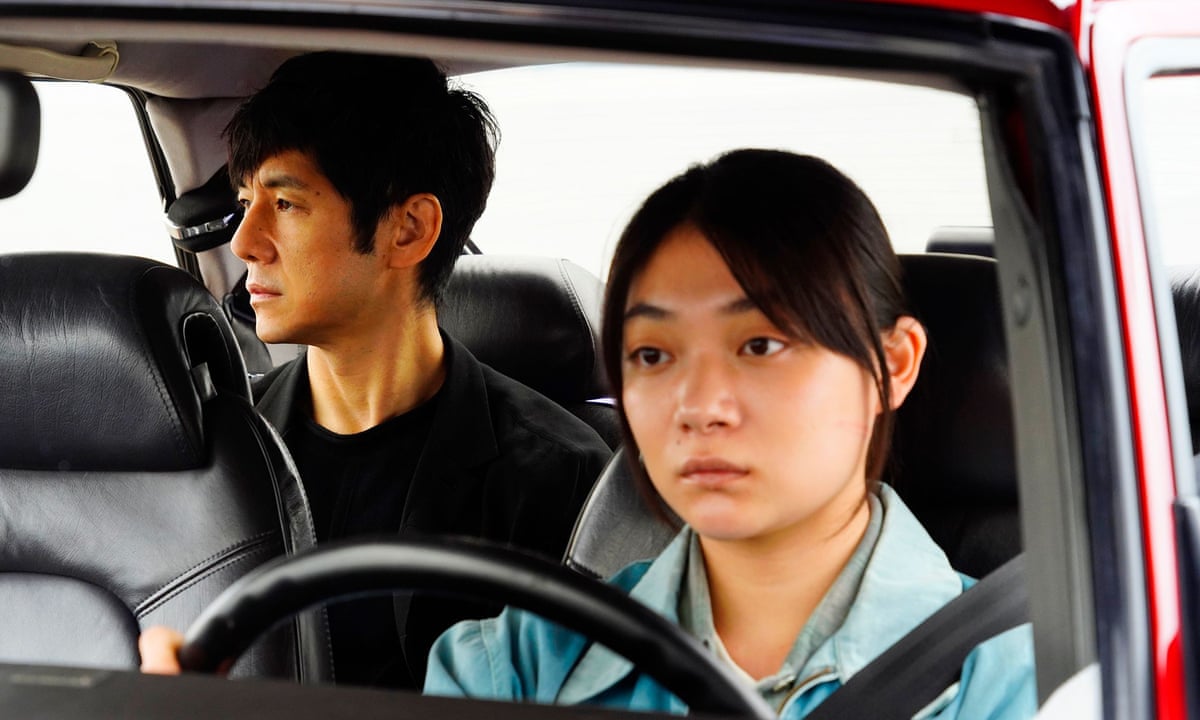
Actor and theatre director Yūsuke Kafuku (Nishijima) is married to television scriptwriter Oto (Kirishima), who conceives her stories during sex and tells them to Yūsuke in bed, and he repeats them to her the next morning, by which time she has forgotten them.  Returning earphone day, he witnesses Oto cheating on him, however he leaves before either of them are aware of him, and never brings it up with her.  Shortly afterwards Oto dies of a sudden cerebral haemorrhage.  Two years later, a still grieving Yūsuke is hired to direct a production of Anton Chekhov's Uncle Vanya for a theatre festival in Hiroshima.  When he arrives, Yūsuke discovers that he is not allowed to drive and is forced to turn over the keys of his beloved old Saab to a taciturn young woman, Misaki Watari (Miura), who will act as his chauffeur for the duration.  During the casting session for the play Yūsuke is shocked to see that one of the cast is a disgraced former TV star, Kōji Takatsuki (Okada), who Yūsuke suspects was once Oto's lover.


Based on a short story by Haruki Murakami from his 2017 collection Men Without Women, and incorporating elements from a couple of other stories from that collection,  Drive My Car won, among many other awards, Best International Feature at the Golden Globes, BAFTAs and Academy Awards, and was nominated for Best Director, Best Adapted Screenplay and Best Picture at the Academy Awards.  It also won Best Screenplay at the Cannes Film Festival.  A three hour long film about coming to terms with grief may not seem like an attractive proposition, but it is more than that, and it is a mesmerising film.  It's full of small details, which can almost pass you by when they first come up, and then pay off later.  It's beautiful, heartbreaking and sometimes joyful.  The film's imposing length is as long as it needs to be to tell the story.  We spend a lot of time with Yūsuke and Oto, whose untimely death occurs about 40 minutes into the film, so we have had a chance to get to know them as a couple, and Yūsuke's loss has some real weight.  Hidetoshi Nishijima gives an incredible performance as Yūsuke, who is on screen for much of the film, and shows a real sense of grief and loss beneath his stoical facade.  Tōko Miura is impressive as the quiet driver, Misaki, who has her own troubled past, and their shared sense of grief, loss and guilt connects her and Yūsuke.  The way the film is structured is around the rehearsals for a theatre production of Uncle Vanya, and the development of the production in way mirrors the development of the characters in the film.  Yūsuke has a very strong relationship with the play, he was acting in a performance of the play at the time Oto died, and while in the car, he constantly listens to a tape recording of the play that Oto made for him to help his rehearsals.  The visual style of the film has a quiet beauty.  The film is laced with ambiguity, particularly the closing moments.  I was almost sorry when the closing credits rolled, because I wanted to see more of this story, and these characters.


     Hidetoshi Nishijima and Tōko Miura in Drive My Car


Friday, 1 April 2022

Jane Eyre

 Year:  2011

Director:  Cary Joji Fukunaga

Screenplay:  Moira Buffini, based on the novel Jane Eyre by Charlotte Brontë

Starring:  Mia Wasikowska, Michael Fassbender, Jamie Bell, Judi Dench, Sally Hawkins

Running Time:  120 minutes

Genre:  Drama, romance


19th Century England:  A tearful Jane Eyre (Wasikowska) runs away from Thornfield Hall, and lost, cold and hungry, she eventually collapses on the moors.  Jane is rescued by St. John Rivers (Bell) and his two sisters, Diana (Holliday Grainger) and Mary (Tamzin Merchant), who nurse her back to health.  As she recuperates, Jane remembers her unhappy childhood, as an orphan, treated cruelly by her aunt Mrs. Reed (Hawkins) and cousins, and later the brutal conditions at Lowood School for Girls. When she leaves school, at the age of 18, Jane gets a job as a governess at Thornfield Hall, and finds herself increasingly drawn to her brooding, enigmatic employer, Edward Rochester (Fassbender).


There have been many screen adaptations of Charlotte Brontë's beloved classic novel,  and this version, scripted by Moira Biffini and directed by Cary Joji Fukunaga is, more or less, a faithful adaptation.  However, while the book tells it's story in a linear fashion, the film opens with a scene that occurs late in the book and much of the story unfolds as a flashback.  Also a lot of sequences of the book, necessarily, had to be cut, this is notable in the scenes in Jane's childhood that seem kind of rushed, and the ending which feels quite abrupt, I was quite surprised when the end credits rolled because I was sure there was at least another scene to go.  Although I am saying that as someone who is a huge fan of the novel, it's one of my favourite books.  The film includes most of the book's important plot points and characters, and the omissions didn't spoil the film as far as I was concerned.  It is beautifully made, with the moods of wild, unforgiving nature; gothic gloom and mystery; as well as sun dappled romance all being perfectly conveyed.  Mia Wasikowska gives a great performance as Jane, capturing Jane's strong will, and conveying a lot with a passing look or the way she carries herself.  Michael Fassbender makes for a magnificently brooding Rochester.  It is an impressive production, and should satisfy devoted Brontë fans, as well as those unfamiliar with Jane Eyre.


Michael Fassbender and Mia Wasikowska in Jane Eyre


Wednesday, 30 March 2022

L'Atalante

Year:  1934

Director:  Jean Vigo

Screenplay:  Jean Vigo and Albert Riéra, based on an original scenario by Jean Guinée

Starring:  Michel Simon, Dita Parlo, Jean Dasté

Running Time:  89 minutes

Genre:  Drama


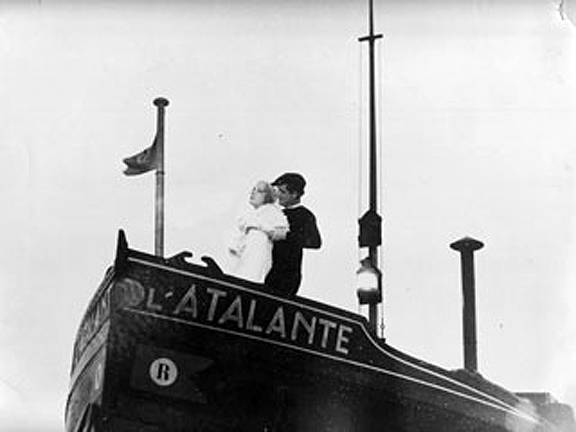
After a whirlwind romance, country girl Juliette (Parlo) marries Jean (Dasté), captain of the barge L'Atalante.  However, the cramped conditions in the barge, as well as the crew consisting of the earthy Père Jules (Simon) and the cabin boy (Louis Lefebvre), and Jules' numerous pet cats soon puts a strain on the marriage.  After an encounter with a charming peddler (Gilles Margaritis), Juliette makes an impulsive trip to Paris, and ends up lost and penniless in a strange city.  Distraught by her departure, Jean begins to fall apart, and it's up to Père Jules to put matters to rights.


French writer/director Jean Vigo died of tuberculosis at the age of 29, having completed three short films and one feature, and yet is regarded as one of the greats of French cinema.  L'Atalante is often regarded as one of the greatest films ever made.  The film mixes social realism with poetic romanticism.  Michel Simon makes an indelible impression as the bawdy, earthy, fiercely loyal Père Jules, and Dita Parlo is great as the romantic, vulnerable, headstrong Juliette.  Jean Dasté is good as the romantic but fiercely jealous captain of the barge, but he is overshadowed by the performances of Simon and Parlo.  L'Atalante followed Vigo's controversial short film about schoolboy rebellion, Zero for Conduct (1933), which was banned by the French government until 1945 and went on to influence such films as François Truffaut's The 400 Blows (1959) and Lindsay Anderson's If.... (1968).  L'Atalante too ran into stormy waters as the distributor cut the film to 65 minutes and retitled it The Passing Barge to make it more commercial.  Vigo, who did shortly after the film's release, was too ill to fight them.  However the film has now been restored to its original length, and it is somehow gratifying that Vigo's legacy has grown with time.  You can tell that L'Atalante is a young person's film, filled as it is with endless invention, mixing documentary-style footage with heavily stylised, almost surreal sequences, a playful sense of humour and invention, and scenes of grimy reality, lightened by poetic beauty and romance, in a way that only film can.  One scene in particular which dissolves between Jean on the barge and Juliette in Paris as they each lie alone in their respective beds, mirroring each other's movements as they toss and turn, unable to sleep, is one of the most powerful scenes of romantic yearning in cinema.


 Dita Parlo and Jean Dasté on board the L'Atalante


Tuesday, 29 March 2022

Ghost World

Year:  2001

Director:  Terry Zwigoff

Screenplay:  Daniel Clowes and Terry Zwigoff, based on the comic Ghost World by Daniel Clowes

Starring:  Thora Birch, Scarlett Johansson, Steve Buscemi, Brad Renfro, Illeana Douglas

Running Time:  112 minutes

Genre:  Dark comedy, drama


In the bland suburbs of an unnamed American city, cynical teenage outcasts Enid (Birch) and Rebecca (Johansson) have just left high school.  However, a summer of wandering the streets, hanging out at kitschy diners and shops and tormenting people with their sarcastic quips and pranks is threatened by the fact that Enid has to take a remedial art class in order to graduate high school.  As the two slowly drift apart, Enid strikes up a friendship with eccentric, lonely middle-aged record collector, Seymour (Buscemi).


Ghost World started out as a slice-of-life comic series in writer-artist Daniel Clowes' Eightball between 1993 and 1997, before being published as a graphic novel in 1997.  Director Terry Zwigoff had previously made his name with the documentary Crumb, about controversial underground "comix" artist Robert Crumb.  Zwigoff shot the film in a deliberately flat, bland way, with very few extras in the streets, and the characters entered in the frame, to mimic the panels of the comic.  It also shows the alienation of the characters.  The streets are eerily quiet and empty all the time, and helps give the film it's odd, slightly surreal feel.  Thora Birch, who at the time was coming off the success of American Beauty (1999), gives a great performance as Enid, a character who is at the same time sympathetic, awkward, cool, sometimes cruel, disloyal and confused, and who wrecks havoc in the lives of her friends albeit unintentionally.  Steve Buscemi gives a very strong performance as the lonely record collector Seymour, who loves old ragtime music and collects odd old artefacts, and is mostly quiet and shy but still given to occasional fits of anger, and who the girls first encounter when he falls victim to one of their cruel pranks, but who Enid ends up developing. strong connection with.  Seymour could very easily have been very creepy character, but the way that he is written and the way Buscemi plays him, with a kind of naive sweetness, makes him a surprisingly likeable and sympathetic character.  The film marks the breakthrough role for Scarlett Johansson, who had previously gained some attention for her supporting roles in The Horse Whisperer (1998) and the Coen Brothers film The Man Who Wasn't There (2001).  She gives a very good performance as Rebecca, Enid's friend, who is just as cynical and sarcastic as her friend, but is the more popular half of the duo, and unlike Enid has solid plans for the future.  The film is billed as a comedy, and some scenes are very funny, but it is a surprisingly dark film, and it all ends on a strange, ambiguous note. Although some aspects of it have dated in the past twenty years, it is still a strange and bracing look at what it means to be lonely and trapped in the bland modern world.


Scarlett Johansson and Thora Birch in Ghost World


Saturday, 26 March 2022

tick, tick... BOOM!

 Year:  2021

Director:  Lin-Manuel Miranda

Screenplay:  Steven Levenson, based on the stage musical tick, tick... BOOM! by Jonathan Larson

Starring:  Andrew Garfield, Alexandra Shipp, Vanessa Hudgens, Robin de Jesús, Joshua Henry, Judith Light

Running Time:  121 minutes

Genre:  Musical, drama

New York City, January 1990:  Jonathan Larson (Garfield) works in a popular Manhattan diner but his true passion is musical theatre.  For the past eight years he has been working on his passion project, a dystopian science-fiction musical called Superbia.  In a few days time he has the opportunity to put on a workshop product of Superbia, which he hopes will attract the attention of producers and investors as well as proving his talent to friends and family.  Jonathan also feels intense pressure to become successful before he turns 30, which is just over a week away, and so he feels that this production is his last chance to "make it".  He also has to deal with personal tragedies, severe financial troubles, and the fact that he still has to write one of the key songs for his musical, and he has no ideas at all. Meanwhile the clock keeps ticking away.


This is a biographical film telling the early career of playwright and composer Jonathan Larson, who is best known for writing the hit musical Rent, which ran for 12 years on Broadway.  The film is based on a semi-autobiographical "rock monologue" Larson wrote in 1990.  The title refers to an incessant ticking sound that Larson says he hears in his head, referring to his feeling that time is running out.  The film cuts between Andrew Garfield, as Larson, performing the monologue in front of an audience, with a full band, and the musical drama which makes up the bulk of the film.  It's a hugely enjoyable film about the sacrifices, pressures, hopes and joys of making art.  Andrew Garfield gives a great performance in the central role, and also shows that he is a very good singer.  Alexandra Shipp is good as Susan, Larson's long-suffering girlfriend, and Robin de Jesús gives a fantastic performance as Michael, Larson's best friend who gave up his own acting dreams for a career in advertising.  The film acknowledges the AIDS crisis, which claims several of Larson's friends, and that casts a strong shadow over Larson's various problems.  The film marks the directorial debut of actor, writer, singer, songwriter, producer Lin-Manual Miranda, and it is a very accomplished debut, with a huge sense of style and visually spectacular.  The songs are very good.  This is one of the best films that I have seen about writing and the creative process.


Andrew Garfield in tick, tick... BOOM!